

Selecting the correct non insulated ring terminal is critical for ensuring electrical safety, current-carrying capacity, and long-term connection reliability. An undersized terminal can cause overheating, voltage drops, and premature failure, while an oversized terminal may lead to poor crimping performance and unstable electrical contact.
Whether you are working on industrial control panels, power distribution systems, automotive wiring, battery connections, or heavy-duty equipment, understanding how to choose the proper Ring Terminal Non Insulated size will help improve system performance and reduce maintenance costs. This guide explains the key factors to consider, including cable size, current rating, material selection, application requirements, and installation practices.
How To Choose The Right Size Non Insulated Ring Terminal
Choosing the proper Non Insulated Ring Connector involves more than simply matching a wire to a terminal. Several technical factors affect connection performance and safety.
Cable Cross-Section And Current Rating Relationship
The cross-sectional area of a conductor directly affects the amount of current it can safely carry.
As conductor size increases, electrical resistance decreases, allowing more current to flow without excessive heat generation. Therefore, terminal selection must always match the cable’s cross-sectional area.
General Rule
| Cable Size (mm²) | Typical Current Range |
|---|---|
| 6-10 mm² | Up to 62A |
| 10-16 mm² | Up to 88A |
| 16-25 mm² | Up to 115A |
| 50-70 mm² | Up to 215A |
| 70-95 mm² | Up to 235A |
| 95-120 mm² | Up to 255A |
| 120-150 mm² | Up to 300A |
| 150-185 mm² | Up to 395A |
When selecting a Copper Ring Terminal Non Insulated, always verify both cable size and current requirement.
Key Considerations
- Match the terminal barrel to conductor size
- Verify maximum current capacity
- Consider ambient operating temperature
- Account for continuous or intermittent loads
- Include safety margins for future expansion
Matching Size With Conductor Size
The most important selection criterion is conductor compatibility.
A properly sized Non Insulated Crimp Terminal should allow the stripped conductor to fully enter the barrel without excessive looseness or force.
Risks Of Incorrect Sizing
Terminal Too Small
- Wire cannot fully enter barrel
- Reduced contact area
- Difficult crimping process
- Increased resistance
- Potential overheating
Terminal Too Large
- Weak mechanical retention
- Poor conductivity
- Higher vibration failure risk
- Reduced pull-out strength
Always follow manufacturer specifications rather than estimating based on visual inspection.
Selecting Based On Current Load (Ampacity Requirements)
Current-carrying capacity is equally important as conductor size.
A terminal operating beyond its rated current may experience:
- Excessive temperature rise
- Oxidation of contact surfaces
- Reduced conductivity
- Insulation damage nearby
- Connection failure
For example:
- RNB 8 supports up to 62A
- RNB 22 supports up to 115A
- RNB 100 supports up to 300A
- RNB 150 supports up to 395A
When designing electrical systems, engineers typically maintain a safety margin between operating current and terminal rating.
Best Practice
Select a Bare Ring Terminal with at least 20% additional capacity above expected continuous load whenever possible.
Choosing Material For High Conductivity And Durability
Material quality significantly affects the performance of an Electrical Ring Terminal Non Insulated.
Copper remains the preferred material because of its:
- Excellent electrical conductivity
- High thermal conductivity
- Superior mechanical strength
- Good corrosion resistance
- Long service life
Why Copper Is Preferred
Compared with aluminum or lower-grade alloys, copper provides lower contact resistance and better long-term stability.
Benefits include:
- Reduced energy losses
- Lower operating temperatures
- Improved crimp reliability
- Better vibration resistance
- Enhanced durability in industrial environments
For demanding applications, a Copper Ring Terminal Non Insulated offers the most dependable solution.
Considering Application Scenarios
Different applications place different demands on ring terminals.
Power Distribution Systems
Require:
- High current capacity
- Stable conductivity
- Long-term reliability
Industrial Equipment
Require:
- Vibration resistance
- Mechanical durability
- Consistent electrical performance
Battery Connections
Require:
- Low resistance
- High current transfer
- Corrosion resistance
Automotive Applications
Require:
- Compact installation
- Resistance to vibration
- Reliable crimp retention
Renewable Energy Systems
Require:
- Long service life
- Environmental durability
- High conductivity
Application requirements should always influence the selection of an Uninsulated Ring Terminal.
Using Product Size Chart
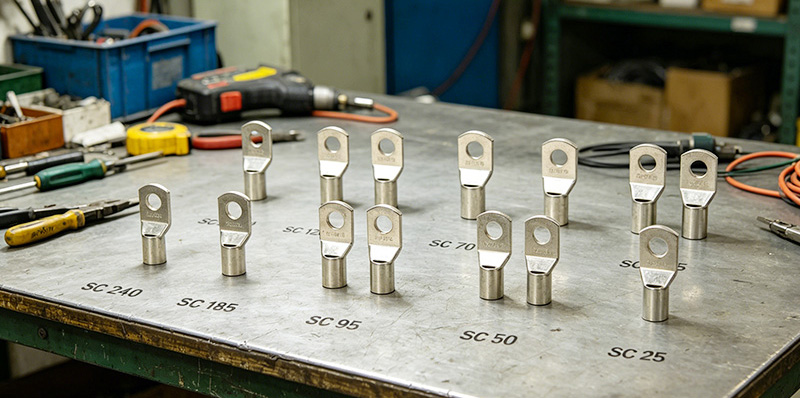
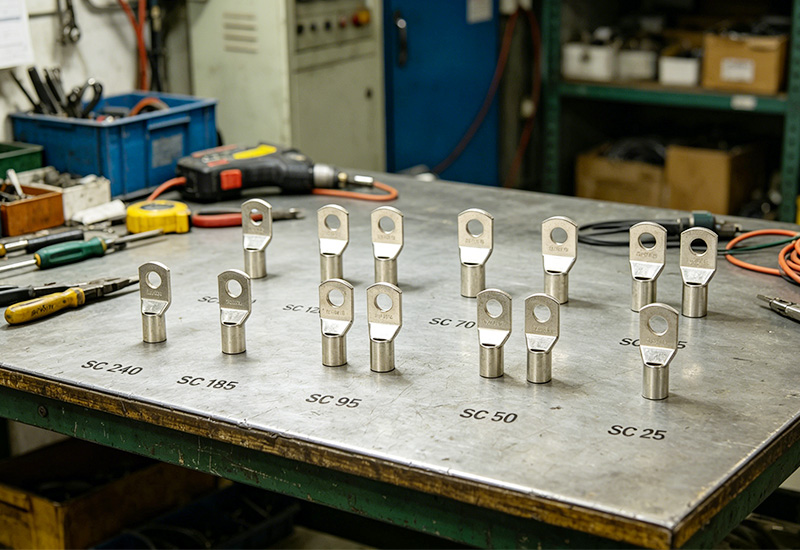
The RNB Series provides a wide range of terminal sizes suitable for low, medium, and high-current applications.
Quick Selection Guide
| Model | Cable Size (mm²) | Max Current |
|---|---|---|
| RNB 8 | 6-10 | 62A |
| RNB 14 | 10-16 | 88A |
| RNB 22 | 16-25 | 115A |
| RNB 60 | 50-70 | 215A |
| RNB 70 | 70-95 | 235A |
| RNB 80 | 95-120 | 255A |
| RNB 100 | 120-150 | 300A |
| RNB 150 | 150-185 | 395A |
This chart provides a practical starting point when selecting Non Insulated Ring Terminals for various electrical systems.
Non Insulated Ring Terminal Size Reference Table
Cable Size Vs Current Capacity Comparison
The following table summarizes the relationship between conductor size and current-carrying capability.
| Model | Cable Range | Current Rating | Typical Use |
|---|---|---|---|
| RNB 8 | 6-10 mm² | 62A | Automotive, lighting |
| RNB 14 | 10-16 mm² | 88A | Control panels |
| RNB 22 | 16-25 mm² | 115A | Industrial machinery |
| RNB 60 | 50-70 mm² | 215A | Distribution systems |
| RNB 70 | 70-95 mm² | 235A | Power equipment |
| RNB 80 | 95-120 mm² | 255A | Heavy-duty machinery |
| RNB 100 | 120-150 mm² | 300A | Main power connections |
| RNB 150 | 150-185 mm² | 395A | High-current industrial applications |
Recommended Applications For Each Model
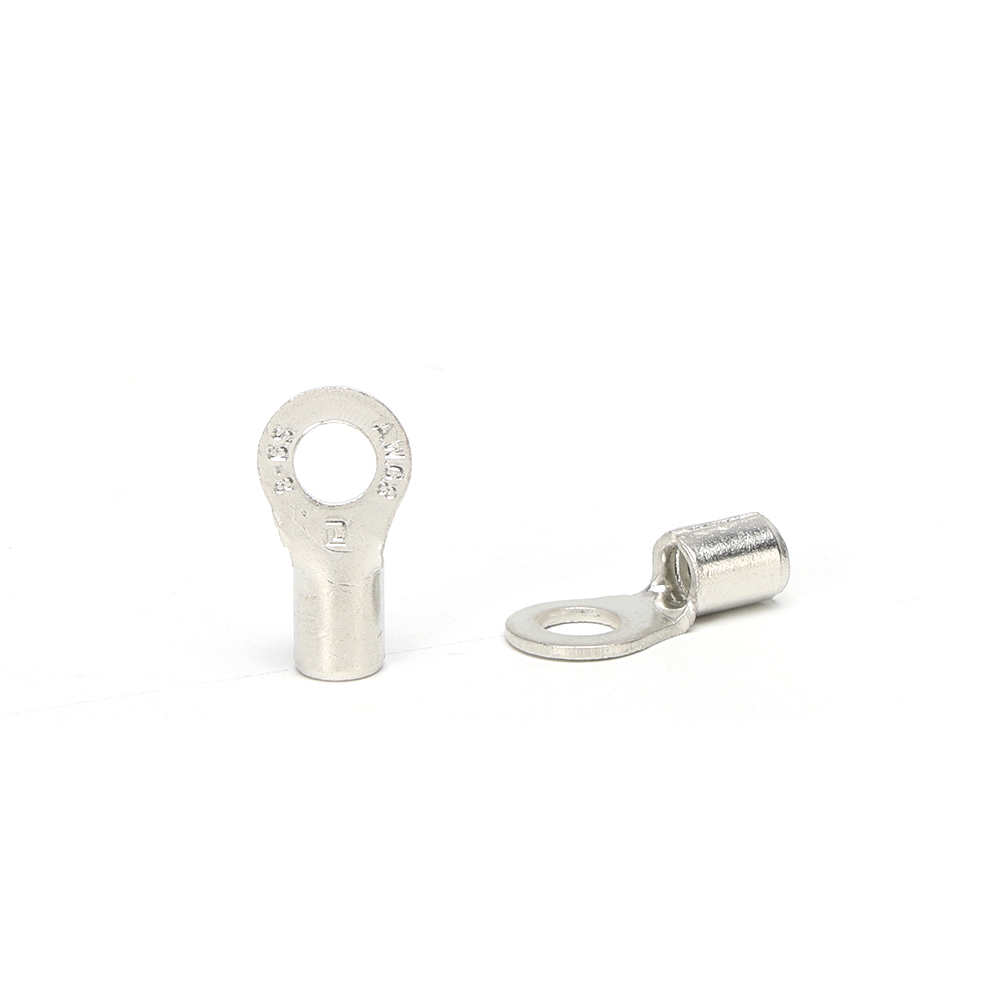 RNB 8 (6–10 Mm², 62A)
Suitable for:
- Automotive wiring
- Marine electrical systems
- Lighting circuits
- Small power distribution
RNB 14 (10–16 Mm², 88A)
Suitable for:
- Control cabinets
- Industrial equipment
- Motor circuits
- Commercial installations
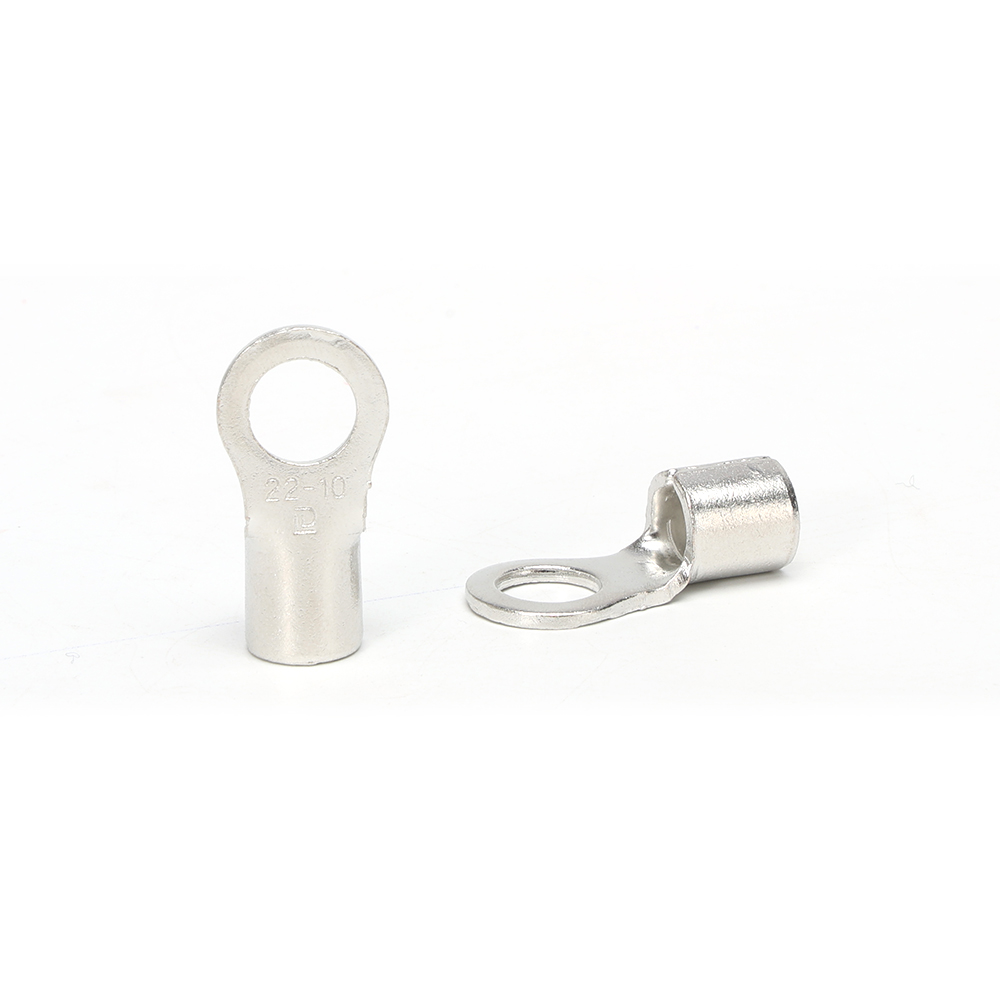
RNB 22 (16–25 Mm², 115A)
Suitable for:
- Medium-power equipment
- Generator connections
- Electrical control systems
RNB 60 (50–70 Mm², 215A)
Suitable for:
- Distribution panels
- Battery banks
- Industrial power systems
RNB 70 (70–95 Mm², 235A)
Suitable for:
- Large motors
- Industrial machinery
- Utility equipment
RNB 80 (95–120 Mm², 255A)
Suitable for:
- Heavy-duty power distribution
- Renewable energy systems
- High-current equipment
RNB 100 (120–150 Mm², 300A)
Suitable for:
- Transformer connections
- Main feeders
- Industrial switchgear
RNB 150 (150–185 Mm², 395A)
Suitable for:
- Utility substations
- High-current busbar systems
- Large industrial installations
Common Mistakes When Choosing Non Insulated Ring Terminals
Selecting the wrong terminal can compromise system safety and reliability.
Based Only On Wire Diameter Without Considering Current
Wire size alone does not determine terminal suitability. Current requirements must also be evaluated.
Ignoring Temperature Rise And Load Conditions
Continuous operation at high temperatures can reduce terminal lifespan and performance.
Using Undersized Bare Ring Terminal For High-Power Systems
An undersized Bare Ring Terminal may overheat and fail under heavy electrical loads.
Mixing Metric Cable Size With AWG Confusion
Always convert cable sizes accurately when working between metric and AWG standards.
Poor Crimping Leading To Resistance And Heat Build-Up
Even the best Non Insulated Ring Terminal can fail if improperly crimped.
Common consequences include:
- Increased resistance
- Voltage drops
- Excessive heat
- Reduced lifespan
- Electrical failure
Installation Tips
Proper installation ensures the maximum performance of your Non Insulated Crimp Terminal.
Proper Crimping Tool Selection
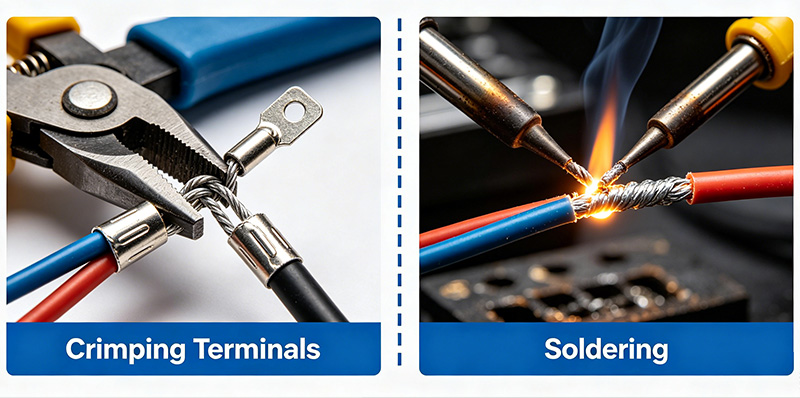
Always use professional crimping tools designed for the specific cable and terminal size.
Benefits include:
- Uniform compression
- Better conductivity
- Improved mechanical strength
- Longer service life
Correct Strip Length And Insertion Depth
The conductor should fully occupy the barrel without exposed strands outside the crimp area.
Ensuring Tight Mechanical And Electrical Connection
A properly crimped connection should provide both strong retention and low-resistance conductivity.
Recommended checks:
- Visual inspection
- Crimp profile verification
- Pull-out testing
- Resistance measurement
Inspection After Crimping And Pull Test Guidelines
After installation:
- Check for cracks or deformation
- Confirm complete wire insertion
- Verify terminal alignment
- Perform pull tests
- Inspect for loose strands
Regular inspection helps maintain long-term reliability in demanding electrical environments.
FAQ
How Does Crimp Quality Affect Performance?
Crimp quality directly impacts both the electrical and mechanical performance of a Non Insulated Ring Terminal. A properly executed crimp creates a gas-tight connection between the conductor and the terminal barrel, minimizing contact resistance and preventing oxidation.
Poor crimping can lead to:
- Increased electrical resistance
- Excessive heat generation
- Voltage drops
- Connection loosening under vibration
- Premature terminal failure
Using the correct crimping tool and die size is essential for achieving a reliable connection.
What Is A Non Insulated Ring Terminal Used For?
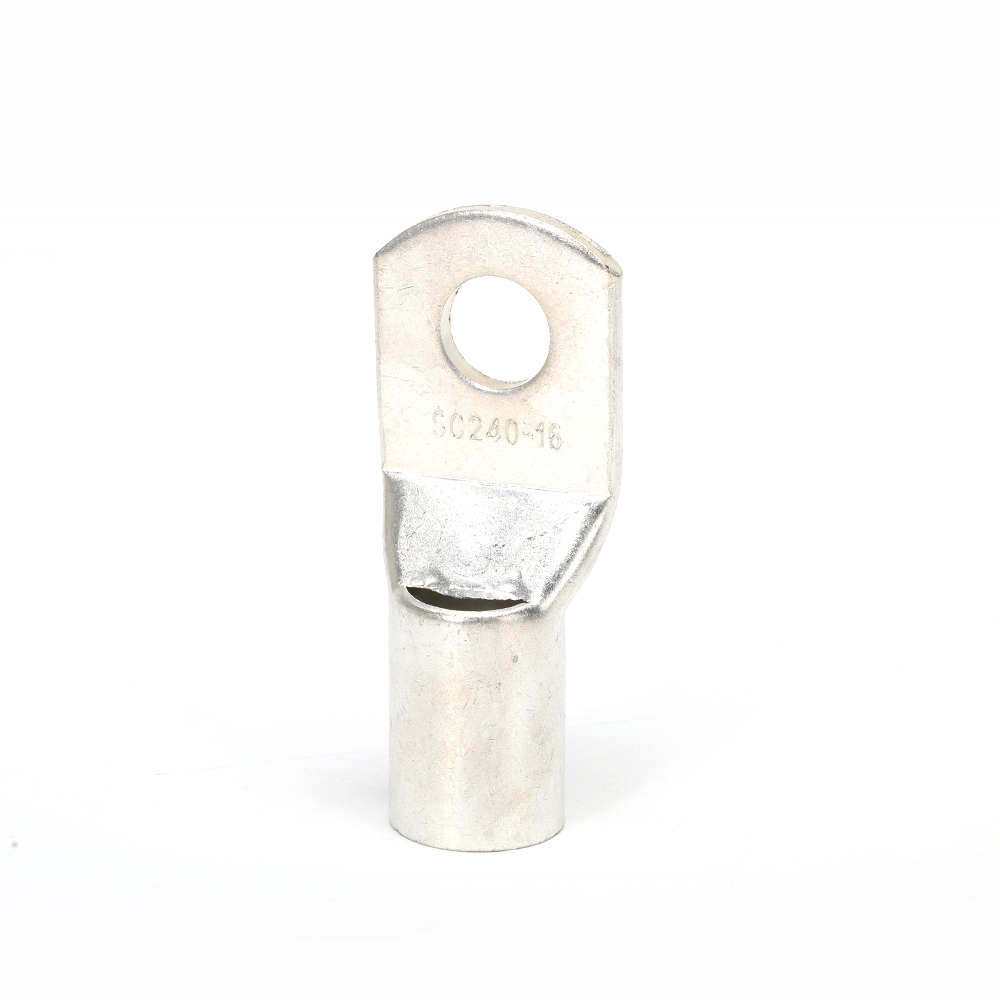
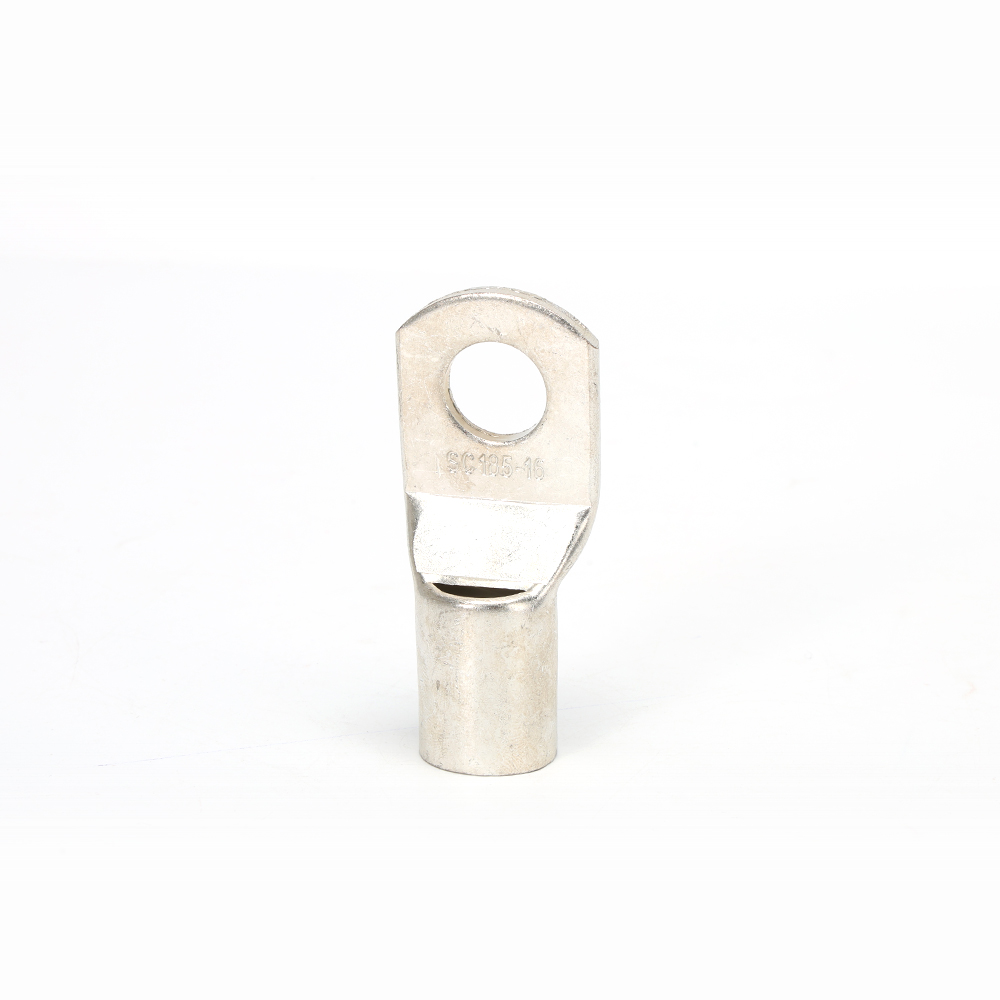
A Non Insulated Ring Terminal is a crimp connector designed to create a secure electrical connection between a wire and a stud, screw, or bolt connection point.
Common applications include:
- Electrical control panels
- Power distribution systems
- Automotive wiring
- Battery connections
- Industrial machinery
- Renewable energy systems
Because the ring design fully surrounds the mounting stud, it provides excellent resistance to accidental disconnection caused by vibration or movement.
Bare Ring Terminal Vs Insulated Type Ring Terminal
Both terminal types serve similar functions, but they are used in different environments.
| Feature | Bare Ring Terminal | Insulated Ring Terminal |
|---|---|---|
| Insulation Sleeve | No | Yes |
| Operating Temperature | Higher | Moderate |
| Conductivity | Excellent | Good |
| Cost | Lower | Higher |
| Crimp Inspection | Easy | Limited |
| Industrial Applications | Preferred | Common |
A Bare Ring Terminal is often preferred in industrial and high-current applications because it provides better heat dissipation and allows direct visual inspection of the crimped connection.
What Material Is Best For High Current Applications?
Copper is widely recognized as the best material for high-current terminal applications.
A Copper Ring Terminal Non Insulated offers:
- Excellent electrical conductivity
- Low contact resistance
- High mechanical strength
- Superior thermal performance
- Long service life
For demanding applications such as switchgear, battery systems, transformers, and industrial equipment, copper terminals provide the most reliable performance.
Which Copper Ring Terminal Non Insulated Size Do I Need?
The correct size depends on two factors:
- Cable cross-sectional area (mm²)
- Maximum operating current
For example:
| Cable Size | Recommended Model |
|---|---|
| 6-10 mm² | RNB 8 |
| 10-16 mm² | RNB 14 |
| 16-25 mm² | RNB 22 |
| 50-70 mm² | RNB 60 |
| 70-95 mm² | RNB 70 |
| 95-120 mm² | RNB 80 |
| 120-150 mm² | RNB 100 |
| 150-185 mm² | RNB 150 |
Always verify both the cable size and current requirement before selecting a terminal.
Can Non Insulated Ring Connectors Be Used In Automotive Systems?
Yes. A Non Insulated Ring Connector is commonly used in automotive electrical systems because it provides a secure and vibration-resistant connection.
Typical automotive applications include:
- Battery terminals
- Grounding connections
- Starter motors
- Alternator wiring
- Fuse and relay systems
For automotive environments, proper crimping and corrosion protection are especially important to ensure long-term reliability.
Can I Use Smaller Electrical Ring Terminal Non Insulated For Lower Current?
No. Terminal size should always match the conductor size regardless of the actual operating current.
Using a smaller Electrical Ring Terminal Non Insulated may result in:
- Improper wire insertion
- Weak crimp strength
- Increased resistance
- Potential overheating
- Reduced safety
Always select the terminal according to the manufacturer’s cable-size specification.
Are RNB Series Terminals Suitable For Industrial High-Current Applications?
Yes. The RNB Series is specifically designed for demanding electrical applications and offers a wide range of current capacities.
Examples include:
| Model | Max Current |
|---|---|
| RNB 60 | 215A |
| RNB 70 | 235A |
| RNB 80 | 255A |
| RNB 100 | 300A |
| RNB 150 | 395A |
These models are commonly used in:
- Industrial control systems
- Power distribution equipment
- Renewable energy installations
- Battery storage systems
- Utility infrastructure
Their copper construction provides excellent conductivity and long-term durability under high electrical loads.
Conclusion
Choosing the right Non Insulated Ring Terminal is essential for achieving safe, efficient, and long-lasting electrical connections. The selection process should always begin with matching the terminal to the conductor size and current-carrying requirements. Factors such as material quality, operating environment, installation method, and application type must also be considered to ensure optimal performance.
The RNB Series offers a comprehensive range of Non Insulated Ring Terminals from 6 mm² to 185 mm², supporting currents from 62A up to 395A. Whether you need a compact Uninsulated Ring Terminal for automotive wiring or a heavy-duty Copper Ring Terminal Non Insulated for industrial power distribution, choosing the correct size will improve reliability, reduce maintenance costs, and enhance overall system safety.
For critical electrical applications, always use high-quality copper terminals and professional crimping tools to achieve the most secure and efficient connection possible.
 EN
EN  PT
PT