

In industrial automation, transportation equipment, energy systems, and heavy machinery, electrical connections often operate under continuous vibration and mechanical stress. Selecting the right Din Rail Mounted Terminal Block is essential for maintaining signal integrity, preventing connection failures, and ensuring long-term system reliability.
For manufacturers, suppliers, and engineering teams, a DIN rail terminal block must provide more than basic electrical connectivity. It needs to withstand harsh operating conditions through reliable mechanical design, high-quality materials, and precise manufacturing processes. A properly designed terminal block helps reduce maintenance requirements, improve equipment uptime, and support stable operation in demanding industrial environments.
This article explains how to select a suitable DIN Rail Terminal Block for high-vibration applications, including key design requirements, connection technologies, material considerations, wiring methods, and industrial application factors.
2. How to Select Din Rail Mounted Terminal Block for High-Vibration Environments
2.1 DIN Rail Terminal Block Requirements in Vibration Applications
High-vibration environments create continuous mechanical stress on electrical connection points. Applications such as railway systems, industrial robots, CNC machines, power equipment, and automated production lines require terminal blocks that can maintain stable contact under repeated movement.
Manufacturers of vibration-resistant terminal solutions typically focus on several critical design factors, including contact force stability, housing strength, terminal structure, and secure mounting mechanisms. The terminal block Din Rail Mount design must prevent loosening caused by vibration while maintaining consistent electrical performance.
For industrial buyers, selecting a terminal block designed specifically for vibration conditions helps reduce unexpected downtime, improve equipment reliability, and lower long-term maintenance costs.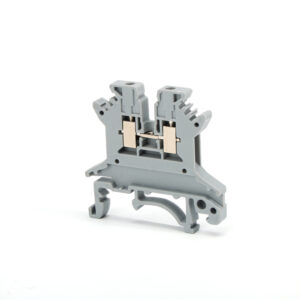
2.2 Key Features of Vibration Resistant Terminal Block
A Vibration Resistant Terminal Block requires a combination of mechanical durability and electrical reliability. Manufacturers use advanced engineering methods to optimize terminal structures and improve performance in challenging environments.
Important features commonly considered for vibration applications include:
- Secure clamping mechanisms: Spring clamp or specially designed screw connections help maintain stable wire contact under vibration.
- High-strength insulating materials: Flame-retardant and temperature-resistant housing materials improve safety and service life.
- Reliable contact systems: Precision-manufactured metal components provide stable current transmission.
- Strong DIN rail mounting design: Robust clips and locking structures prevent movement between the terminal block and mounting rail.
For procurement teams, these features indicate better product consistency, reduced installation issues, and improved performance in industrial projects.
2.3 How Terminal Block Din Rail Mount Improves Connection Stability
The mounting structure plays an important role in the reliability of industrial electrical systems. A properly designed Terminal Block Din Rail Mount provides mechanical support by securely attaching the terminal block to the DIN rail while allowing efficient installation inside control cabinets.
Manufacturers improve mounting stability through reinforced rail clips, accurate dimensional control, and optimized housing designs. These production methods ensure that terminal blocks remain firmly positioned even when equipment experiences continuous vibration.
For industrial customers, stable DIN rail installation improves wiring organization, simplifies maintenance operations, and supports consistent performance throughout the equipment lifecycle.
3. Technical Factors to Consider When Choosing DIN Rail Terminal Blocks
3.1 Selecting the Right Connection Type for Vibration Resistance
The connection method directly affects vibration resistance and electrical reliability. Different industrial applications require different terminal technologies based on current requirements, environmental conditions, and maintenance expectations.
Screw-type DIN Rail Terminal Blocks remain widely used because they provide strong mechanical clamping force and are suitable for many industrial control applications. However, proper torque control during installation is required to prevent loosening over time.
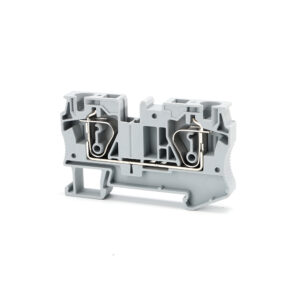
Screwless connection technologies, such as spring clamp terminals, provide consistent contact pressure and reduce installation variation. Manufacturers apply precision forming and quality inspection processes to ensure reliable spring performance.
Choosing the correct connection type allows engineering teams to achieve safer wiring systems and improve production efficiency during equipment assembly.
 3.2 Evaluating Material Quality and Electrical Performance
Material selection is a key factor in the manufacturing quality of DIN Rail Terminal Blocks. Industrial applications require materials that can withstand temperature changes, mechanical stress, electrical loads, and environmental exposure.
Professional manufacturers typically use engineering plastics with strong insulation characteristics and conductive alloys with stable electrical performance. Production processes include material inspection, dimensional testing, electrical testing, and quality control procedures to maintain product consistency.
For procurement managers, evaluating material quality helps ensure that selected terminal blocks meet application requirements and support reliable operation in industrial systems.
3.3 Understanding DIN Rail Terminal Block Wiring Methods
Correct DIN Rail Terminal Block Wiring is essential for achieving safe and stable electrical connections. Improper wiring practices may lead to increased resistance, overheating, or connection failures, especially in vibration environments.
Manufacturers design terminal blocks with features that simplify installation, including clear marking systems, standardized spacing, and compatible wire entry designs. Some solutions also support accessories such as jumpers, end covers, and marking labels to improve cabinet organization.
For industrial projects, well-designed wiring solutions reduce installation time, improve maintenance efficiency, and support standardized production processes.
4. Types of DIN Rail Terminal Blocks for Industrial Applications
4.1 Screw and Screwless DIN Rail Terminal Block Solutions
Industrial control systems require flexible terminal solutions to meet different electrical and mechanical requirements. Screw and screwless DIN Rail Terminal Block designs are commonly selected based on application conditions and installation preferences.
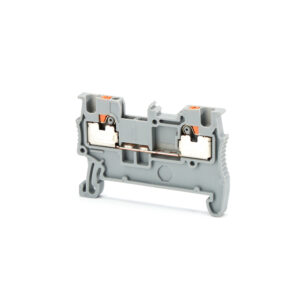
Screw terminal blocks provide strong clamping force and are often used in applications requiring high current capacity. Screwless terminal blocks offer faster installation and consistent contact pressure, making them suitable for automated production environments where wiring efficiency is important.
Manufacturers develop both solutions through precision manufacturing and testing processes to ensure reliable performance across various industrial applications.
4.2 Power Distribution and Grounding Terminal Block Options
Power distribution and grounding systems require terminal blocks with excellent electrical safety and mechanical stability. These products are designed to manage higher current loads while maintaining secure connections.
Manufacturers optimize conductor materials, insulation structures, and protective designs to meet industrial electrical requirements. Grounding terminal blocks also require reliable metal-to-rail contact to support effective grounding performance.
For industrial buyers, selecting suitable power and grounding terminal solutions improves system safety and supports compliance with engineering standards.
4.3 Applications in Control Panels and Industrial Equipment
DIN Rail Terminal Blocks are widely applied in control panels, automation equipment, machinery, energy systems, and industrial electrical cabinets. Their modular design allows engineers to create organized and scalable wiring solutions.
Manufacturers support these applications through customized product options, including different terminal sizes, connection methods, accessories, and labeling solutions. Advanced production capabilities help suppliers meet the requirements of different industrial projects.
For equipment manufacturers and system integrators, reliable terminal blocks improve assembly efficiency, simplify maintenance, and enhance overall system stability.
5. FAQ
How do you choose the right DIN Rail Terminal Block?
The right DIN Rail Terminal Block should be selected based on current rating, wire size, vibration conditions, connection type, and installation requirements. Industrial buyers should also evaluate manufacturer quality control and customization capabilities.
Why do screw terminal blocks loosen under vibration?
Screw terminal blocks may loosen when continuous vibration reduces clamping force over time. Proper torque installation and vibration-resistant designs can help maintain connection stability.
Are Din Rail Terminal Blocks Suitable for Control Panels?
Yes. Din Rail Terminal Blocks are widely used in industrial control panels because they provide modular installation, organized wiring, and reliable electrical connections.
How should DIN Rail Terminal Block Wiring be installed correctly?
DIN Rail Terminal Block Wiring should follow manufacturer specifications, including correct wire stripping length, proper conductor insertion, and suitable tightening torque. Correct installation improves electrical safety and long-term reliability.
What Are the Benefits of Using a Din Rail Mounted Terminal Block?
A Din Rail Mounted Terminal Block provides secure mounting, efficient wiring organization, and easier maintenance in industrial electrical systems. It helps improve cabinet design efficiency and connection reliability.
Are screwless DIN rail terminal blocks better for industrial applications?
Screwless DIN rail terminal blocks can provide faster installation and consistent contact pressure, especially in automated production environments. The suitable choice depends on electrical requirements and application conditions.
6. Conclusion
Selecting the correct Din Rail Mounted Terminal Block for high-vibration environments requires careful consideration of connection technology, material quality, mounting stability, and wiring requirements. Reliable terminal solutions are developed through precise manufacturing processes, strict quality control, and application-focused engineering.
For industrial manufacturers, suppliers, and procurement teams, working with experienced terminal block manufacturers helps ensure product consistency, customization capability, and stable supply for long-term projects. A well-designed DIN rail terminal solution supports safer electrical systems, improved production efficiency, and reliable performance in demanding industrial environments.
 EN
EN  PT
PT