


UM bloco terminal de conexão rápida lets installers make a secure, tool-free (or near tool-free) wire connection in seconds, which is why it has become a standard part of modern control panels, distribution boards, and OEM machinery. If the block is wired incorrectly, however, the same convenience turns into a reliability risk: loose conductors, overheating, and intermittent faults that are hard to diagnose in the field. This guide, prepared by the Westlec engineering team, walks you through a verified, step-by-step wiringprocess, the specifications you must check first, and the four most common mistakes we see during factory audits and site visits. If you are still evaluating the technology for your project, review the advantages of quick connect terminal blocks before you begin.
Nota de segurança: Electrical wiring carries shock and fire risk. Always de-energize the circuit, confirm isolation with a tester, and follow local codes. For industrial or high-current installations, have the work performed or verified by a qualified electrician.
Como to Wire a Quick Connect Terminal Block Correctly
Verificar the Terminal Block Specifications Before Wiring
Before a single wire is stripped, confirm that the block matches the job. A quick wiring terminal block is only safe when operated inside its declared ratings, so read the datasheet and check these points:
- Rated voltage and current – most compact quick connect blocks are rated around 800 V and 32 A; verify against your actual load and apply derating for high ambient temperatures.
- Accepted wire size – note the solid and stranded ranges (for example 0.2–4 mm² solid, 0.2–2.5 mm² stranded with ferrule).
- Number of poles and connections – single, double, or through-connection versions change how you lay out the circuit.
- Standards and certifications – look for IEC 60947-7-1 and UL 1059 compliance, plus CE/RoHS where required for your market.
- Mounting and environment – confirm 35 mm DIN-rail compatibility and the operating temperature / IP rating for the enclosure.
Prepare the Wires for Quick Connection
Clean, consistent preparation is the difference between a connection that lasts and one that fails under vibration. For a reliable quick connection terminal:
- Strip the conductor to the length stated on the block (typically 9–11 mm). Too little leaves the clamp gripping insulation; too much exposes bare copper inside the housing.
- Use a calibrated wire stripper and avoid nicking or twisting the strands – damaged conductors reduce contact area and raise resistance.
- For stranded or flexible wire, always fit a proper ferrule and crimp it squarely. This keeps the strands together so they seat fully in the clamp.
- Make sure the conductor is straight and free of kinks, then give it a quick visual check before insertion.
Inserir Wires Into the Quick Connect Terminal Block Correctly
The exact motion depends on the clamp design, but the goal is always the same: a full, bottomed-out seat in the metal contact. Westlec’s bloco terminal push-in range uses a spring-loaded mechanism, while lever-style wiring quick connectors use a lift gate. Follow the matching step:
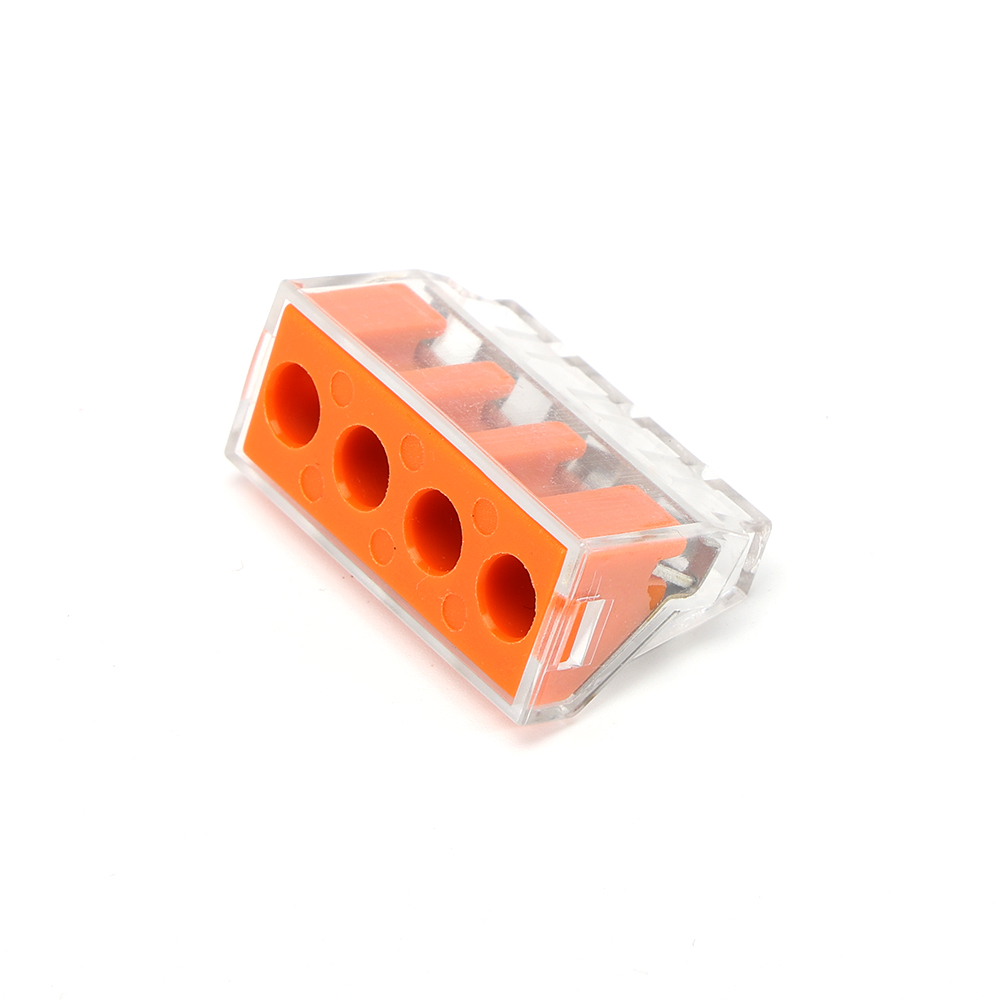
- Lever type: lift the orange lever fully, insert the prepared wire until it stops, then close the lever until it clicks. The lever holds the conductor under spring pressure.
- Push-in / spring type: insert the straight conductor firmly into the entry until it bottoms. Some designs need a small flat-blade actuating tool to open the clamp for insertion or removal.
- Through-connection: where a single wire must join two circuits, use the through-connection version and seat both ends fully.
Insert each conductor along its axis – never at an angle – so the spring grips the full strip length rather than the tip.
Verificar the Connection After Wiring
Do not assume a click means a good connection. Verify every joint before re-energizing:
- Tug test: pull the wire gently; a correctly seated conductor will not slip out.
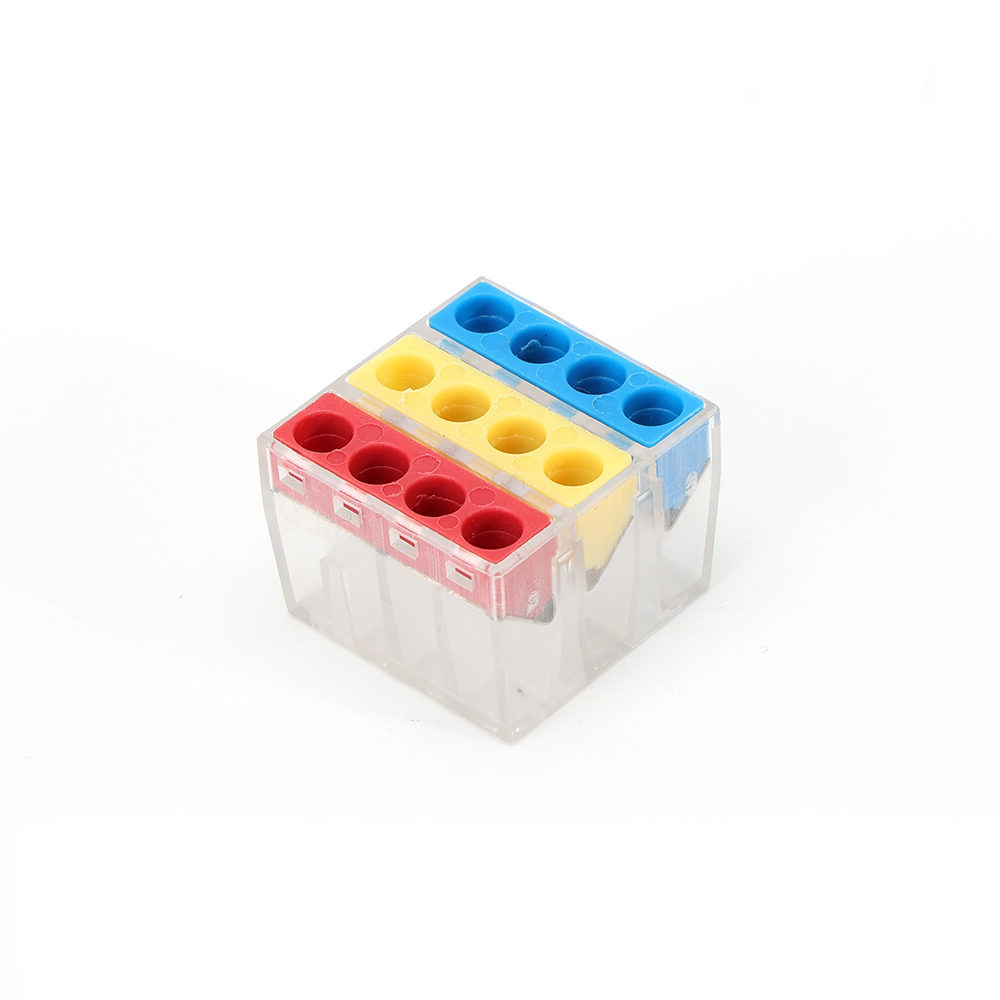
- Visual check: on transparent-housing blocks, confirm the stripped conductor is fully inside the clamp and no insulation is pinched.
- Electrical test: use a multimeter for continuity and, under load, confirm there is no unusual warming at the block.
- Labeling: mark poles and circuits so future maintenance is fast and error-free.
Comum Wiring Mistakes to Avoid
Mistake 1: Using Incorrect Wire Size
A wire outside the block’s rated range either will not clamp securely (too small) or will not fit / overheats (too large). Always match the conductor to the datasheet before ordering.
Mistake 2: Insufficient Wire Stripping
Stripping too little means the spring grips the insulation instead of copper, giving a high-resistance joint. Stripping too much leaves exposed conductor that can short against a neighbor. Hit the specified strip length every time.
Mistake 3: Loose Conductor Insertion
If the wire is not pushed to the stop, only a few strands make contact. Under load this arcs and heats. The tug test in the verification step catches this before it becomes a field failure.
Mistake 4: Exceeding Rated Current
Running a quick connector terminal block above its rated current – or ignoring derating in hot enclosures – is the fastest route to meltdown. Size the block with headroom for the real operating current, not just the nameplate peak.
Como to Choose the Right Quick Connect Terminal Block
Correct wiring starts with correct selection. When specifying a block, weigh these factors against your application:
- Connection style: lever, push-in, and spring-cage each trade off speed, strand handling, and reusability. Compare a bloco terminal de parafuso with a quick-connect type if your team is used to torque-checked joints.
- Electrical rating: match voltage and current to the load with margin, and confirm stranded-wire acceptance if you use flexible cable.
- Modularity: choose pole counts and through-connection options that fit the panel layout and allow future expansion.
- Certificações: require IEC / UL marks and RoHS compliance for your target market.
- Supplier reliability: for B2B volume, prioritize a manufacturer with proven production capacity, short lead times, OEM/ODM customization, and responsive technical support.
Westlec supplies a full quick connection terminal block lineup – including the VPT 2.5 push-in terminal block – built for industrial DIN-rail assemblies. If you are weighing this technology against alternative fittings, see our comparison of quick connect terminal blocks vs wire connectors.
Need a reliable quick connect terminal block supplier?
Westlec manufactures factory-direct, IEC-certified terminal blocks and wiring accessories for B2B projects worldwide. Send us your specifications and we will return a customized quote with lead time and OEM/ODM options.
Frequently Asked Questions
São Quick Connection Terminals Safe?
Yes – when used within their ratings. The spring or lever clamp meets IEC 60947-7-1 / UL 1059 requirements and is designed to resist loosening from vibration. Safety depends on correct wire size, proper stripping, and staying under the rated current.
Fazer Quick Connect Terminal Blocks Require Tools?
Most are tool-free for insertion: lever types need no tools, and push-in types accept a straight solid conductor by hand. Stranded wires still require a ferrule crimper, and a flat-blade actuating tool is often used to open the clamp for removal or dense wiring.
What Wire Size Can a Quick Connect Terminal Block Accept?
It varies by model, but a typical compact block accepts 0.2–4 mm² solid and 0.2–2.5 mm² stranded (with ferrule). Always confirm the exact range on the product datasheet before procurement.
Como to Select a Reliable Quick Connect Terminal Block Supplier?
Check certifications (IEC/UL/CE/RoHS), production capacity, and whether the factory supports audits and samples. Favor suppliers with short, predictable lead times, OEM/ODM customization, and engineering support – exactly what a high-volume B2B buyer needs.
Como Do You Remove a Wire From a Quick Connector Terminal Block?
Lift the lever (lever type) or insert a flat-blade actuating tool into the release slot (push-in type) to open the spring, then pull the wire straight out. Never yank a wire without releasing the clamp, as that can damage the contact.
What Is the Difference Between Quick Connect and Screw Terminal Blocks?
The core difference is the clamping method and speed:
| Fator | Bloco terminal de conexão rápida | Bloco terminal de parafuso |
|---|---|---|
| Requisito de ferramenta | Mostly tool-free | Screwdriver + torque |
| Wiring speed | Muito rápido | Mais devagar |
| Resistência à vibração | High (spring-held) | Good if re-torqued |
| Melhor para | Panels, OEM, prefab | Field service, retrofits |
Can Quick Connect Terminal Blocks Be Used for Industrial Applications?
Yes. Rail-mounted quick connect blocks are widely used in control cabinets, machinery, and automation lines. Choose industrial-rated versions with the right current, temperature range, and certifications, and they perform reliably in demanding environments.
Conclusão
Wiring a bloco terminal de conexão rápida correctly comes down to four habits: check the ratings, prepare the wire to length, seat it fully, and verify before power-on. Avoid the common mistakes – wrong wire size, short stripping, loose insertion, and over-current – and the block will deliver the fast, vibration-resistant joint it was designed for. Westlec’s engineering team is ready to help you specify the right block and supply it direct from the factory for your next B2B project.
Ready to specify your terminal blocks?
Browse the full Westlec quick connection terminal block catalog, or contact our team for a customized B2B quote with samples and lead time.
 PT
PT  EN
EN 