


If you specify, source, or install electrical connectors for panels, switchgear, or power distribution, you have almost certainly handled a terminal de tubo de cobre. They are among the most common yet most misunderstood components in low-voltage wiring. This guide explains what a copper tube terminal is, how it works, what it is made from, the main types available, and—critically for B2B buyers—how to choose a reliable manufacturer and factory partner.
1. Introdução
Electrical connections live and die by their weakest point. A loose or corroded joint can overheat, fail under load, and trigger downtime that costs far more than the connector itself. Copper tube terminals solve this by creating a permanent, low-resistance transition between a stranded or flexible cable and a stud, busbar, or terminal block. Whether you are an OEM assembling control panels, a distributor building a catalog, or a contractor specifying parts for a solar or industrial project,understanding these terminals helps you buy smarter and install safer.
2. What Is A Copper Tube Terminal?
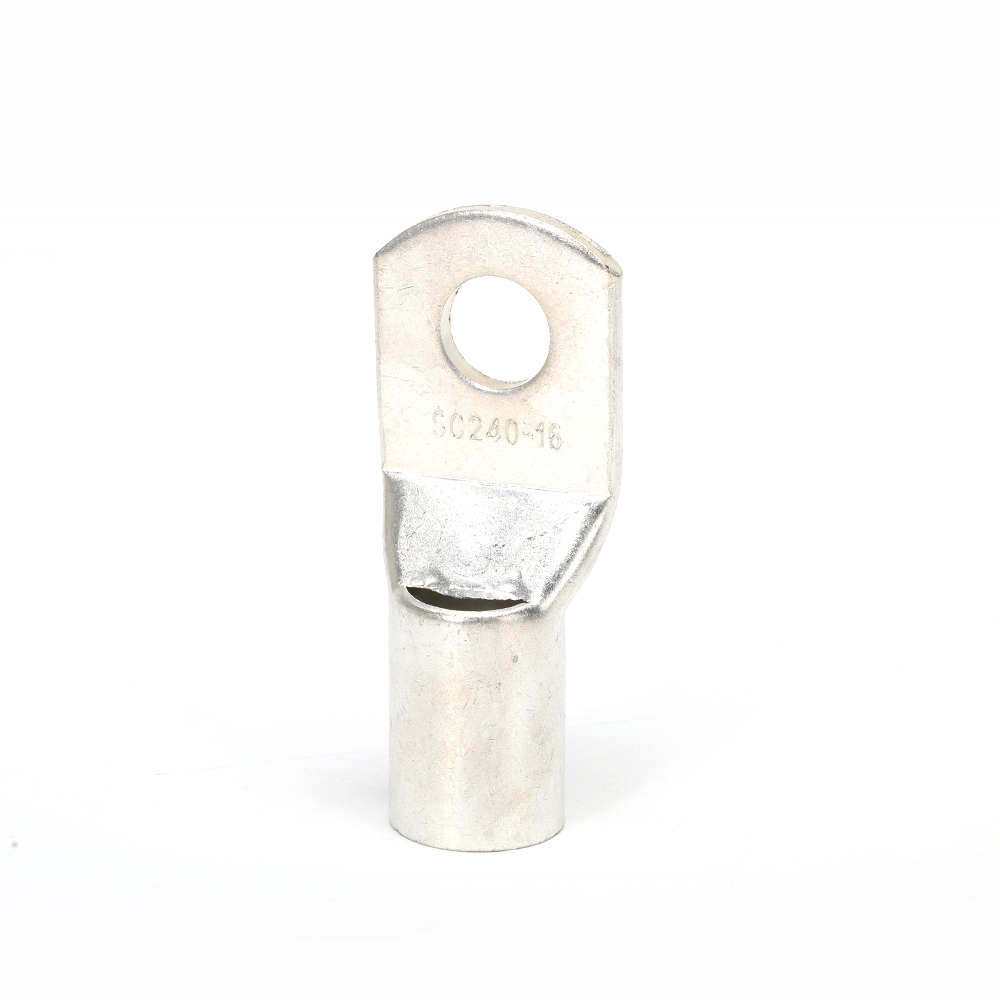
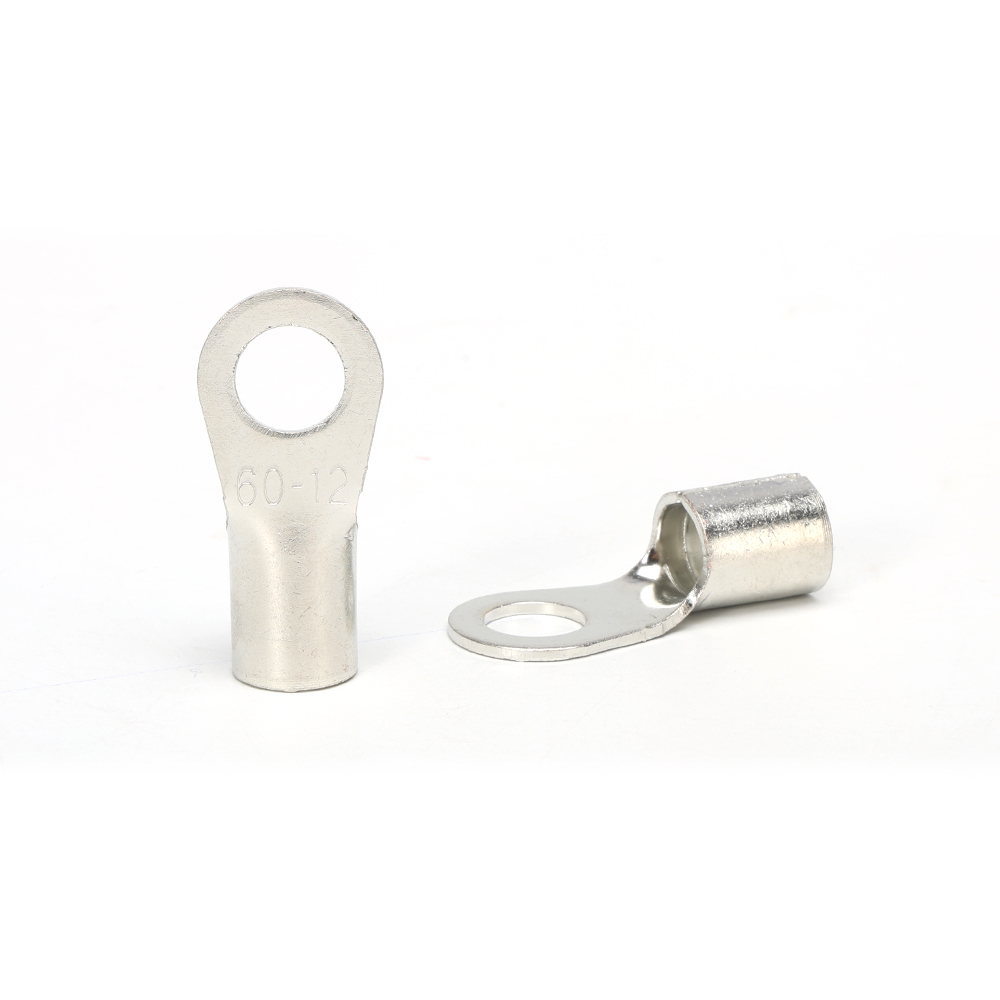
UM terminal de tubo de cobre (often called a copper tube lug) is a solderless electrical connector with a cylindrical, tubular barrel on one end and a flat, drilled palm (the “lug”) on the other. The stripped conductor is inserted into the tube and permanently compressed with a crimping tool, while the palm is fastened to a connection point with a bolt or screw.
Unlike insulated blade or push-in connectors, a copper tube terminal is built for high-current, vibration-resistant, permanent joints. The seamless drawn-copper barrel conforms tightly to the conductor under crimp pressure, producing a gas-tight, low-resistance connection that performs reliably for decades in demanding environments.
3. How Does A Copper Tube Terminal Work?
The working principle is straightforward but precise:
- Inserção: The stripped end of the cable is pushed fully into the tubular barrel until it bottoms out.
- Crimpagem: A matched die compresses the barrel around the conductor, displacing material so copper-to-copper contact is maximized and the strand bundle is mechanically locked.
- Conduction: Current flows from the conductor, through the solid copper barrel and palm, and into the stud or busbar with minimal resistance and heat generation.
- Securing: The palm is bolted to the termination point, creating a stable, torque-controlled mechanical and electrical joint.
Because the joint is cold-welded by crimping pressure rather than soldered, it tolerates thermal cycling and vibration far better than soldered connections—an important advantage in industrial and transport applications.
4. What Materials Are Used For Copper Tube Terminals?
Material choice directly affects conductivity, corrosion resistance, and price. The standard build is:
- Body: High-purity electrolytic copper (ETP copper, typically ≥99.9% Cu), drawn seamless for uniform wall thickness and crimp performance.
- Acabamento de superfície: Bare copper, or tinned copper terminals where a tin layer (≈3–5 µm) protects against oxidation and prevents galvanic corrosion when mating with tinned busbars or aluminium conductors.
- Inspection feature: Many quality terminals include a viewing hole in the barrel so installers can confirm the conductor is fully seated before crimping.
Respeitável crimp terminal manufacturers also control plating thickness and conductivity to meet RoHS and relevant electrical safety standards.
5. What Are The Main Types Of Copper Tube Terminals?
Copper tube terminals are differentiated mainly by barrel length and plating. The four most common variants are:
5.1 Standard Copper Tube Terminal
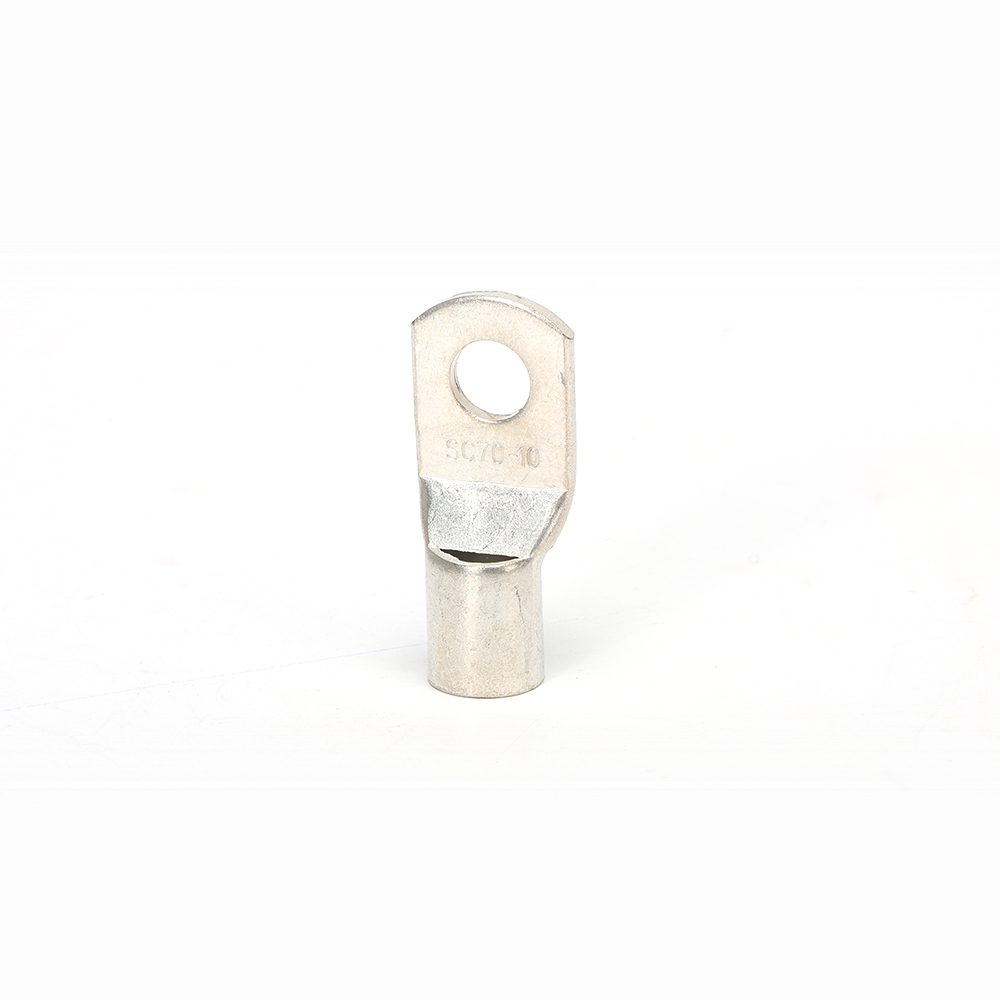
The general-purpose design with a balanced barrel length. Suitable for most panel, switchgear, and distribution applications where space and current are within normal ranges.
5.2 Long Barrel Copper Tube Terminal
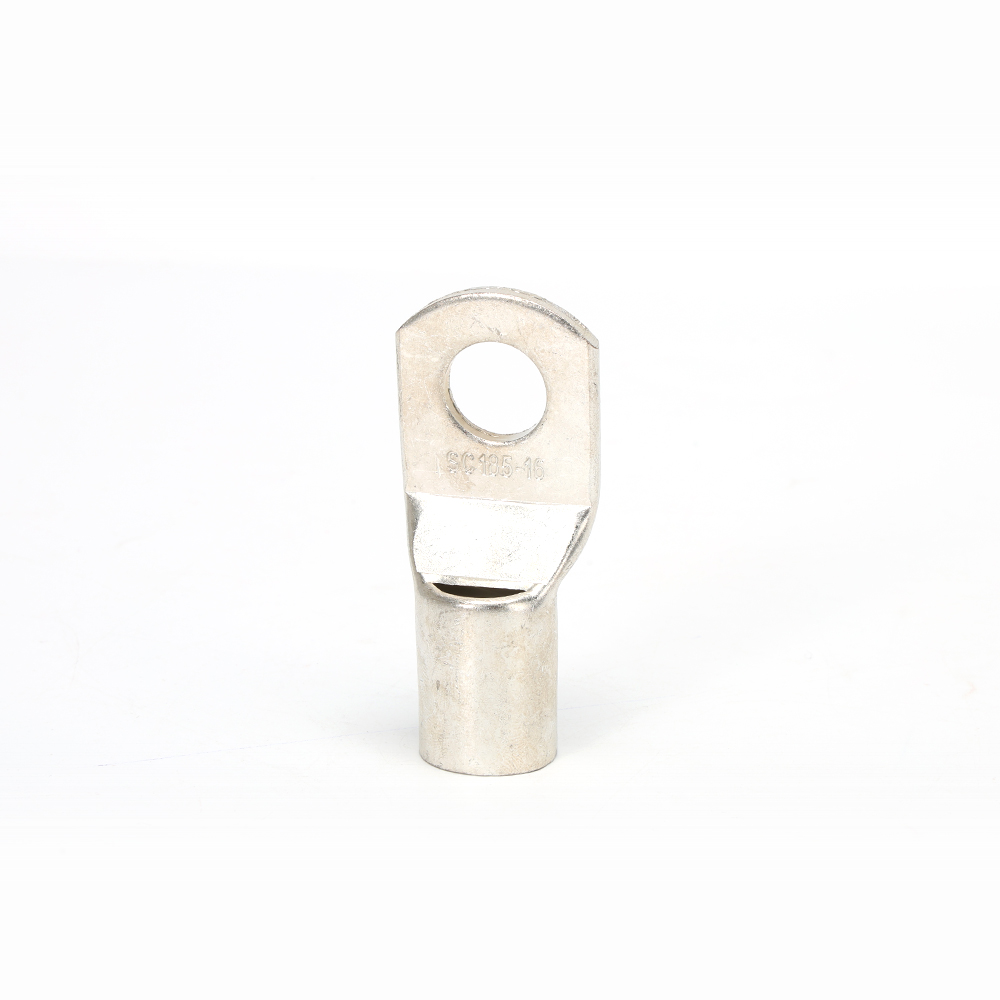
A longer barrel provides a larger crimp area and more secure grip on fine-stranded or flexible conductors. Preferred for high-vibration environments (rail, EV, renewables) and where maximum pull-out strength is required.
5.3 Short Barrel Copper Tube Terminal
A compact barrel for tight spaces and shorter conductor insertions. Common in crowded panels and applications with limited cable dress length, though it offers slightly less crimp surface than the long-barrel version.
5.4 Tinned Copper Tube Terminal
A standard or long-barrel terminal finished with tin plating. The tin layer resists corrosion in humid, coastal, or outdoor installations and improves compatibility with aluminium conductors, reducing the risk of galvanic reaction.
6. What Applications Use Copper Tube Terminals?
Copper tube terminals appear wherever a secure, high-current cable termination is needed:
- Power distribution & switchgear: Panel boards, busbar connections, and distribution blocks.
- Energia renovável: Solar combiner boxes, inverters, and battery energy storage systems.
- Automação industrial: Motor connections, control cabinets, and machinery wiring.
- Transport & EV: Rail, marine, and electric-vehicle battery and charging links.
- Edifício e HVAC: Large-capacity feeder and equipment terminations.
Browse Westlec’s Copper Tube Terminal Range
Explore standard, long-barrel, short-barrel, and tinned copper tube terminals—available for OEM and distributor volumes with full specification support.
7. Copper Tube Terminal Vs Other Cable Terminals
Buyers often confuse copper tube terminals with other crimp connectors. Here is how they compare:
| Tipo de Terminal | Melhor para | Key Limitation |
|---|---|---|
| Terminal de tubo de cobre | High-current, permanent, bolted terminations | Requires crimp tool; not reusable |
| Copper lugs / ring terminals | Secure stud connections, vibration resistance | Must be removed to disconnect (no quick release) |
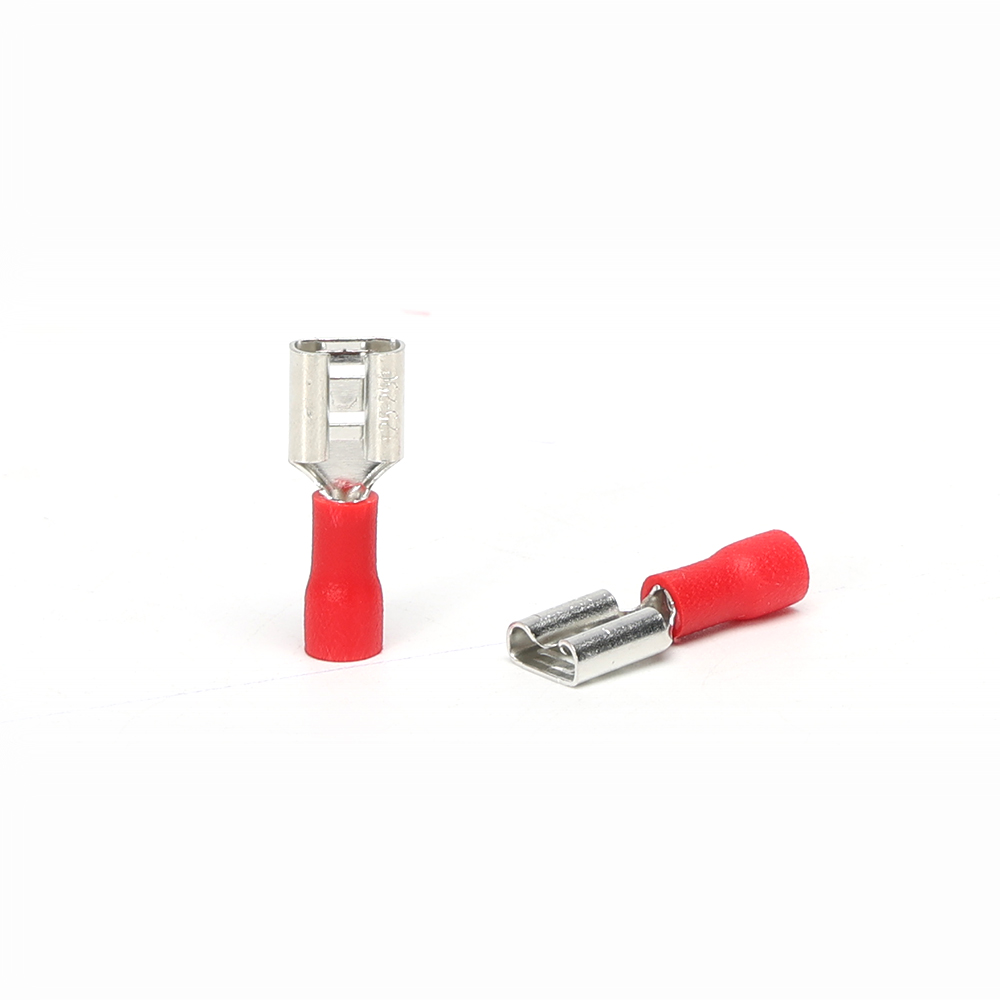
| Spade / fork terminal | Easy connect-disconnect on a stud | Less secure under heavy vibration |
| Butt splice terminal | Joining two wire ends inline | Not a panel/stud termination |
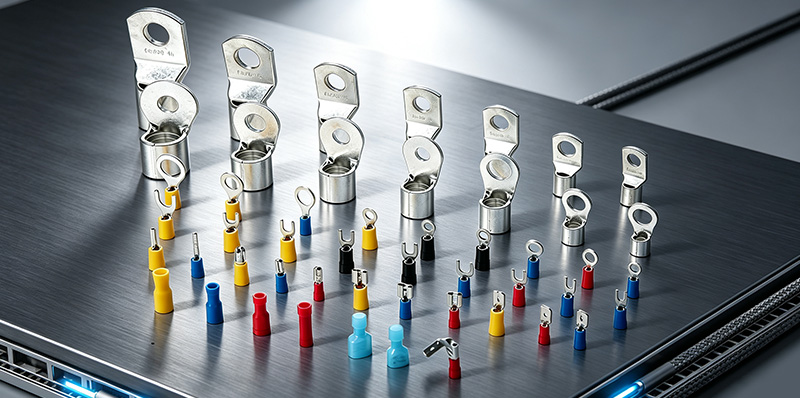
In practice, “copper lugs” and copper tube terminals overlap heavily—a tube terminal é a type of lug. The distinction buyers care about is barrel style and plating, which we covered above.
8. How To Find A Reliable Copper Tube Terminal Manufacturer?
For B2B buyers, supplier selection matters as much as the product. A dependable copper tube terminal manufacturer ou copper tube terminal factory should demonstrate:
- Certifications & testing: RoHS, and documented electrical and mechanical test reports. See our guide on crimp terminal manufacturer certifications.
- Material traceability: Verified copper purity and plating thickness.
- OEM / ODM capability: Custom sizes, plating, packaging, and private-label support.
- Production scale & lead time: Consistent capacity for volume orders and fast delivery.
- Suporte de engenharia: Help with size selection, crimping specs, and application fit.
Westlec operates as a factory-direct electrical accessory supplier, offering copper tube terminals alongside a broad terminal de crimpagem range with OEM/ODM support for global B2B customers.
9. Perguntas frequentes
Can Copper Tube Terminals Be Customized?
Yes. Most factories offer customization of barrel length, hole diameter, plating (bare or tinned), angle (straight or 45°/90°), and packaging. Custom tooling is common for high-volume OEM programs.
How Do I Choose The Right Copper Tube Terminal Size?
Match the terminal to your cable’s cross-sectional area (mm² or AWG) and the stud diameter of the termination point. Use the manufacturer’s size chart and verify with a crimp gauge. For a broader reference, see our terminal sizing guide.
How Do I Choose A Reliable Copper Tube Terminal Factory?
Evaluate certifications, material traceability, production capacity, sample quality, and after-sales support. Request test reports and, where possible, a small trial order before committing to volume.
Does A Copper Tube Terminal Factory Support OEM And ODM Orders?
Most professional factories do. OEM covers branded/private-label production to your spec; ODM includes design and engineering input. Confirm MOQ, lead time, and tooling costs up front.
Are Copper Tube Terminals Suitable For High Current Applications?
Yes. Copper tube terminals are specifically designed for high-current terminations in switchgear, distribution, and energy storage. Select the correct mm²/AWG rating and a long-barrel version for added security under load.
Are Tinned Copper Tube Terminals Better Than Bare Copper Terminals?
Tinning is better for corrosive, humid, or outdoor environments and improves compatibility with aluminium conductors by reducing galvanic corrosion. Bare copper offers slightly higher conductivity and lower cost for dry, indoor use.
What Is The Difference Between Copper Tube Terminals And Copper Lugs?
A copper tube terminal is a type of copper lug. “Lug” is the broader category (any palm-style connector); “tube terminal” specifies the cylindrical crimp barrel design used for permanent, high-current bolted connections.
Why Should I Buy From Professional Copper Tube Terminal Manufacturer?
Professional manufacturers provide consistent quality, certified materials, reliable lead times, engineering support, and OEM/ODM flexibility—reducing field failures, warranty risk, and total procurement cost versus unverified sources.
10. Conclusão
Copper tube terminals are the workhorses of secure, high-current electrical termination. Choosing the right type—standard, long-barrel, short-barrel, or tinned—and the right manufacturing partner ensures safe, long-lasting connections across power, industrial, and renewable applications. For B2B buyers, factory-direct sourcing with certified quality and OEM/ODM support is the most cost-effective path.
Request a Quote for Copper Tube Terminals
Get factory-direct pricing, full specifications, and OEM/ODM options for your copper tube terminal requirements. Our team responds with a customized quote and lead time.
Recursos relacionados
- Quais certificações um fabricante de terminais de crimpagem deve fornecer?
- Guia de tamanho do conector de crimpagem fêmea: compatibilidade com AWG, passo e fio
- Terminal de emenda de topo vs conector de topo: Qual é a diferença?
- Barramento neutro: um componente -chave em sistemas de distribuição elétrica
 PT
PT  EN
EN 