


Selecting the right copper terminal supplier is a decision that directly impacts the safety, reliability, and cost-efficiency of your electrical projects. Whether you are sourcing copper tube terminal lugs for power distribution, ring terminals for control panels, or crimp terminals for automotive harnesses, the supplier you choose determines whether your connections hold — or fail — under real-world conditions.
A substandard copper terminal can cause overheating, voltage drops, and catastrophic connection failures. For B2B buyers managing industrial projects, choosing a trusted copper terminal supplier is not just a procurement task — it is a risk management decision. This guide breaks down the top factors you must evaluate before committing to a supplier, with practical checklists and comparison tables you can use during vendor evaluation.
Why Copper Terminal Quality Matters More Than Price
Copper terminals are the physical bridge between conductors and equipment. They carry the full current load of your system, often in harsh environments with vibration, temperature cycling, and moisture exposure. When a terminal fails, the entire circuit fails — and in industrial settings, that means downtime, equipment damage, and safety hazards.
Many buyers fall into the trap of selecting the cheapest supplier, only to discover that “copper” terminals are actually copper-clad aluminum, that tin plating is uneven or absent, or that crimp dimensions do not match industry-standard dies. The cost difference between a premium copper terminal and a substandard one is measured in cents per unit. The cost of a failure is measured in thousands of dollars per incident.
This is why evaluating a supplier goes far beyond comparing price lists. The factors below will help you assess whether a copper terminal manufacturer can consistently deliver products that meet your technical and commercial requirements.
Factor 1: Copper Material Purity and Compliance
The single most important factor is the purity of the copper used in the terminals. High-quality copper terminals should be manufactured from copper with a minimum purity of 99.9% (typically C11000 or E-Cu57 grade). Lower purity copper — or worse, copper-clad aluminum disguised as pure copper — will have significantly higher electrical resistance, leading to heat buildup and potential fire hazards.
What to verify:
- Request a material test report (MTR) or mill certificate showing copper grade and purity percentage
- Ask whether the supplier uses oxygen-free copper (OFC) for high-performance applications
- Verify compliance with IEC 60947-7-1 (or applicable regional standards) for material specifications
- Confirm that copper tube terminals meet the dimensional tolerances specified in DIN 46235 for cable lugs
Suppliers who cannot or will not provide material certificates are a red flag. A reputable copper tube terminal manufacturer will have this documentation readily available as part of their standard quality assurance process.
Factor 2: Tin Plating Quality and Corrosion Resistance
Most industrial-grade copper terminals are tin-plated to prevent oxidation and improve corrosion resistance. The quality of this plating is critical. Poorly plated terminals will oxidize at the contact surface, increasing resistance and creating failure points. In marine, outdoor, or chemically aggressive environments, inadequate plating can lead to terminal failure within months of installation.
Plating specifications to check:
- Plating thickness: Industry standard is 3–6 microns for general industrial use; 8–12 microns for harsh environments
- Plating uniformity: Request cross-section photos or salt spray test results (should pass 96 hours minimum per ASTM B117)
- Plating type: Confirm whether it is bright tin or matte tin — matte tin is preferred for applications requiring solderability after long storage
- Undercoat: Some premium terminals use a nickel undercoat between copper and tin for additional corrosion protection
| Plating Specification | General Industrial | Harsh Environment | Marine / Outdoor |
|---|---|---|---|
| Tin Thickness | 3–6 microns | 6–8 microns | 8–12 microns |
| Salt Spray Test | 48 hours | 96 hours | 240+ hours |
| Nickel Undercoat | Optional | Recommended | Required |
| Plating Type | Bright or Matte | Matte preferred | Matte required |
If your projects involve outdoor installations, marine environments, or chemical plants, do not compromise on plating specifications. Request salt spray test certificates before placing a bulk order.
Factor 3: Manufacturing Standards and Certifications
Certifications are the baseline proof that a supplier’s manufacturing processes meet internationally recognized quality standards. For copper terminals, the most relevant certifications include:
- ISO 9001:2015 — Quality management system. This is the minimum certification any credible supplier should hold.
- UL Listing (UL 486A-486B) — For wire connectors and soldering lugs sold in North American markets. UL-listed copper terminals have passed rigorous pull-out, temperature cycling, and current-cycle tests.
- CE Marking — Required for products sold in the European Economic Area, confirming compliance with EU safety directives.
- RoHS / REACH — Environmental compliance, critical if your products will be sold in the EU or to environmentally conscious clients.
- IATF 16949 — Automotive quality management standard. Essential if you supply terminals for automotive or EV applications.
| Certification | Scope | Why It Matters for Copper Terminals |
|---|---|---|
| ISO 9001:2015 | Quality Management | Ensures consistent production processes and traceability |
| UL 486A-486B | Wire Connectors | Validates mechanical and electrical performance for North America |
| CE Marking | EU Safety | Mandatory for EU market access |
| RoHS / REACH | Environmental | Restricts hazardous substances in plating and materials |
| IATF 16949 | Automotive QMS | Required for automotive/EV harness suppliers |
Verification Tip: Do not just take a supplier’s word for their certifications. Ask for certificate numbers and verify them directly on the issuing body’s website. UL certificates can be verified through the UL Product iQ database, and ISO certificates through the certifying body’s online registry. Expired or unverifiable certifications are a common red flag.
Factor 4: Product Range and Customization Capability
A supplier’s product range tells you whether they can be a single-source partner or just a niche vendor. When evaluating copper terminal suppliers, look at both their standard catalog depth and their customization capabilities.
Standard product range to expect from a comprehensive supplier:
- Copper tube terminals / cable lugs (various cable cross-sections from 1.5mm² to 400mm²+)
- Ring terminals (insulated and non-insulated)
- Fork/spade terminals (insulated and non-insulated)
- Butt splice terminals (insulated, heat shrink, and waterproof variants)
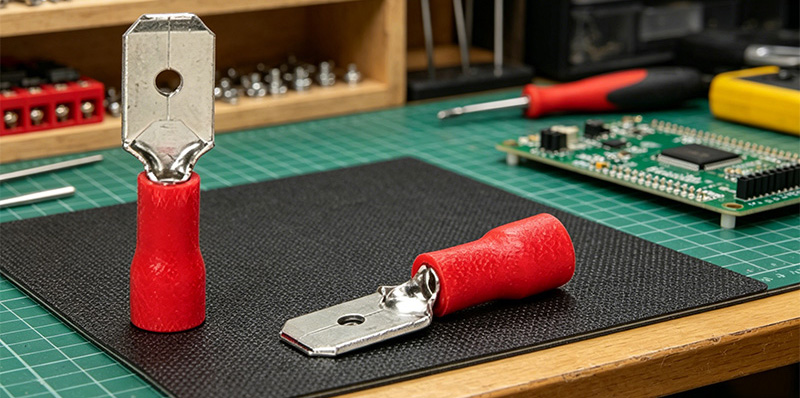
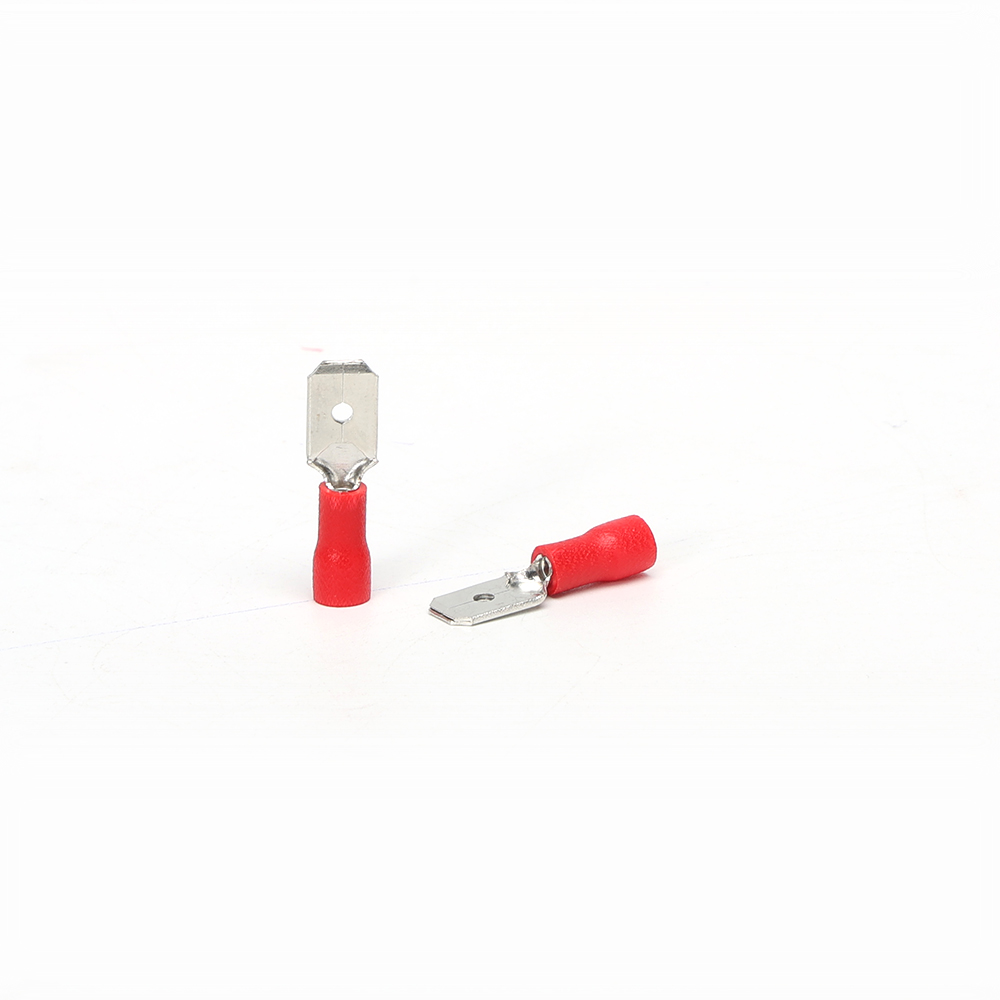
- Pin terminals and disconnect terminals
- Specialty terminals for specific applications (solar, railway, marine)
Beyond the standard catalog, customization capability is what separates a manufacturer from a trading company. Can the supplier produce custom dimensions for non-standard cable sizes? Can they apply specific plating thicknesses for your environment? Can they provide custom markings or packaging? A true manufacturer will have the tooling and engineering capability to accommodate these requests.
| Customization Type | Manufacturer | Trading Company |
|---|---|---|
| Custom cable cross-sections | Yes — in-house tooling | Limited — depends on factory partner |
| Custom plating specifications | Yes — controls plating process | No — must relay requests |
| Custom packaging / branding | Yes | Sometimes |
| New product development | Yes — engineering team | No |
| Lead time for custom orders | 7–15 days | 20–35 days |
Factor 5: Quality Control Processes
Quality control is where many suppliers cut corners, and it is the factor most difficult to assess from a distance. A supplier may use high-quality copper and have the right certifications, but without rigorous QC processes, you will still see batch-to-batch inconsistency.
Key QC processes to ask about:
- Incoming material inspection: Does the supplier test copper purity on receipt, or do they rely on supplier certificates?
- In-process inspection: Are dimensional checks performed during production, not just on finished goods?
- Final inspection (FQC): What is the AQL (Acceptable Quality Limit) level? For copper terminals, AQL 1.0 or better is standard.
- Crimp pull-out testing: Does the supplier perform mechanical pull tests on sampled terminals from every batch?
- Conductivity testing: Is electrical resistance tested on finished products?
- Plating thickness verification: Is plating thickness measured using X-ray fluorescence (XRF) or equivalent methods?
Request a copy of the supplier’s QC inspection report for a recent production batch. A supplier with robust quality control will have detailed records including test results, AQL levels, and defect rates. If the report is a generic template with no specific data, that is a warning sign.
Copper Terminal Supplier QC Checklist — Print This:
☐ Material test report (copper purity ≥ 99.9%)
☐ Plating thickness certificate (XRF verified)
☐ Salt spray test report (96 hours minimum)
☐ Dimensional inspection report (per DIN 46235 or applicable standard)
☐ Crimp pull-out test results (per batch)
☐ Conductivity / resistance test results
☐ AQL inspection report (AQL 1.0 or better)
☐ RoHS / REACH compliance declaration
☐ ISO 9001 certificate (valid and verifiable)
Factor 6: Production Capacity and Lead Time Reliability
For B2B buyers, a supplier’s production capacity and lead time reliability are make-or-break factors. A supplier who cannot scale to meet your growing demand — or who consistently misses delivery deadlines — will disrupt your entire supply chain.
Capacity questions to ask:
- What is your monthly production capacity for copper tube terminals?
- What is your current capacity utilization rate? (If above 85%, lead times may stretch during peak periods)
- What is your standard lead time for repeat orders vs. new/custom orders?
- Do you maintain safety stock for standard items?
- What is your on-time delivery rate over the past 12 months? (Ask for data, not estimates)
| Order Type | Standard Lead Time | Express Available? | Typical MOQ |
|---|---|---|---|
| Standard catalog items (in stock) | 3–7 days | Yes | 1,000 pcs |
| Standard catalog items (production run) | 7–15 days | Yes (surcharge) | 5,000 pcs |
| Custom dimensions / plating | 15–25 days | Limited | 10,000 pcs |
| New product development | 30–45 days | No | Per agreement |
Always ask for references from existing B2B customers who can confirm the supplier’s actual on-time delivery performance. A supplier’s stated lead time means nothing if their historical on-time delivery rate is below 90%.
Factor 7: Technical Support and Engineering Expertise
Copper terminal selection involves more than picking a part number. Cross-section matching, crimp tool compatibility, environmental suitability, and installation standards all require technical knowledge. A supplier with strong technical support can help you avoid costly specification errors and provide value beyond the product itself.
Indicators of strong technical support:
- Dedicated technical sales engineers (not just order-takers)
- Ability to recommend terminal types based on your application parameters
- Crimp tool and die recommendations compatible with their terminals
- Willingness to provide samples for prototyping and testing
- Technical documentation including installation guides and torque specifications
- Response to technical inquiries within 24 hours
Test a supplier’s technical capability early in the evaluation process. Send a detailed technical inquiry — for example, ask which terminal is appropriate for a 95mm² stranded copper conductor in a high-vibration environment at 85°C ambient. A knowledgeable supplier will recommend a specific product, explain the reasoning, and suggest a compatible crimp die. A supplier who responds with a catalog link and “you can choose” is not providing technical support.
Factor 8: Pricing Transparency and Total Cost of Ownership
Price is always a factor, but the cheapest unit price rarely translates to the lowest total cost. When comparing copper terminal suppliers, look at the total cost of ownership (TCO), which includes:
- Unit price — but only after confirming material and plating specifications are equivalent
- Tooling / setup costs — for custom or non-standard items
- Quality-related costs — inspection rejects, field failures, warranty claims
- Logistics costs — including packaging, freight, and customs duties
- Communication overhead — time spent resolving quality issues or chasing deliveries
| Cost Factor | Low-Price Supplier | Quality Supplier |
|---|---|---|
| Unit Price (SC 185 lug) | $0.32 | $0.48 |
| Inspection Reject Rate | 3–5% | <0.5% |
| Field Failure Rate | 0.8–1.2% | <0.1% |
| Effective Cost per Good Unit | $0.34–$0.36 | $0.48–$0.49 |
| Cost of Field Failures (per 10,000 pcs) | $2,400–$3,600 | $200–$300 |
| Total Cost of Ownership | Higher | Lower |
As the table demonstrates, the “cheaper” supplier often costs more when quality-related expenses are factored in. For B2B buyers managing industrial projects, field failures are exponentially more expensive than the unit price difference — a single failed connection in a power distribution panel can cost thousands in downtime and repair labor.
Request a Copper Terminal Sample Package
Factor 9: Export Experience and Global Compliance
If you are sourcing copper terminals internationally — particularly from China, which is the world’s largest manufacturer of electrical terminals — your supplier’s export experience directly affects the smoothness of your procurement process. An experienced exporter will handle documentation, packaging, and logistics professionally, reducing delays and customs issues.
Export experience indicators:
- Minimum 5 years of export experience to your target market region
- Familiarity with destination country import regulations and documentation requirements
- Experience with your preferred Incoterms (FOB, CIF, DDP, etc.)
- Proper export packaging (vacuum-sealed, corrosion-inhibited, palletized for sea freight)
- References from customers in your country or region
- Multilingual sales support (at minimum, fluent English communication)
For more comprehensive guidance on sourcing electrical components from China, see our detailed China supplier selection guide, which covers verification processes and trust-building strategies applicable to all electrical terminal categories.
Factor 10: Reputation and Industry References
A supplier’s reputation is built over years of consistent delivery — or destroyed by a few high-profile failures. While reputation is intangible, there are concrete ways to assess it:
- Customer references: Ask for contact information for 2–3 existing B2B customers in your industry. A supplier with strong relationships will readily provide references.
- Industry exhibition presence: Does the supplier exhibit at major trade shows like Hannover Messe, Canton Fair, or Electronica? Regular exhibition presence indicates financial stability and industry commitment.
- Online reviews and mentions: Search for the supplier’s name on industry forums, B2B platforms, and LinkedIn. Look for patterns in feedback — both positive and negative.
- Business registration verification: For Chinese suppliers, verify the business license through the National Enterprise Credit Information Publicity System. Check registration date, registered capital, and business scope.
- Partnership longevity: How long have the supplier’s key customers been with them? Long-term customer relationships (3+ years) are the strongest indicator of supplier reliability.
Red Flags — Avoid Suppliers Who:
✗ Cannot provide material test reports or plating certificates
✗ Offer prices 30%+ below market average without explanation
✗ Cannot verify their manufacturing address or refuse factory audits
✗ Have no verifiable certifications or expired certificates
✗ Cannot provide customer references
✗ Refuse to provide samples for testing
✗ Have poor or inconsistent communication (response times >48 hours)
✗ Pressure you to place large orders before sample evaluation
Copper Terminal Type Comparison: Matching Products to Applications
Different copper terminal types serve different applications, and a quality supplier should offer expert guidance on which type is appropriate for your use case. Understanding the basics yourself helps you evaluate whether a supplier’s recommendations are sound.
| Terminal Type | Best Application | Current Range | Key Selection Criteria |
|---|---|---|---|
| Copper Tube Terminal (Cable Lug) | Power distribution, switchgear, high-current connections | 16A–630A | Cable cross-section match, stud size, barrel length |
| Ring Terminal (Insulated) | Control panels, automotive, equipment grounding | 6A–150A | Insulation color code (AWG), stud size, barrel type |
| Ring Terminal (Non-Insulated) | High-temperature environments, industrial equipment | 10A–200A | Material thickness, plating, stud clearance |
| Butt Splice Terminal | Wire-to-wire splicing, harness repair | 6A–100A | Insulation type, wire range compatibility, crimp profile |
| Fork Terminal (Spade) | Quick-disconnect applications, terminal blocks | 6A–60A | Fork width, insulation type, wire size |
For more information on common issues with butt splice terminals — including crimping problems and overheating — see our guide on common butt splice terminal problems and solutions.
How To Evaluate a Copper Terminal Supplier: Step-by-Step Process
Now that you understand the key factors, here is a practical step-by-step process for evaluating and selecting a copper terminal supplier:
Step 1: Define Your Technical Requirements
Before contacting any supplier, document your exact requirements: terminal types, cable cross-sections, current ratings, environmental conditions, applicable standards, and certifications needed. This specification document becomes your baseline for supplier evaluation and prevents you from being swayed by a supplier’s generic product pitches.
Step 2: Shortlist 3–5 Suppliers
Identify potential suppliers through industry exhibitions, B2B platforms, professional referrals, and search engines. Evaluate each against the 10 factors above and create a shortlist of 3–5 candidates who meet your baseline requirements.
Step 3: Request Documentation and Samples
Send each shortlisted supplier your specification document and request: (1) material test reports, (2) plating certificates, (3) salt spray test results, (4) certification copies, and (5) product samples. This step simultaneously evaluates their product quality and their responsiveness to technical requests.
Step 4: Conduct Independent Testing
Do not rely solely on supplier-provided documentation. Send samples to an independent testing laboratory for verification of copper purity (using spectrometry), plating thickness (XRF), dimensional accuracy, and pull-out strength. The cost of independent testing is trivial compared to the cost of a bad supplier decision.
Step 5: Place a Trial Order
Once testing confirms sample quality, place a small trial order (typically 20–30% of your anticipated regular order volume). Use this order to evaluate the supplier’s production consistency, lead time accuracy, packaging quality, and communication throughout the process.
Step 6: Conduct a Factory Audit (If Feasible)
For strategic supplier relationships, conduct an on-site factory audit or commission a third-party inspection service. The audit should verify manufacturing equipment, QC processes, production capacity, and working conditions. If an on-site visit is not feasible, request a video factory tour or hire a local inspection agency.
Step 7: Establish Long-Term Partnership Terms
After successful trial order and audit, negotiate long-term partnership terms including volume pricing, safety stock agreements, quality guarantees, and communication protocols. A good supplier partnership is an ongoing relationship, not a one-time transaction.
Get a Custom Copper Terminal Quote
How WESTLEC Meets the Copper Terminal Supplier Standard
WESTLEC manufactures a comprehensive range of copper terminals including copper tube terminals (SC series), ring terminals, fork terminals, and insulated crimp terminals. Our production follows strict quality control protocols at every stage — from incoming copper material inspection through final AQL sampling — ensuring consistent performance across every production batch.
Our copper tube terminals are engineered to meet DIN 46235 dimensional standards, with tin plating thicknesses tailored to application requirements. The SC series covers cable cross-sections from 2.5mm² to 240mm², serving applications from control panels to heavy-duty power distribution.
We hold ISO 9001 certification and provide full material documentation with every order. Our engineering team supports customers with terminal selection, crimp tool recommendations, and custom specification development. With years of export experience to Europe, North America, Southeast Asia, and the Middle East, we understand the documentation, packaging, and compliance requirements of international B2B procurement.
Discuss Your Copper Terminal Requirements with WESTLEC
Frequently Asked Questions
1. What purity of copper should I look for in copper terminals?
High-quality copper terminals should be manufactured from copper with a minimum purity of 99.9%, typically C11000 grade (or E-Cu57 in European standards). This purity level ensures optimal electrical conductivity and mechanical performance. Always request a material test report (MTR) from the supplier to verify copper grade. Some high-performance applications may require oxygen-free copper (OFC) for enhanced conductivity and reduced oxidation. Be cautious of suppliers who cannot provide material certificates, as this may indicate the use of copper-clad aluminum or recycled copper with inconsistent purity levels.
2. How can I tell if a copper terminal supplier is a manufacturer or a trading company?
Key indicators of a manufacturer include: in-house tooling and customization capabilities, ability to produce non-standard dimensions, direct control over plating processes, shorter lead times for custom orders (7–15 days vs. 20–35 days for trading companies), and willingness to accommodate factory audits. Trading companies typically have generic product catalogs, cannot modify product specifications, and relay all technical questions to an undisclosed factory. For B2B buyers, working directly with a manufacturer typically results in better pricing, faster communication, and greater flexibility for custom requirements.
3. What certifications should a copper terminal supplier have?
At minimum, a credible copper terminal supplier should hold ISO 9001:2015 certification for quality management. For specific markets, look for UL 486A-486B listing (North America), CE marking (European Union), and RoHS/REACH compliance (environmental). For automotive applications, IATF 16949 is essential. Always verify certifications by checking certificate numbers on the issuing body’s official database — expired or forged certificates are common issues in the industry. Request current, valid certificates and cross-reference them before placing orders.
4. What is the difference between copper tube terminals and ring terminals?
Copper tube terminals (also called cable lugs) are designed for high-current applications, typically ranging from 16A to 630A, and are used in power distribution, switchgear, and heavy equipment connections. They feature a tubular barrel that is crimped onto the conductor and a palm/flat section that bolts to a busbar or equipment stud. Ring terminals are smaller, designed for lower-current applications (6A–150A), and feature a pre-formed ring that slides over a stud. Ring terminals can be insulated (vinyl or nylon) or non-insulated, and are commonly used in control panels, automotive wiring, and equipment grounding.
5. Why is tin plating important for copper terminals?
Tin plating serves two critical functions: it prevents copper oxidation at the contact surface, and it improves corrosion resistance in harsh environments. Untinned copper terminals oxidize rapidly when exposed to air, forming copper oxide which is a poor conductor and increases contact resistance. This leads to heat buildup, voltage drops, and potential failure. Tin plating thickness should be 3–6 microns for general industrial use and 8–12 microns for marine or outdoor applications. Request salt spray test results (ASTM B117) to verify plating durability before committing to a supplier.
6. What is AQL and why does it matter for copper terminal suppliers?
AQL (Acceptable Quality Limit) is a statistical sampling standard used in quality control to determine the maximum number of defective units acceptable in a production batch. For copper terminals, AQL 1.0 is the industry standard, meaning no more than 1% of units in a sampled batch may have defects. A supplier using AQL 2.5 or higher (allowing 2.5% defects) is operating at a lower quality threshold. Ask your supplier for their AQL level and request recent QC inspection reports showing actual defect rates. Suppliers who cannot provide AQL data or who use loose AQL levels may deliver inconsistent quality.
7. How do I verify a Chinese copper terminal supplier’s legitimacy?
Verify the supplier’s business license through the National Enterprise Credit Information Publicity System (国家企业信用信息公示系统). Check the registration date, registered capital, and business scope — a legitimate manufacturer will have “manufacturing” in their business scope, while a trading company will list “wholesale” or “retail.” Request a factory video tour or hire a third-party inspection agency (such as SGS, TÜV, or Intertek) to conduct a factory audit. Cross-reference the factory address on the business license with the address provided in communications. For comprehensive supplier verification guidance, refer to our China supplier selection guide.
8. What MOQ (Minimum Order Quantity) should I expect for copper terminals?
MOQ varies by supplier and product type. For standard catalog items, typical MOQ ranges from 1,000 to 5,000 pieces per part number. For custom or non-standard items, MOQ is usually 10,000 pieces or more due to tooling setup costs. Some suppliers offer lower MOQ for initial trial orders to facilitate evaluation. If your project volumes are below standard MOQ, discuss options such as safety stock agreements, combined orders across multiple part numbers, or working with a supplier who maintains standard items in stock for smaller quantity orders.
9. What testing should I perform on copper terminal samples before bulk ordering?
Independent testing of samples is strongly recommended before placing bulk orders. Key tests include: (1) copper purity verification using spectrometry or XRF analysis, (2) plating thickness measurement using XRF, (3) dimensional inspection per DIN 46235 or applicable standards, (4) crimp pull-out testing per IEC 61238-1, (5) electrical resistance measurement, and (6) salt spray testing per ASTM B117 for corrosion resistance. The cost of independent testing ($200–$500 per part number) is negligible compared to the cost of a supplier quality problem discovered after bulk delivery.
10. Can copper terminals be used in high-temperature applications?
Standard tin-plated copper terminals are rated for continuous operating temperatures up to 105°C. For higher temperature applications (up to 150°C or 200°C), use non-insulated copper terminals with nickel plating instead of tin plating, paired with high-temperature insulation materials such as silicone or ceramic fiber sleeves. In extreme temperature environments above 200°C, specialized high-temperature alloys may be required. Always confirm the supplier’s temperature rating for specific terminal models and request thermal cycling test data if your application involves significant temperature fluctuations. A knowledgeable supplier should be able to recommend appropriate products for your thermal requirements.
Conclusion
Selecting a reliable copper terminal supplier requires systematic evaluation across material quality, manufacturing standards, QC processes, capacity, technical support, pricing transparency, export experience, and reputation. By following the 10-factor framework and the step-by-step evaluation process outlined in this guide, you can make an informed decision that balances cost, quality, and risk — rather than defaulting to the lowest price.
Remember that the cheapest copper terminal is rarely the most economical choice when total cost of ownership is considered. Field failures, inspection rejects, and supply chain disruptions cost far more than the marginal price difference between a quality supplier and a cut-rate vendor. Invest the time to evaluate suppliers properly, and you will build a procurement relationship that delivers consistent quality and value over the long term.
WESTLEC is committed to meeting every factor on this checklist — from material purity and plating quality through to export experience and technical support. If you are evaluating copper terminal suppliers for your next project, we welcome your evaluation.
Contact WESTLEC for a Free Consultation
Related Resources
Existing Blog Posts on WESTLEC:
- DIN Rail Terminal Block Manufacturer Guide: China Supplier Selection — Comprehensive guide to verifying and selecting Chinese electrical component suppliers, applicable to copper terminal sourcing.
- Common Butt Splice Terminal Problems and Solutions — Troubleshooting guide for crimp terminal issues, including crimping defects and overheating causes.
- Signs That a Quick Connect Terminal Block Needs Replacement — How to identify terminal failure signs early, relevant to copper terminal failure prevention.
- Spring Cage Terminal Block Price Guide: Factors That Affect Cost — Understanding pricing factors in electrical terminal procurement.
- Screw Connection Terminal Block Applications in Industrial Control Systems — Application context for terminal selection in industrial environments.
 EN
EN  PT
PT 