

In modern electrical control systems, terminal blocks play a critical role in ensuring safe, stable, and efficient wire connections. Among the most widely used types are screw terminal blocks and push-in terminal blocks.
With increasing demand for faster wiring, higher reliability, and reduced maintenance costs, engineers and panel builders are shifting toward push-in terminal block technology. However, screw-type solutions still dominate in many traditional installations.
This article provides a complete technical comparison between screw vs push-in terminal blocks, helping engineers, procurement managers, and electrical designers choose the right solution for industrial applications.
What Is a Push-In Terminal Block?
A Push In Terminal Block is a type of electrical connector that allows solid or ferruled stranded wires to be inserted directly into the terminal without tools.
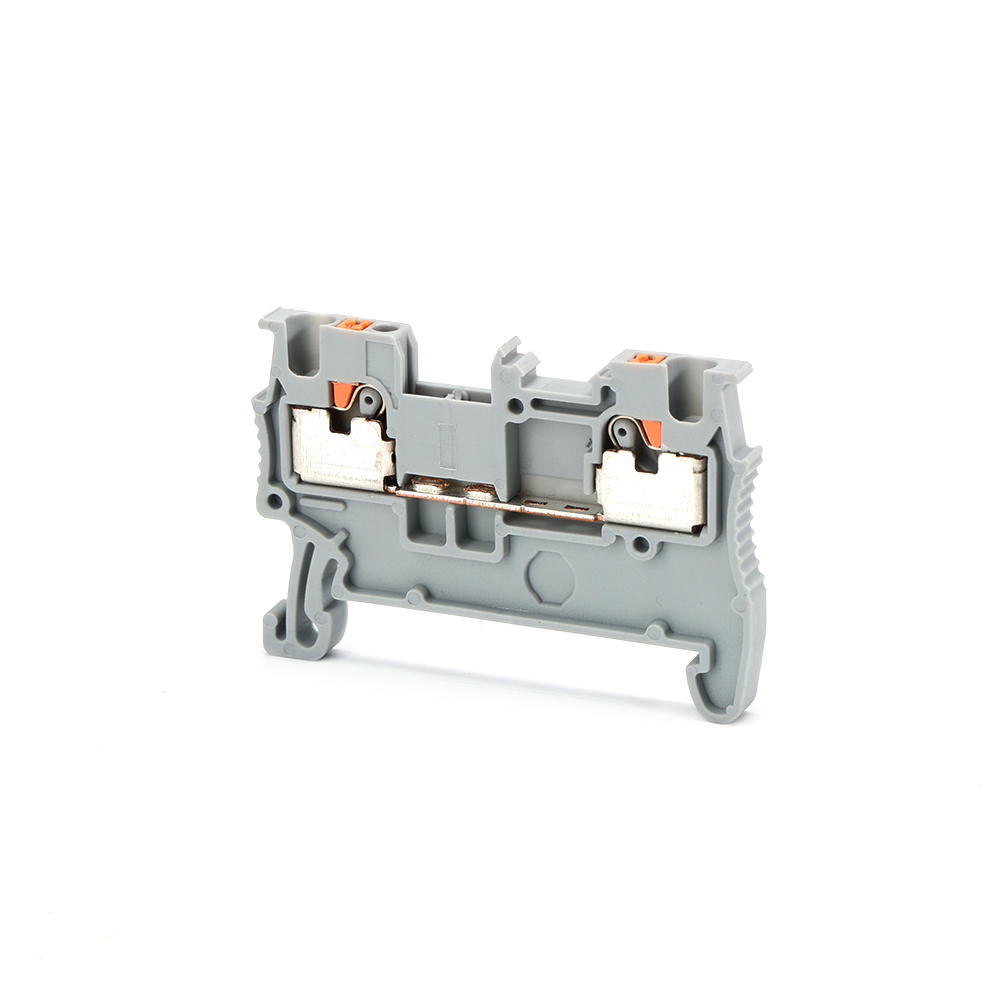
The internal spring mechanism automatically clamps the conductor, creating a secure and vibration-resistant connection.
Key Features of Push In Terminal Blocks
● Tool-free wiring installation
● Spring-force connection technology
● Compatible with DIN rail systems
● High vibration resistance
● Fast wiring speed
● Maintenance-free operation
Push-in technology is widely used in automation systems, PLC control panels, machinery wiring, and industrial electrical distribution systems.
What Is a Screw Terminal Block?
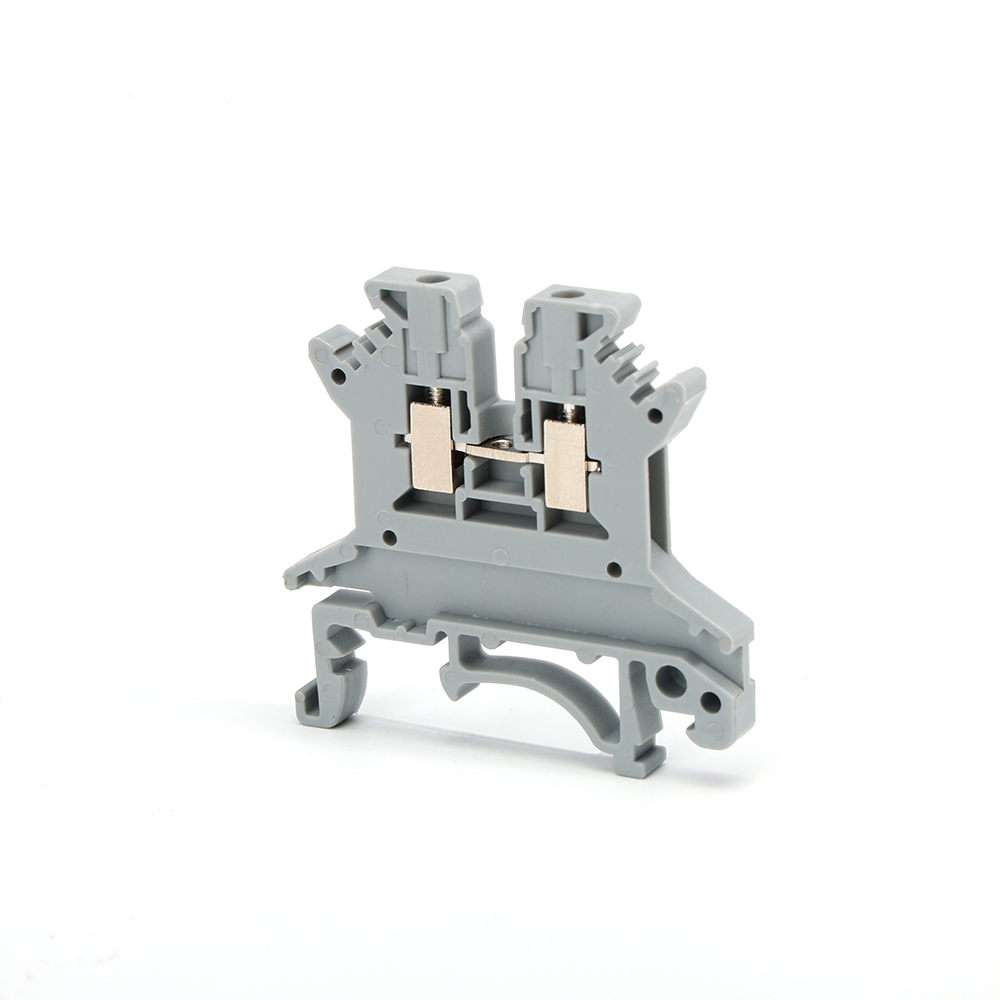
A screw terminal block uses a mechanical screw to clamp and secure the wire conductor.
The wire is inserted into the terminal, and a screwdriver is used to tighten the screw, creating pressure between the metal contact and the conductor.
Key Features of Screw Terminal Blocks
● Traditional and widely used design
● High mechanical clamping force
● Compatible with many wire types
● Low cost and easy availability
● Suitable for heavy-duty applications
Screw terminals have been the industry standard for decades in electrical installations.
Screw VS Push-In Terminal Block: Key Differences
Understanding the differences is essential for selecting the right solution for industrial wiring systems.
1. Wiring Method
Screw Terminal Block
Requires:
● Insert wire
● Tighten screw using tool
Push In Terminal Block
Requires:
● Strip wire
● Insert directly
👉 Push-in systems eliminate tools and reduce installation steps.
2. Installation Speed
● Screw terminal: slower, depends on torque tightening
● Push-in terminal: up to 50% faster wiring time
In large control panels with hundreds of connections, push-in systems significantly reduce labor time.
3. Connection Reliability
Screw Type
● Risk of loosening due to vibration
● Requires periodic maintenance
● Torque-dependent consistency
Push-In Type
● Constant spring force
● Vibration-resistant
● Stable long-term connection
👉 Push-in terminal blocks perform better in high-vibration environments like industrial machines and transportation systems.
4. Maintenance Requirements
● Screw terminal blocks: require re-tightening checks
● Push-in terminal blocks: maintenance-free design
This makes push-in systems more suitable for modern automation industries where downtime must be minimized.
5. Space Efficiency
Push-in terminal blocks are generally:
● More compact
● Designed for high-density wiring
● Easier for modular panel design
Screw terminals require more space due to screwdriver access requirements.
6. Wiring Safety
Screw Terminal Risks:
● Over-tightening damages wire
● Under-tightening causes heat buildup
● Human error in torque control
Push-In Advantages:
● Consistent clamping force
● Reduced installation errors
● Safer long-term operation
7. Cost Comparison
| Factor | Screw Terminal | Push-In Terminal |
|---|---|---|
| Initial cost | Lower | Slightly higher |
| Installation cost | Higher (labor) | Lower |
| Maintenance cost | Higher | Minimal |
👉 While screw terminals are cheaper initially, push-in systems reduce total lifecycle cost.
Advantages of Push-In Terminal Blocks
Push-in technology is becoming the preferred solution in modern electrical engineering.
1. Faster Industrial Wiring
Push-in terminals reduce wiring time significantly, especially in mass production control panels.
2. Tool-Free Installation
No screwdriver required → reduces labor complexity.
3. High Vibration Resistance
Spring clamp technology ensures stable contact in harsh environments.
4. Reduced Human Error
No torque dependency → consistent connection quality.
5. Maintenance-Free Operation
Once installed, no periodic tightening is required.
6. Ideal for Automation Systems
Widely used in:
● PLC systems
● Factory automation
● Robotics
● Energy distribution panels
Disadvantages of Push-In Terminal Blocks
Despite advantages, push-in technology has some limitations:
● Slightly higher unit cost
● Requires proper wire stripping length
● Not ideal for all conductor types (depending on design)
● Requires standard-compliant ferrules for stranded wires
Advantages of Screw Terminal Blocks
Screw terminal blocks remain widely used due to their strengths:
1. Universal Compatibility
Works with a wide range of wire types and sizes.
2. Lower Initial Cost
Ideal for budget-sensitive installations.
3. High Clamping Force
Suitable for heavy-duty electrical connections.
4. Easy Replacement
Simple mechanical structure makes maintenance straightforward.
Disadvantages of Screw Terminal Blocks
However, screw-type systems face limitations in modern applications:
● Time-consuming installation
● Risk of loosening under vibration
● Requires periodic maintenance
● Operator-dependent quality
● Higher labor cost in large projects
Screw vs Push-In Terminal Block in Industrial Applications
1. Control Cabinets
Push-in terminals are preferred due to:
● High-density wiring
● Fast assembly
● Reduced maintenance
2. Industrial Automation
Push-in systems dominate because of:
● Vibration resistance
● Reliability
● Modular design compatibility
3. Power Distribution Systems
Screw terminals are still used for:
● Heavy current connections
● Traditional installations
4. Machinery Manufacturing
Push-in technology is increasingly adopted for:
● Faster production cycles
● Reduced assembly errors
Which Is Better: Screw or Push-In Terminal Blocks?
The answer depends on application requirements.
Choose Screw Terminal Blocks if:
● Budget is limited
● Application is low vibration
● Wiring changes are frequent
● Heavy conductor applications are required
Choose Push-In Terminal Blocks if:
● Speed and efficiency are critical
● High reliability is required
● Industrial automation systems are used
● Maintenance reduction is important
👉 In modern industrial design, push-in terminal blocks are increasingly becoming the standard choice.
Future Trend: Why Push-In Terminal Blocks Are Replacing Screw Types
The electrical industry is moving toward:
● Automation
● Modular panel design
● Smart manufacturing
Push-in technology aligns with these trends because it offers:
● Faster installation
● Lower lifecycle cost
● Higher reliability
● Reduced human dependency
Many global electrical manufacturers are gradually shifting their product lines toward push-in systems.
FAQ
1. What is a push in terminal block used for?
It is used for fast, tool-free electrical wire connections in control systems and industrial panels.
2. Are push-in terminal blocks reliable?
Yes, they provide stable spring-force connections with high vibration resistance.
3. What is the main advantage of screw terminal blocks?
Lower cost and compatibility with various wire types.
4. Can push-in terminal blocks handle stranded wire?
Yes, but ferrules are usually recommended for best performance.
5. Why are push-in terminal blocks faster?
Because they eliminate screw tightening and tool usage.
6. Which is safer: screw or push-in terminal blocks?
Push-in terminals generally reduce human error and improve safety consistency.
7. Do push-in terminal blocks need maintenance?
No, they are designed as maintenance-free components.
Conclusion
The comparison between screw vs push-in terminal blocks clearly shows a shift in the electrical industry toward faster, safer, and more efficient wiring systems.
While screw terminal blocks still hold value in traditional and heavy-duty applications, push-in terminal blocks dominate modern industrial automation due to their speed, reliability, and maintenance-free design.
For engineers and system designers, selecting the right terminal block is no longer just about cost—it is about long-term performance, installation efficiency, and system reliability.

 EN
EN  PT
PT