

A dependable wire termination is the foundation of every safe electrical installation. For control cabinets, power distribution boards, and machine interfaces, the screw connection terminal block remains the workhorse of industrial wiring. In this guide we break down the real-world advantages of screw terminals, explain how to choose the right one for your project, and show why sourcing from a proven manufacturer matters for B2B buyers.
In this article you will learn:
- Why screw terminals still outperform alternatives in high-vibration and high-current environments
- How wire-size flexibility reduces your spare-parts inventory
- The four factors to check before you specify a terminal block
- What separates a reliable electrical screw terminal block supplier from a risky one
2. Advantages Of Screw Connection Terminal Blocks
2.1 High Mechanical Strength And Reliable Wire Connection
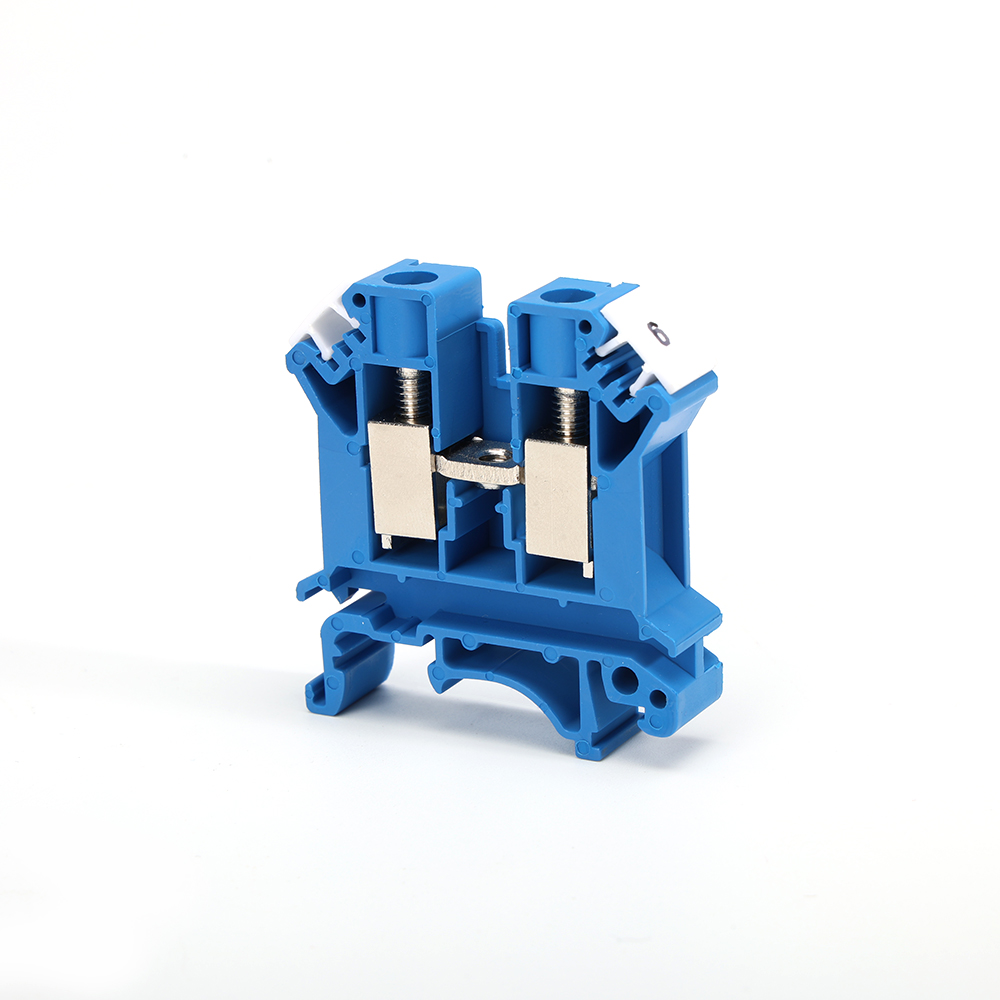
A screw terminal clamps the conductor with direct mechanical force. Tightening the screw drives a metal pressure plate or cage onto the stripped wire, creating a gas-tight, low-resistance contact that resists loosening from vibration, thermal cycling, and repeated load changes. In factories, on moving machinery, and inside switchgear that sees constant temperature swings, that mechanical certainty is why engineers keep specifying the wire screw terminal block over tool-free alternatives. When the screw is torqued to the manufacturer’s specification, the connection stays put for the life of the installation.
2.2 Wide Compatibility With Different Wire Sizes
One screw terminal family typically accepts a broad range of conductor cross-sections—solid, stranded, and flexible wires, with or without ferrules. A single series can often cover everything from 0.2 mm² signal wires up to 35 mm² power conductors by swapping only the rated insert. For B2B buyers, that means fewer part numbers to stock, simpler procurement, and faster panel builds. A well-designed electrical screw terminal block also guides the wire cleanly into the clamp, reducing installation errors on the line.
2.3 Easy Maintenance And Inspection
Screw terminals are transparent to service technicians. You can visually confirm torque, re-tighten a single point without disturbing neighbours, and replace one block on the DIN rail without rewiring the whole row. There is no special release tool to lose and no spring to fatigue unexpectedly. For maintenance teams responsible for uptime, that serviceability is a major advantage—especially when a panel must be brought back online quickly.
2.4 Suitable For High Current Electrical Applications
Because the screw clamp develops high, consistent contact pressure, screw terminals handle large conductors and high loads with confidence. Feed-through and branch designs scale from control-level currents into the tens and even hundreds of amps, making them a natural fit for power distribution, motor control centres, and busbar transitions. If your project needs a robust DIN rail terminal block for demanding currents, the screw connection type is usually the first option evaluated.
Need screw terminal blocks for your next panel build?
WESTLEC supplies factory-direct electrical screw terminal block ranges with full specifications and fast quoting for B2B orders.
3. How To Choose The Right Screw Connection Terminal Block
3.1 Wire Size Compatibility
Start with the conductor you will actually terminate. Match the block’s approved cross-section range to your wire—solid, stranded, or fine-stranded—and decide whether ferrules are required for flexible conductors. Choosing a block whose range comfortably covers your smallest and largest wires lets one series serve the whole panel.
3.2 Current And Voltage Rating
Every terminal carries a rated voltage and rated current (for example, a 2.5 mm² feed-through block is commonly rated around 800 V and 24 A). Your application must stay below these values, with margin for ambient temperature, bundling, and future load growth. Always check the derating curve in the datasheet before finalising the design.
3.3 Screw Terminal Block Dimensions
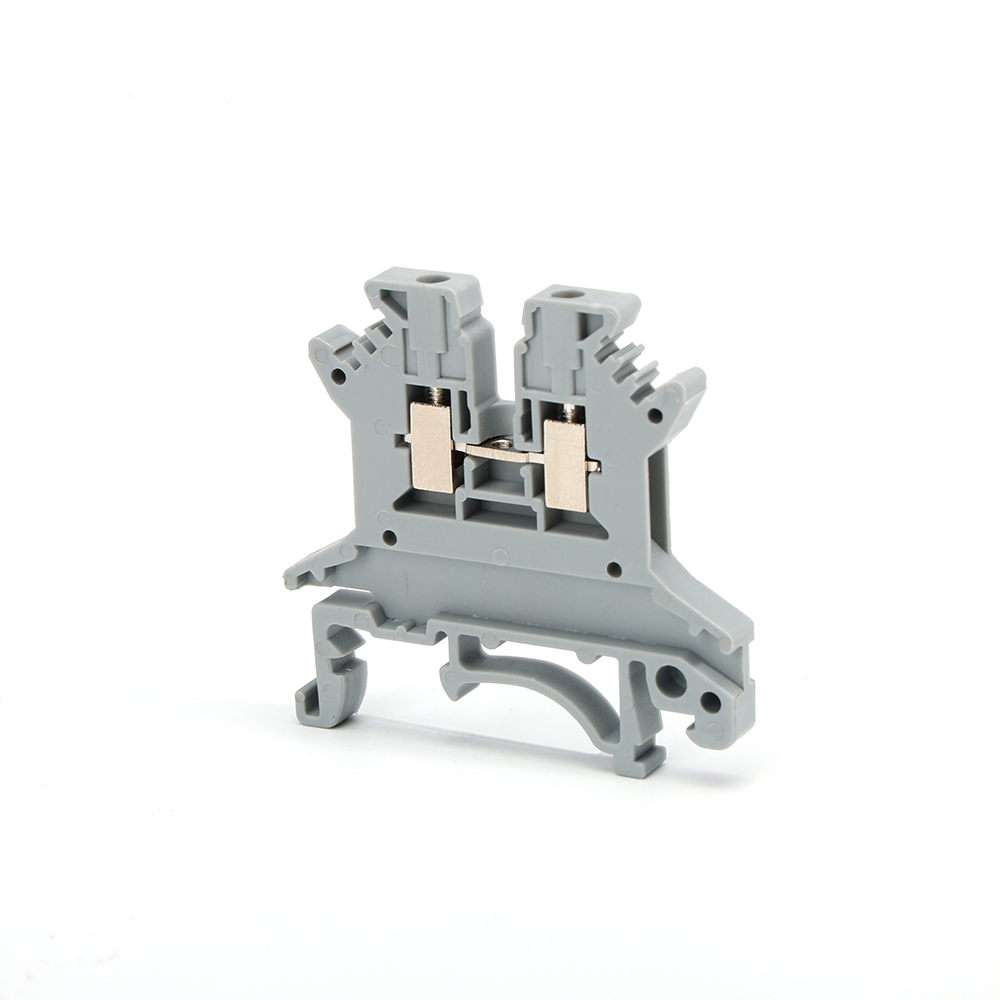
The physical envelope decides whether the block fits your rail pitch and panel layout. Width (pitch), height, and depth vary by rated cross-section, and they determine how many poles you can pack into a given space. Use the quick-reference table below, then confirm exact drawings on the product page before you order.
| Rated Cross-Section (mm²) | Typical Pitch / Width (mm) | Typical Height (mm) | Typical Depth (mm) | Typical Rated Current (A) |
|---|---|---|---|---|
| 2.5 | 5.2 | ~48–50 | ~35–40 | 24 |
| 4 | 6.2 | ~50–53 | ~40–45 | 32 |
| 6 | 8.2 | ~52–55 | ~45–50 | 41 |
| 10 | 10.2 | ~55–60 | ~50–55 | 57 |
| 16 | 12.2 | ~60–65 | ~55–60 | 76 |
| 35 | 15.2 | ~70–80 | ~60–70 | 125 |
Figures are representative ranges for standard rail-mounted screw terminals; exact screw terminal block dimensions are published in each product’s datasheet.
3.4 Material Quality
The housing, conductor, and screw decide long-term reliability. Look for a flame-retardant housing (typically PA66, UL 94 V-0), a copper-alloy current bar with tin plating, and a corrosion-resistant screw (zinc-plated steel or brass). Certifications such as UL, CE, RoHS, and compliance with IEC 60947-7-1 are the quickest proof that a wire screw terminal block meets international safety and performance benchmarks.
4. Why Choose Reliable Screw Connection Terminal Block Manufacturer
For B2B buyers, the manufacturer behind the part is as important as the part itself. A reliable supplier delivers consistent quality across every batch, holds the certifications your end market requires, and provides the technical drawings and support needed to spec correctly the first time. Factory-direct sourcing also removes reseller markup, which matters when you buy in volume. Beyond price, an established partner helps you avoid the hidden cost of field failures—downtime, recalls, and damaged reputation.
To understand why global buyers increasingly source from experienced low-voltage specialists, see our analysis of what makes China terminal blocks popular in global electrical markets. WESTLEC combines factory-direct pricing with full low-voltage accessory ranges, strong production capacity, and responsive engineering support for distributors and OEMs worldwide.
Talk to a WESTLEC application engineer
Get matched terminal recommendations, datasheets, and volume pricing for your DIN rail screw terminal block project.
5. FAQ
Are Screw Terminal Blocks Reliable?
Yes. When torqued to specification, a screw terminal forms a gas-tight, mechanically clamped connection that resists vibration and thermal cycling. Reliability depends on correct torque, the right wire preparation, and a quality block built to IEC 60947-7-1.
Can Screw Terminal Blocks Handle High Current?
Yes. Screw connection designs scale from control-level currents to well over 100 A in larger cross-sections, which is why they are widely used in power distribution and motor control. Always verify the rated current and apply derating for your environment.
How Often Should Screw Terminals Be Tightened?
For most fixed installations, a correctly torqued screw terminal does not need routine re-tightening. Inspect and re-torque during scheduled maintenance, after significant vibration exposure, or if thermal imaging shows a hot spot. Use a calibrated torque screwdriver for critical circuits.
How Do I Choose Screw Terminal Block Dimensions?
Match the block’s width (pitch), height, and depth to your DIN rail layout and available panel space, then confirm the envelope against the datasheet. The table in section 3.3 gives typical dimensions by cross-section to help you plan pole counts before ordering.
What Applications Use Din Rail Screw Terminal Blocks?
They appear in control cabinets, power distribution boards, HVAC panels, renewable energy combiner boxes, machinery interfaces, and railway or marine electrical systems—anywhere a secure, serviceable rail-mounted termination is required.
Are Screw Terminal Blocks Suitable For Industrial Automation?
Absolutely. Their vibration resistance, high-current capability, and easy field service make them a staple in industrial automation panels, PLC cabinets, and motor starters where uptime and maintainability are critical.
What Is The Difference Between Screw And Spring Terminal Blocks?
A screw terminal clamps the wire with a tightened screw and pressure plate; a spring (or push-in) terminal uses a spring cage to hold the conductor. Screw types offer very high contact force and broad wire-size coverage, while spring types speed up wiring and resist loosening without torque checks. For a deeper comparison of wiring-speed trade-offs, see our guide on why quick connect terminal blocks reduce wiring time.
6. Conclusion
The screw connection terminal block earns its place in B2B electrical engineering through mechanical strength, wide wire compatibility, simple maintenance, and proven performance in high-current applications. Choose by matching wire size, current and voltage rating, physical dimensions, and material quality—and partner with a manufacturer that backs its parts with certifications and support. For panel builders and OEMs who value uptime and total cost of ownership, the screw terminal remains the safe, serviceable choice.
About WESTLEC: WESTLEC is a low-voltage electrical accessory manufacturer supplying terminal blocks, connectors, busbars, and wiring accessories to distributors and OEMs worldwide—factory-direct, with full technical documentation. Learn more about WESTLEC or contact our team.
Related Resources
- What Makes China Terminal Blocks Popular In Global Electrical Markets
- Why Quick Connect Terminal Blocks Reduce Wiring Time
- Simplify Your Wiring with WESTLEC Push-in Terminals
- What Certifications Should A Crimp Terminal Manufacturer Provide?
- Neutral Busbar: A Key Component in Electrical Distribution Systems
 EN
EN  PT
PT