

Selecting the right DIN rail terminal block manufacturer is one of the most critical decisions in any industrial electrical project. Whether you are building control panels for a manufacturing plant, assembling power distribution systems, or specifying components for an OEM equipment line, the terminal blocks you choose directly impact safety, reliability, and long-term performance. A single failure in a terminal block can trigger downtime, equipment damage, or even safety hazards that ripple across an entire facility.
This guide walks you through a proven, step-by-step framework for evaluating and selecting a reliable DIN rail terminal block manufacturer for industrial projects. You will learn the key factors to assess, red flags to avoid, essential certifications to verify, and the questions you should ask before committing to a supplier. By the end, you will have a clear evaluation process that minimizes risk and ensures your project gets high-quality, certified components delivered on time.
What Are DIN Rail Terminal Blocks and Why They Matter in Industrial Projects
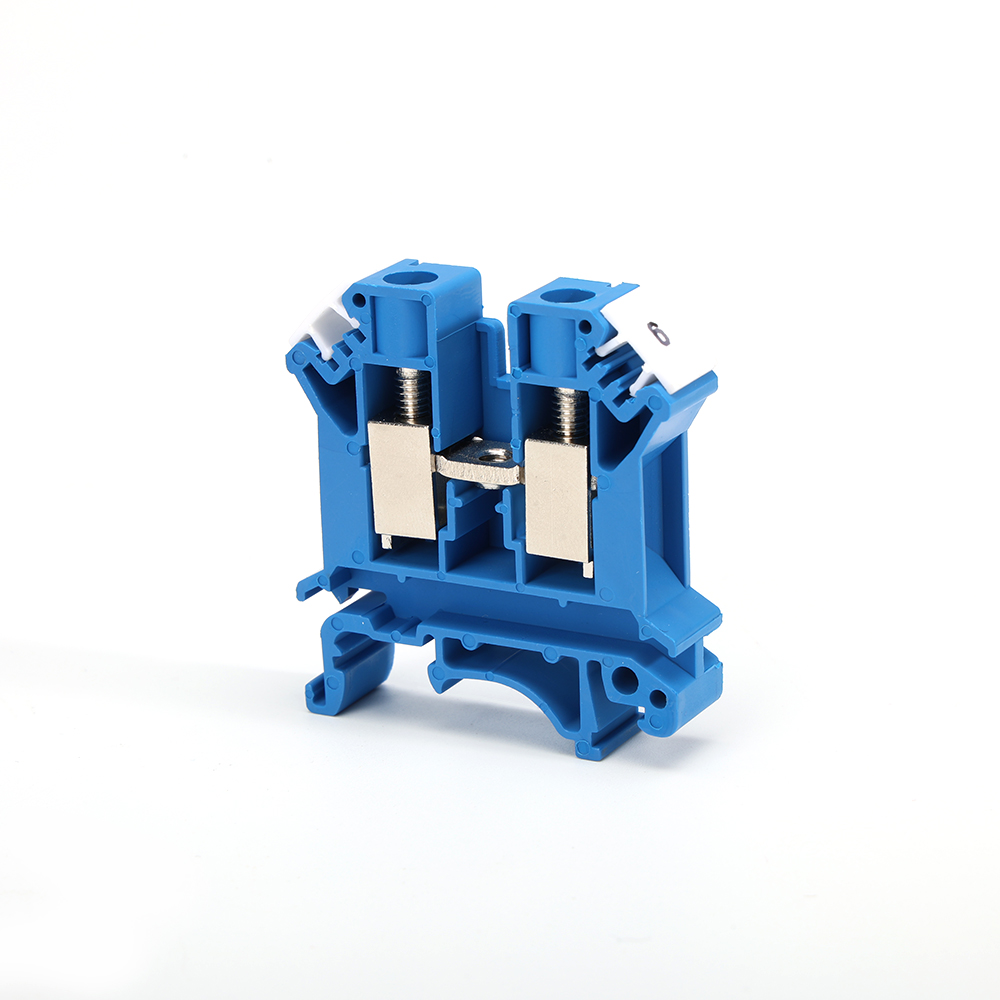
DIN rail terminal blocks are modular electrical connectors mounted on standardized metal rails (typically 35mm DIN rails) inside control panels, distribution boards, and switchgear enclosures. They provide secure, organized connections between wires, cables, and electrical components. In industrial environments, these components face vibration, temperature fluctuations, dust, moisture, and continuous electrical load conditions that demand exceptional build quality.
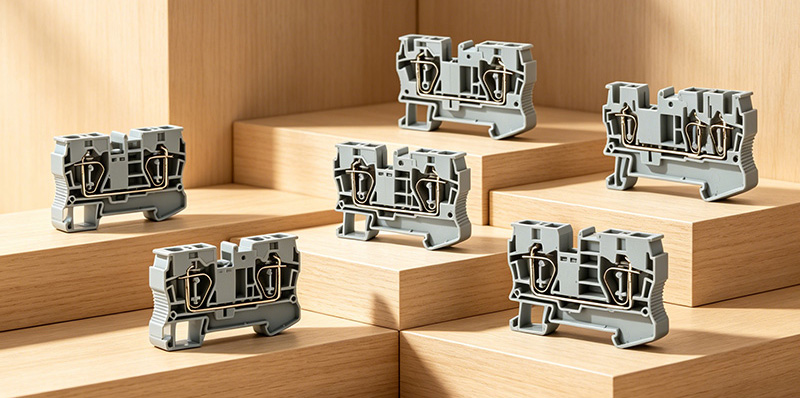
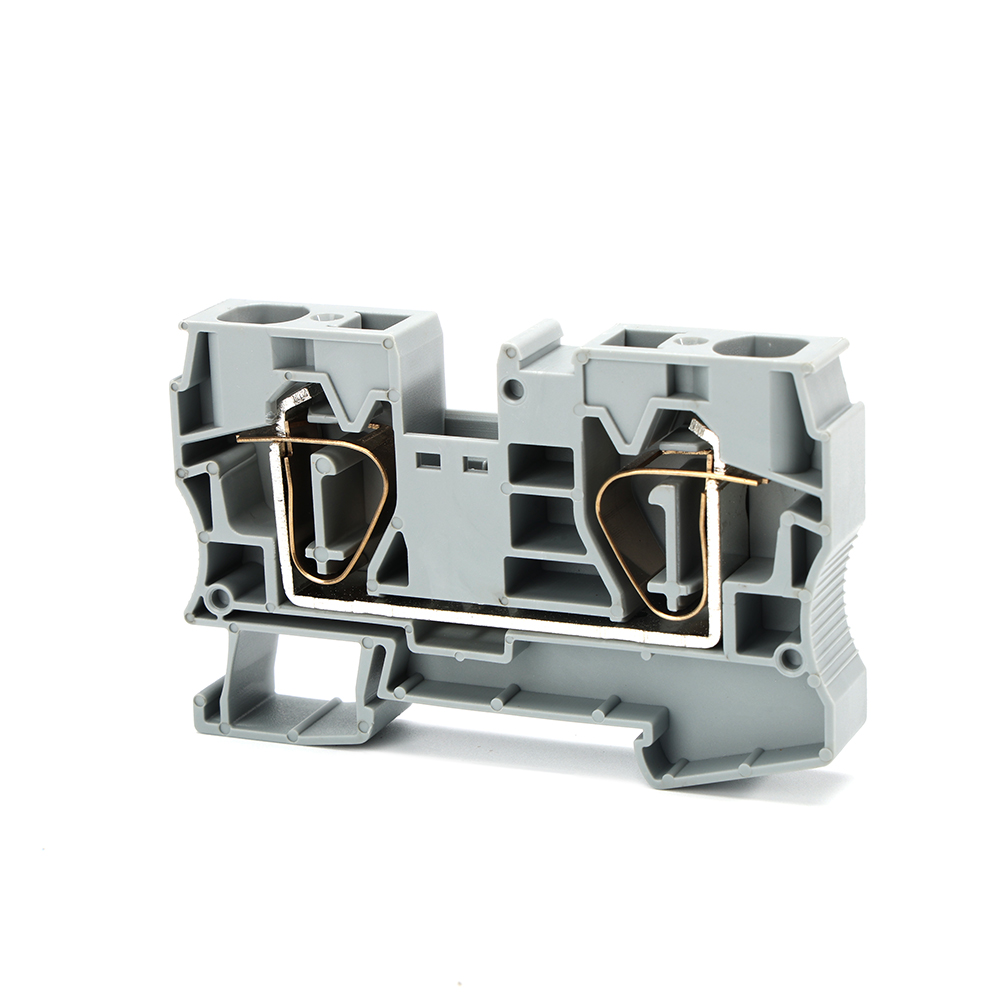
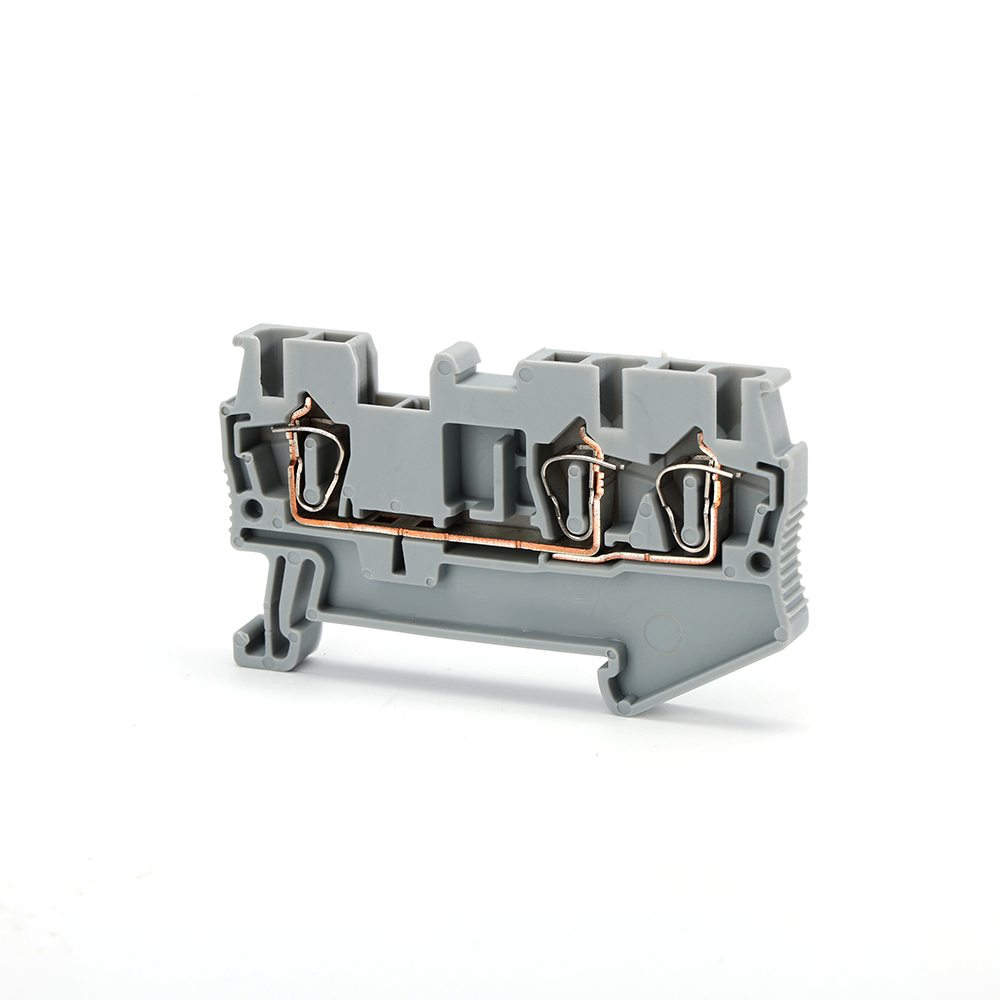
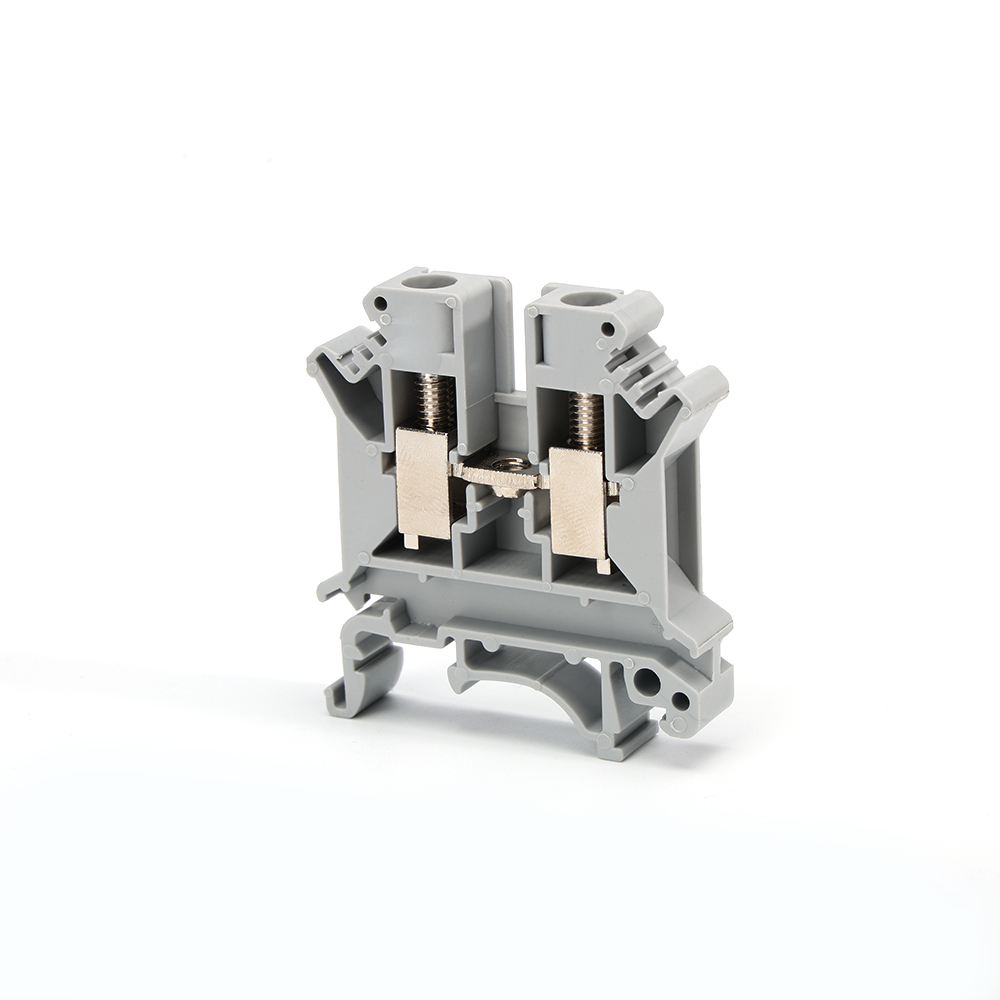
A reliable DIN rail terminal block manufacturer produces components that maintain stable contact pressure, resist environmental degradation, and meet international safety standards. The three primary connection types available include screw connection terminal blocks, spring cage terminal blocks, and push-in terminal blocks, each suited to different industrial applications.
For industrial projects specifically, the stakes are higher than residential or commercial applications. A faulty connection in a factory automation panel can halt production lines. A substandard terminal block in a power distribution system can cause arc faults. This is why choosing a manufacturer with proven industrial experience is not optional but essential.
7 Key Factors to Evaluate a Reliable DIN Rail Terminal Block Manufacturer
When evaluating potential suppliers for your industrial project, assess each manufacturer against these seven critical criteria. Every factor below contributes to the overall reliability, quality, and service you will receive.
1. Manufacturing Experience and Industry Expertise
Experience is the first indicator of a manufacturer’s reliability. A company with over 10 years in the low-voltage electrical component industry has likely encountered and resolved the most common production challenges, quality issues, and customization requirements. Look for manufacturers that specifically serve the industrial sector, not just general electrical markets.
Ask potential suppliers about the types of industrial projects they have supplied. Have they worked with OEM equipment manufacturers, panel builders, system integrators, or power distribution contractors? A manufacturer with broad industrial project experience will understand your specific requirements better than one focused primarily on consumer electronics or residential applications.
2. Quality Control Systems and International Certifications
A reliable DIN rail terminal block manufacturer must have documented quality control systems and relevant international certifications. At minimum, verify that the manufacturer holds the following:
| Certification | What It Verifies | Why It Matters for Industrial Projects |
|---|---|---|
| IEC 60947 / EN 60947 | Low-voltage switchgear and controlgear standards | Ensures terminal blocks meet international safety and performance benchmarks for industrial use |
| UL (Underwriters Laboratories) | Product safety certification for North American markets | Required for projects in the US and Canada; validates fire and electrical safety |
| CE Marking | EU conformity with health, safety, and environmental requirements | Mandatory for products sold in the European Economic Area |
| RoHS Compliance | Restriction of hazardous substances in manufacturing | Environmental responsibility and compliance with global regulations |
| ISO 9001 | Quality management system certification | Confirms consistent manufacturing processes and quality control procedures |
Do not simply accept a manufacturer’s claim of certification. Request copies of current certificates and verify their validity. A trustworthy supplier will readily provide documentation and may even share test reports from independent laboratories.
3. Product Range and Customization Capabilities
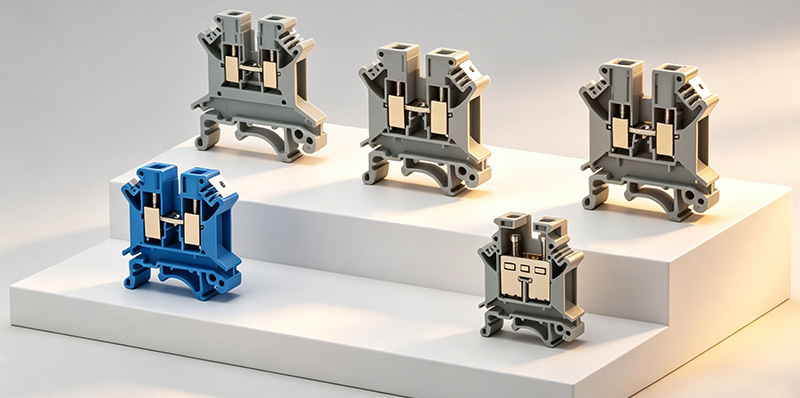
Industrial projects often require a variety of terminal block types within the same panel or distribution board. A reliable manufacturer should offer a comprehensive terminal block product range that includes feed-through blocks, multi-level blocks, grounding blocks, fuse blocks, and disconnect blocks. This breadth ensures you can source all your components from a single supplier, simplifying procurement, logistics, and quality management.
Beyond standard catalog products, evaluate the manufacturer’s ability to provide custom solutions. Can they modify electrical specifications, adjust mechanical dimensions, or produce specialized marking systems for your project? For OEM applications, ask about OEM branding services and whether they can apply your company logo, part numbers, and packaging specifications.
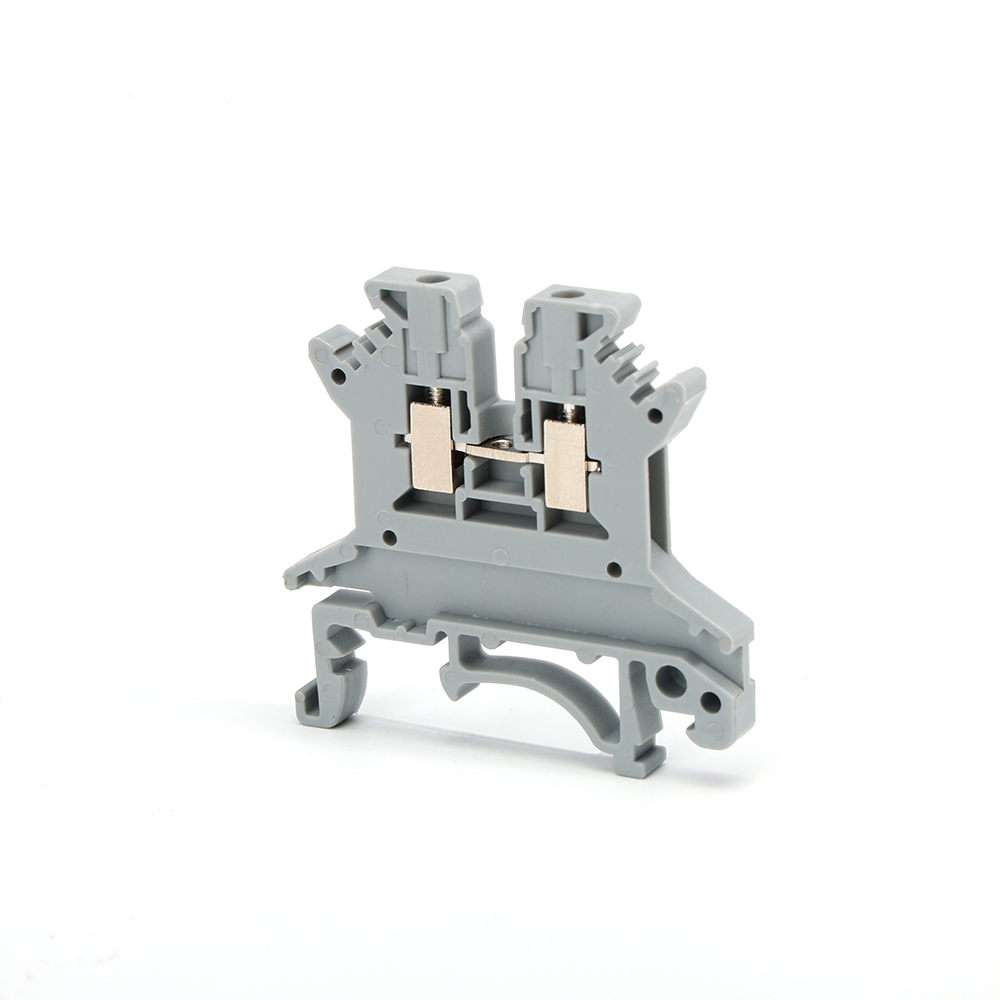
For example, the VPT 2.5 feed-through terminal block demonstrates how a well-engineered product can serve multiple wire gauges and connection types, offering flexibility that industrial projects frequently require.
4. Production Capacity and Lead Time Reliability
Industrial projects operate on strict timelines. A delayed component shipment can push back an entire project schedule, costing thousands in lost productivity. When evaluating a DIN rail terminal block manufacturer, ask these critical questions about production capacity:
- What is your monthly production volume for DIN rail terminal blocks?
- What is the standard lead time for orders of 10,000 units or more?
- Do you maintain buffer stock for repeat customers or long-term contracts?
- What is your on-time delivery rate over the past 12 months?
- How do you handle rush orders or urgent project requirements?
A manufacturer with robust production capacity, automated assembly lines, and established supply chain networks can reliably meet your project deadlines. Look for evidence of semi-automated and automated production processes, as these indicate the ability to scale output without compromising quality consistency.
5. Technical Support and Engineering Assistance
Reliable manufacturers do not just sell products; they provide technical expertise that helps you make better specification decisions. Evaluate the level of technical support available from each supplier. Do they have in-house engineers who can help with product selection, wiring diagram recommendations, and troubleshooting? Can they provide detailed technical datasheets, 3D CAD models, and installation guides?
For complex industrial projects, having a manufacturer that offers application-specific guidance on terminal block applications in industrial control systems can prevent costly specification errors and ensure optimal panel design.
6. Material Quality and Component Sourcing
The materials used in terminal block manufacturing directly determine long-term performance. Quality DIN rail terminal blocks use high-grade flame-retardant polyamide or polycarbonate for insulating bodies, copper alloys for current-carrying parts, and corrosion-resistant plating on contact surfaces. Ask potential manufacturers about their material specifications and where they source raw materials.
Inferior materials may pass initial inspections but fail prematurely under industrial conditions. Signs of poor material quality include brittle plastic housings, oxidizing metal contacts, inconsistent dimensional tolerances, and low dielectric strength. Always request material test reports and specifications before placing a bulk order.
7. Export Experience and Global Logistics
For international buyers, a manufacturer’s export experience is a significant reliability factor. Manufacturers with established global export operations understand customs documentation, international shipping requirements, incoterms, and packaging standards for long-distance transport. They can provide guidance on import regulations in your destination country and help optimize shipping costs.
Ask about the manufacturer’s experience shipping to your region, their preferred freight forwarders, and whether they can accommodate FOB, CIF, or DDP terms. A supplier with a track record of successful international shipments is far less likely to encounter delays or compliance issues that could disrupt your project.
Manufacturer Evaluation Scorecard
Use this scorecard to systematically compare DIN rail terminal block manufacturers side by side. Score each criterion from 1 (poor) to 5 (excellent) for every supplier you are evaluating. A total score of 35 or above indicates a highly reliable manufacturer.
| Evaluation Criterion | Supplier A | Supplier B | Supplier C |
|---|---|---|---|
| Years of manufacturing experience | /5 | /5 | /5 |
| Quality certifications (IEC, UL, CE, RoHS, ISO) | /5 | /5 | /5 |
| Product range breadth and depth | /5 | /5 | /5 |
| Customization and OEM capabilities | /5 | /5 | /5 |
| Production capacity and lead times | /5 | /5 | /5 |
| Technical support quality | /5 | /5 | /5 |
| Material quality and test reports | /5 | /5 | /5 |
| Export and logistics experience | /5 | /5 | /5 |
| Pricing competitiveness | /5 | /5 | /5 |
| After-sales support and warranty | /5 | /5 | /5 |
| TOTAL SCORE | /50 | /50 | /50 |
Scoring Guide: 1 = Poor, 2 = Below Average, 3 = Average, 4 = Good, 5 = Excellent. Minimum acceptable total: 35/50.
Request a Manufacturer Evaluation Package
Red Flags: Warning Signs of an Unreliable Manufacturer
Just as important as knowing what to look for is recognizing the warning signs that a manufacturer may not be reliable. The following red flags should prompt serious caution before placing an order:
- No verifiable certifications: If a manufacturer cannot produce current IEC, UL, CE, or ISO certificates, walk away. Verbal claims of compliance are not acceptable for industrial projects.
- Refusal to provide samples: A reliable manufacturer will gladly send product samples for evaluation. Refusal suggests the actual product quality does not match marketing claims.
- No technical datasheets or test reports: Professional manufacturers maintain complete technical documentation. If these are unavailable, the manufacturer likely lacks proper quality control systems.
- Prices significantly below market average: Unusually low pricing often indicates substandard materials, skipped quality control steps, or non-compliant manufacturing practices. For industrial projects, the cost of failure far exceeds any savings.
- Poor communication and slow response times: If a manufacturer is slow to respond during the sales process, expect worse after you have placed an order. Responsiveness is a leading indicator of overall service quality.
- No export history to your region: Manufacturers without prior export experience to your country may struggle with customs, documentation, and shipping, causing delays.
- Outdated website and incomplete product information: A professional manufacturer invests in maintaining accurate, detailed product information. An outdated or incomplete catalog signals a lack of professionalism.
Step-by-Step Process to Vet a DIN Rail Terminal Block Manufacturer
Follow this structured evaluation process to systematically assess potential manufacturers for your industrial project. Each step builds on the previous one, giving you a complete picture before making a purchasing decision.
Step 1: Define Your Industrial Project Requirements
Before contacting any manufacturer, create a detailed specification document that includes:
- Terminal block types needed (feed-through, multi-level, grounding, fuse, disconnect)
- Connection method preference (screw, spring cage, push-in)
- Wire cross-section range and current/voltage ratings
- Environmental requirements (temperature range, IP rating, vibration resistance)
- Estimated order quantity and delivery timeline
- Required certifications for your target market
- Any customization or OEM branding requirements
Having clear requirements prevents miscommunication and allows manufacturers to provide accurate quotes. It also demonstrates professionalism, which encourages suppliers to take your inquiry seriously.
Step 2: Shortlist and Research Potential Manufacturers
Identify 3 to 5 manufacturers that appear to meet your basic requirements. Research each one by reviewing their website, product catalog, certifications, company history, and any available customer testimonials. Check whether they have experience in your specific industry or application area.
For a deeper understanding of manufacturer selection, review our DIN rail terminal block manufacturer guide which covers supplier evaluation in additional detail.
Step 3: Request Samples and Technical Documentation
Contact each shortlisted manufacturer and request physical samples of the terminal blocks you need, along with complete technical datasheets, material specifications, and certification copies. A professional manufacturer will respond within 1-2 business days and arrange sample shipment promptly.
When you receive samples, evaluate them for build quality, material feel, dimensional accuracy, and connection reliability. Compare the actual product against the technical datasheet specifications. Any discrepancies indicate poor quality control.
Step 4: Audit Quality Control and Certifications
Verify all claimed certifications by requesting certificate copies and checking their validity on the issuing body’s website. Ask about the manufacturer’s quality control process: How many inspection points exist in the production line? What testing equipment do they use? Do they perform 100% final testing or batch sampling?
For large or critical projects, consider requesting a virtual or in-person factory audit. Many manufacturers will accommodate video tours of their production facilities, showing injection molding workshops, assembly lines, and testing stations.
Step 5: Evaluate Customization and Technical Support
If your project requires custom specifications, discuss the manufacturer’s engineering capabilities in detail. Can they produce custom marking tags, modified dimensions, or special packaging? Do they have a dedicated engineering team to support your project from specification through production?
Understanding factors that affect terminal block pricing will help you evaluate whether the customization costs are reasonable and how they compare across suppliers.
Step 6: Negotiate Terms and Verify Logistics
Once you have narrowed your selection to one or two manufacturers, negotiate pricing, payment terms, lead times, and incoterms. Confirm shipping methods, packaging standards, and delivery schedules. Request a formal quotation that includes all specifications, certifications, pricing, and delivery terms in writing.
For ongoing projects, discuss the possibility of long-term supply agreements, buffer stock arrangements, and scheduled deliveries. Reliable manufacturers value long-term partnerships and will offer favorable terms to secure repeat business.
Cost vs. Quality: Why the Cheapest Option Is Not Always the Best
In industrial procurement, there is a persistent temptation to select the supplier with the lowest unit price. However, for DIN rail terminal blocks used in industrial projects, the total cost of ownership extends far beyond the initial purchase price. Consider these hidden cost factors when comparing supplier quotes:
| Cost Factor | Low-Quality Supplier Risk | Reliable Supplier Value |
|---|---|---|
| Product failure rate | Higher defect rate leads to field failures and warranty claims | Low defect rate reduces maintenance costs and downtime |
| Lead time variability | Inconsistent delivery causes project delays and idle labor costs | Predictable delivery keeps project schedules on track |
| Technical support | No engineering support leads to specification errors and rework | Expert guidance prevents costly design mistakes |
| Compliance risk | Non-compliant products may fail inspection, requiring replacement | Certified products pass inspection on the first attempt |
| Long-term relationship | Frequent supplier switching disrupts procurement efficiency | Stable partnership enables better pricing over time |
The message is clear: a 15% lower unit price from an unreliable supplier can easily cost more in the long run through failures, delays, and rework. Always evaluate total cost of ownership, not just the invoice price.
Terminal Block Connection Type Comparison for Industrial Use
Understanding the differences between connection types is essential when evaluating manufacturers, as a reliable supplier should offer all three types with consistent quality across the range. Use this comparison table to identify which connection method best suits your industrial application:
| Feature | Screw Connection | Spring Cage | Push-In |
|---|---|---|---|
| Vibration resistance | Good (requires periodic retightening) | Excellent | Excellent |
| Installation speed | Moderate | Fast | Fastest |
| Wire types accepted | Solid and stranded (with ferrules) | Solid and stranded | Solid and stranded (with ferrules) |
| Maintenance requirement | Periodic retightening needed | Maintenance-free | Maintenance-free |
| Best industrial application | General industrial panels, power distribution | High-vibration environments, rail and marine | High-volume panel assembly, automation systems |
A manufacturer that offers all three connection types demonstrates comprehensive engineering capability and production breadth. To learn more about specific connection types, read our guides on push-in terminal blocks and screw connection applications in industrial control systems.
Get a Custom Quote for Your Project
Questions to Ask Your Prospective Manufacturer
Before finalizing your supplier selection, schedule a technical call with each manufacturer and ask the following questions. The quality and specificity of their answers will tell you more about their reliability than any marketing brochure.
Manufacturer Qualification Questions:
- How many years have you been manufacturing DIN rail terminal blocks specifically for industrial applications?
- Can you provide references from industrial customers in my industry sector?
- What is your production capacity per month, and how do you handle peak demand periods?
- What is your defect rate, and what is your process for handling quality complaints?
- Do you maintain ISO 9001 certification, and can you share your latest audit report?
- What testing do you perform on finished products before shipment?
- Can you provide OEM branding, custom packaging, and specialized part numbering?
- What is your standard lead time for first orders versus repeat orders?
- Do you offer buffer stock arrangements for long-term supply contracts?
- How do you handle technical support for international customers across different time zones?
A reliable manufacturer will answer each question with specific, verifiable details. Vague or evasive responses are a strong signal to continue your search.
How WESTLEC Supports Industrial Terminal Block Projects
WESTLEC has built its reputation as a professional manufacturer of low-voltage electrical components, with over 10 years of industry experience serving global industrial clients. Headquartered in Yueqing, Zhejiang, China, WESTLEC operates a modern production facility equipped with precision injection molding workshops, automated and semi-automated assembly lines, and comprehensive quality control systems.
Our DIN rail terminal block range includes screw connection, spring cage, and push-in connection types, covering cross-sections from 0.14mm to 4mm and current ratings up to 30A. Every product is manufactured to comply with IEC and EN international standards, with CE, RoHS, and ISO 9001 certifications available for verification.
For industrial project customers, WESTLEC offers:
- Factory-direct pricing that eliminates distributor markups while maintaining certified quality standards
- Comprehensive product range covering all common DIN rail terminal block types and accessories
- OEM customization including branding, custom specifications, and specialized packaging
- Technical engineering support with in-house specialists available for product selection and application guidance
- Reliable production capacity with established supply chain networks ensuring on-time delivery
- Global export experience with established logistics for international shipments to any destination
Whether your project requires standard catalog products or custom-engineered solutions, our team is ready to support your specification, production, and delivery requirements. Contact WESTLEC today to discuss your industrial terminal block needs.
Discuss Your Project Requirements
Frequently Asked Questions
1. What makes a DIN rail terminal block manufacturer reliable for industrial projects?
A reliable DIN rail terminal block manufacturer demonstrates verifiable industry experience (typically 10+ years), holds international certifications (IEC, UL, CE, RoHS, ISO 9001), maintains documented quality control systems, offers comprehensive product ranges, provides OEM customization, delivers consistent on-time shipments, and offers responsive technical support. For industrial projects specifically, the manufacturer should have proven experience supplying terminal blocks for control panels, power distribution systems, and OEM equipment applications.
2. What certifications should a DIN rail terminal block manufacturer have?
At minimum, a reliable manufacturer should hold IEC 60947 / EN 60947 compliance for low-voltage switchgear, CE marking for European market access, RoHS compliance for environmental safety, and ISO 9001 for quality management. For projects in North America, UL certification is essential. Request current certificate copies and verify their validity directly with the issuing bodies. Manufacturers that cannot provide documentation should be avoided for industrial applications.
3. How do I verify a terminal block manufacturer’s production capacity?
Verify production capacity by asking specific questions about monthly output volume, number of production lines, automation level, and on-time delivery rates. Request a virtual or in-person factory tour to see the injection molding workshop, assembly lines, and testing stations firsthand. Ask for references from existing industrial customers who have placed orders of similar volume to yours. A manufacturer that is transparent about production capabilities and willing to show their facility is far more trustworthy than one that makes claims without evidence.
4. What is the typical lead time for DIN rail terminal block orders?
Typical lead times vary based on order volume and customization requirements. For standard catalog products, expect 7-15 days for orders under 10,000 units and 15-30 days for larger volumes. Custom or OEM-specified products may require 25-45 days including tooling and sample approval. Reliable manufacturers will provide firm lead time commitments in writing and maintain buffer stock for repeat customers on long-term contracts. Always confirm lead times before placing an order and include delivery schedules in your purchase agreement.
5. Can DIN rail terminal block manufacturers provide custom solutions?
Yes, established manufacturers typically offer custom solutions including modified electrical specifications (current and voltage ratings), customized mechanical dimensions, specialized marking and labeling systems, OEM branding with your company logo and part numbers, and application-specific packaging. The ability to provide custom solutions depends on the manufacturer’s engineering capabilities and production flexibility. Discuss your specific requirements early in the evaluation process and request examples of previous custom projects.
6. What materials should quality DIN rail terminal blocks be made of?
Quality DIN rail terminal blocks use flame-retardant polyamide (PA66) or polycarbonate for insulating housings, offering high dielectric strength and thermal stability. Current-carrying parts should be made of high-conductivity copper alloys with tin or nickel plating to prevent oxidation. Contact springs in spring cage and push-in types should use stainless steel or beryllium copper for consistent clamping force. Always request material specifications and test reports from the manufacturer to verify material quality.
7. How important is OEM capability when choosing a terminal block manufacturer?
OEM capability is highly important for companies that need branded products, custom part numbering, or specialized packaging for their supply chain. A manufacturer with OEM services can apply your branding, produce to your exact specifications, and manage custom logistics arrangements. This is particularly valuable for equipment manufacturers, panel builders, and distributors who want to build brand identity while outsourcing production. Evaluate the manufacturer’s OEM experience by reviewing previous projects and their process for managing custom specifications.
8. What are the most common quality issues with DIN rail terminal blocks?
Common quality issues include loose screw connections due to poor thread tolerances, brittle plastic housings that crack under thermal cycling, contact oxidation causing increased resistance, inconsistent dimensional tolerances that complicate DIN rail mounting, and insufficient marking label adhesion. These issues typically stem from inferior materials, inadequate quality control, or outdated production equipment. Requesting samples and conducting your own quality testing before placing bulk orders is the best way to identify these issues early.
9. How do I compare quotes from different terminal block manufacturers?
Compare quotes by evaluating more than just unit price. Assess the total cost of ownership including product quality (defect rates), lead time reliability, technical support availability, customization capabilities, and after-sales warranty terms. Ensure all quotes specify identical product specifications, certifications, and delivery terms (FOB, CIF, DDP). Use the Manufacturer Evaluation Scorecard from this guide to score each supplier objectively. The supplier with the lowest price is rarely the best value for industrial projects when all factors are considered.
10. What after-sales support should I expect from a terminal block manufacturer?
A reliable manufacturer should provide comprehensive after-sales support including a clear warranty policy (typically 12-24 months), responsive handling of quality complaints with root cause analysis, replacement of defective products, technical support for installation and troubleshooting, and ongoing communication about product updates or discontinuations. They should also maintain records of your specifications for repeat orders and offer scheduled deliveries for long-term contracts. If a manufacturer does not clearly articulate their after-sales support policy, consider it a warning sign.
Conclusion
Choosing a reliable DIN rail terminal block manufacturer for industrial projects requires systematic evaluation across multiple dimensions: manufacturing experience, quality certifications, product range, customization capabilities, production capacity, technical support, and export logistics. By following the step-by-step evaluation process outlined in this guide and using the Manufacturer Evaluation Scorecard, you can objectively compare suppliers and make an informed decision that protects your project from costly failures and delays.
Remember that the cheapest quote is rarely the best value. Focus on total cost of ownership, verify all certifications independently, request physical samples for testing, and prioritize manufacturers with proven industrial project experience. The right supplier partnership will deliver consistent quality, reliable delivery, and technical support that makes your industrial project more successful.
WESTLEC combines over 10 years of manufacturing expertise with comprehensive DIN rail terminal block solutions, OEM customization capabilities, and global export experience to support industrial projects worldwide. To discuss your specific requirements and request samples, contact our team today.
Contact WESTLEC for a Free Consultation
Related Resources
Deepen your understanding of DIN rail terminal blocks and supplier selection with these additional resources from the WESTLEC blog:
- DIN Rail Terminal Block Manufacturer Guide: China Supplier Selection — A detailed guide to evaluating China-based terminal block manufacturers, covering OEM services, quality control, and supplier comparison.
- Screw Connection Terminal Block Applications In Industrial Control Systems — Explore how screw connection terminal blocks are used in industrial control panels and what to consider when specifying them.
- Spring Cage Terminal Block Price Guide: Factors That Affect Cost — Understand the pricing factors for spring cage terminal blocks to make more informed procurement decisions.
- Simplify Your Wiring with WESTLEC Push-in Terminals — Learn how push-in terminal blocks speed up installation while maintaining reliable connections in industrial applications.
- Signs That a Quick Connect Terminal Block Needs Replacement — Identify warning signs of terminal block wear and failure to prevent downtime in industrial systems.
Recommended Future Reading:
- DIN Rail Terminal Block Installation Guide: Best Practices for Industrial Control Panels (coming soon)
- Top 10 Terminal Block Failure Modes in Industrial Environments and How to Prevent Them (coming soon)
- How to Specify DIN Rail Terminal Blocks for Hazardous Location Applications (coming soon)
About WESTLEC: WESTLEC is a professional manufacturer of low-voltage electrical components headquartered in Yueqing, Zhejiang, China. With over 10 years of industry experience, WESTLEC provides DIN rail terminal blocks, quick wire connectors, busbars, cable glands, and related components to industrial clients worldwide. All products comply with IEC, CE, RoHS, and ISO 9001 standards. For inquiries, contact [email protected] or visit our contact page.
 EN
EN  PT
PT