

Finding a trusted copper terminal supplier from China is rarely hard because of a lack of options. It is hard because every supplier looks the same on a B2B marketplace: the same product photos, the same “100% copper” claim, and the same 24-hour reply time. The difference between a supplier that ships consistent, certified copper tube terminals for ten years and one that disappears after the first container only shows up when you start verifying.
This guide is written for purchasing managers, OEM engineers and distributors who need to qualify a Chinese copper terminal manufacturer before committing budget. It gives you a seven-step vetting process, a copy-and-use supplier scorecard, measurable acceptance criteria for samples, and the red flags that should end a conversation early.
Why B2B Buyers Source Copper Terminals From China
China remains the world’s largest production base for low-voltage electrical connection components, and for good commercial reasons that go beyond unit price.
- Complete raw material chain — electrolytic copper, brass rod, tin plating chemicals and insulation sleeves are all sourced domestically, which shortens lead time and stabilises cost.
- Mature tooling capability — stamping dies, cold-press forming and CNC machining for custom lugs are available in the same industrial cluster.
- Standard coverage — established factories already build to IEC, EN, DIN and UL dimensional requirements, so documentation is not built from scratch.
- Scalable capacity — multiple production lines allow a supplier to move from a 5,000-piece trial to container-level volumes without changing the process.
The risk is not the country. The risk is failing to separate factories that run a controlled process from traders who broker whatever is cheapest that week.
Manufacturer Or Trading Company? Identify Who You Are Really Buying From
Roughly half of the “manufacturers” you meet on sourcing platforms are trading companies. A good trading company can still be a workable partner, but you must know which one you have, because it changes who owns quality, tooling and delivery risk.
How To Tell A Real Copper Terminal Factory From A Trading Company
| Check | Real factory | Trading company |
| Business licence scope | Lists “manufacturing / production” of terminals or electrical accessories | Lists “wholesale / import & export trade” only |
| Machinery ownership | Shows presses, plating line or crimping dies with its own nameplate | Shows only warehouse shelves and packing tables |
| Answers on process | Explains annealing, plating thickness control and pull-force testing in detail | Deflects technical questions to “the factory” |
| Certification holder | ISO 9001 certificate names the same legal entity | Certificate belongs to an unrelated company |
7 Steps To Find A Trusted Copper Terminal Supplier From China
Step 1 – Write A Specification They Cannot Misread
Most bad sourcing outcomes start with a vague RFQ. “Copper ring terminal, 10mm” can be quoted ten different ways. Before you contact anyone, lock down conductor cross-section (mm² or AWG), stud or bolt size, terminal type, plating, applicable standard, and the annual volume per size. If you are still comparing product families, review the range of non-insulated ring terminals and insulated variants so your RFQ names the exact construction you need.
Step 2 – Build A Shortlist And Pre-Screen It
Aim for five to eight candidates from at least three channels: sourcing platforms, industry exhibitions (Canton Fair, Electric + Power, Hannover Messe supply chains), and referrals from peers in your industry. Pre-screen on three filters only: the product family matches your spec, the company has an export record to your region, and the sales engineer answers a technical question in the first reply. Suppliers that only talk price at this stage tend to stay that way.
Step 3 – Verify The Legal Entity And Export Record
Ask for the business licence and the 18-digit Unified Social Credit Code, then check the entity on China’s National Enterprise Credit Information Publicity System. Confirm the registered name matches the name on the quotation, the bank account and the ISO certificate. Then request proof of export: customs export records, a redacted bill of lading, or reference customers in your market.
Step 4 – Check Certifications And Material Traceability
Certificates are easy to fake and easy to verify. Always ask for the certificate number and check it with the issuing body. For copper terminals, the relevant set is normally ISO 9001 for the quality system, RoHS and REACH for material compliance, CE or CB where the finished equipment enters regulated markets, IATF 16949 for automotive programmes, plus product standards such as IEC 61238-1 for compression connectors and UL 486A-486B for wire connectors. A deeper breakdown of what a crimp terminal supplier should hand over is covered in our guide to certifications a crimp terminal manufacturer should provide.
Step 5 – Audit The Factory, On Site Or By Live Video
A two-hour live video audit catches more than a polished brochure. Ask them to walk you from raw material storage to finished goods packing, and to show the incoming copper certificate, the annealing or forming process, the plating line or plating subcontract record, and the in-house test equipment. If the camera suddenly cannot enter a building, or if the walkthrough is pre-recorded only, treat it as a red flag.
Step 6 – Test Samples Against Measurable Acceptance Criteria
Never approve a supplier on visual inspection. Test samples against numbers you wrote down before the samples arrived, and keep the results as your incoming inspection baseline for future batches.
| Test | What it proves | Typical acceptance target |
| Dimensional check | Fits your stud, barrel and tooling | Within drawing tolerance, 10-piece sample |
| Pull-off / tensile test | Crimp joint will not separate under load | Meets IEC 61238-1 class requirement for the size |
| Plating thickness | Corrosion resistance and contact stability | Tin layer typically 3 – 8 µm, measured by X-ray |
| Material & conductivity | Copper purity, not brass or copper-clad substitute | High-conductivity copper, 98% IACS minimum on request |
| Salt spray | Behaviour in humid or coastal environments | No red corrosion after the agreed test duration |
Step 7 – Run A Trial Order Before You Scale
Place a trial order of 5,000 to 20,000 pieces depending on your annual volume, and evaluate the process rather than just the parts. Did the quotation match the final invoice? Was the packing list accurate? Did the supplier flag a material issue before shipping, or after? A supplier that handles a small order transparently usually handles a large one the same way.
Shortlist Verified Copper Terminal Suppliers Faster
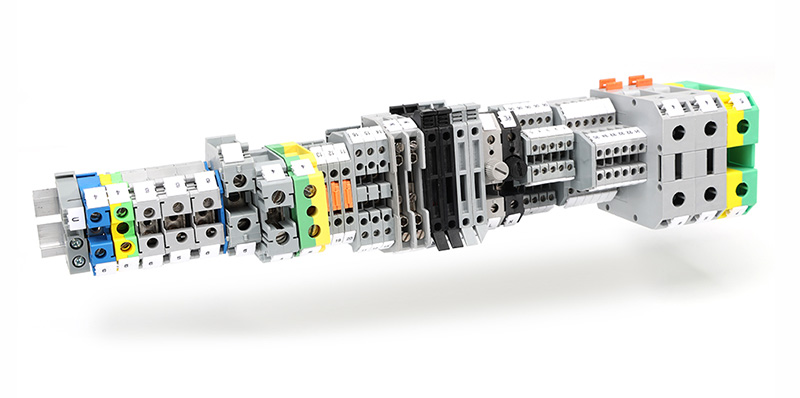
Skip the first four steps. WESTLEC is a Wenzhou-based manufacturer and exporter of low-voltage electrical connection components, supplying copper tube terminals, ring terminals, fork terminals and crimp terminals to distributors and OEMs worldwide.
Copper Terminal Supplier Scorecard (Copy And Use)
Score every shortlisted supplier from 1 to 5 on each line, multiply by the weight, and compare totals. Anything below 60 out of 100 is not worth a trial order.
| Criterion | What to look for | Weight |
| Manufacturing capability | Own presses, tooling shop, plating control, documented process | 20 |
| Quality control & testing | In-house pull test, plating thickness gauge, AQL-based inspection | 20 |
| Certifications & compliance | ISO 9001, RoHS, REACH, product standards relevant to your market | 15 |
| Product range & customisation | Covers your full size range, offers OEM tooling and private label | 15 |
| Commercial terms | Realistic MOQ, clear lead time, stable pricing, sane payment terms | 15 |
| Communication & engineering support | Technical answers in under 24 hours, drawings supplied on request | 10 |
| Export experience | Documented shipments to your region, references available | 5 |
Red Flags That Should Disqualify A Supplier
- The legal entity changes between quotation and contract — a classic sign of a brokered deal with no quality owner.
- Refusal to provide a business licence or credit code — no legitimate exporter refuses this.
- Certificates without numbers, or numbers that fail verification — treat as no certificate at all.
- No in-house test equipment — if they cannot measure pull force or plating thickness, they cannot control them.
- Price far below the market with no technical explanation — usually thinner plating, brass instead of copper, or undersized barrel wall.
- Pressure for 100% prepayment — standard practice is a deposit plus balance against documents or before shipment.
- No written specification acceptance — if the supplier will not sign off your drawing, you have no claim later.
Want A Factory That Passes This Checklist?
Send us your drawing or sample and we will return a dimensional report, material certificate and test data before you commit to a trial order.
What To Send In Your Copper Terminal RFQ
A complete RFQ cuts quotation turnaround from a week to a day and removes the ambiguity that later becomes a dispute. Include the following fields every time.
| RFQ field | Why it matters |
| Terminal type & drawing | Fixes barrel, tongue and inspection window geometry |
| Conductor size (mm² / AWG) | Determines barrel bore and crimp die selection |
| Stud / bolt size | Prevents on-site fitting failures |
| Material & plating | Copper grade plus tin or silver plating thickness |
| Applicable standard | IEC, DIN, UL or customer specification |
| Quantity per size & annual volume | Drives MOQ, tooling amortisation and price tier |
| Packing, labelling & Incoterm | Affects landed cost and warehouse handling |
Why WESTLEC Meets The Copper Terminal Supplier Standard
WESTLEC is headquartered in Wenzhou, Zhejiang, one of China’s main low-voltage electrical manufacturing clusters, and has supplied terminal blocks, connectors, busbars, DIN rails and crimp terminals to global markets for over ten years. Our copper terminal range covers vinyl-insulated ring terminals, non-insulated ring and fork types, and copper tube terminals from small control-wiring sizes up to heavy power lugs, built to EN and IEC requirements with RoHS and REACH compliant materials.
For B2B buyers, that means one accountable factory for specification review, sample testing, OEM tooling, private-label packing and consolidated shipments, rather than a chain of intermediaries.
Frequently Asked Questions
How do I verify a copper terminal supplier in China is a real manufacturer?
Request the business licence and the 18-digit Unified Social Credit Code, then check the registered entity and its business scope on the National Enterprise Credit Information Publicity System. The name must match the quotation, the ISO certificate and the bank account. Follow up with a live video factory walkthrough that shows forming, plating and testing equipment.
What certifications should a copper terminal supplier from China have?
At minimum ISO 9001 for the quality system, plus RoHS and REACH declarations for material compliance. Depending on your market and application, add CE or CB for European equipment, IEC 61238-1 test reports for compression connectors, UL 486A-486B for North American wire connectors, and IATF 16949 for automotive programmes.
What is a typical MOQ for copper terminals from China?
For standard catalogue sizes, MOQ commonly starts around 1,000 to 5,000 pieces per size. Custom geometries, special plating or private-label packing usually start at 5,000 to 10,000 pieces because tooling and setup cost has to be amortised. Always confirm whether MOQ applies per size or per order total, because that changes your cash exposure significantly.
How do I test copper terminal samples before placing a bulk order?
Test at least ten pieces per size: dimensional check against your drawing, pull-off or tensile test to the applicable standard, plating thickness measurement, material verification for copper purity, and a salt spray run if the product will see humidity or coastal air. Keep the results as the incoming inspection baseline for every future batch.
What copper purity and plating thickness should I require?
Specify high-conductivity electrolytic copper rather than a generic “copper” description, and ask for conductivity confirmation of 98% IACS or better where performance is critical. For tin plating, 3 to 8 µm is the common industrial range; thinner plating reduces cost but shortens corrosion life, especially in humid or salt-laden environments.
Can Chinese copper terminal suppliers provide OEM and custom parts?
Yes. Established factories produce to your drawing or reverse-engineer from a sample, and can supply custom barrel dimensions, stud sizes, plating, sleeve colour, printed markings and private-label packing. Expect tooling lead time of roughly three to five weeks before first samples for a genuinely new geometry.
What lead time and Incoterms should I expect when importing copper terminals?
Standard sizes typically ship in 15 to 30 days after order confirmation, while custom tooling and first-article approval extends this to roughly 30 to 45 days. FOB Ningbo or Shanghai is the most common term for sea freight, with EXW used when you have your own consolidator and DAP or CIF used for door-to-door simplicity. Agree the Incoterm before comparing quotations, otherwise the prices are not comparable.
How do I avoid being scammed when sourcing copper terminals from China?
Use three controls: verify the legal entity before any payment, pay by bank transfer to an account in the verified company name rather than a personal account, and never release the balance before a documented inspection. Use a deposit plus balance structure, or a letter of credit for larger orders, and require a signed specification so you have a contractual reference point.
What is the difference between a copper tube terminal and a ring terminal?
A copper tube terminal, also called a cable lug, is a seamless copper barrel with a flat palm that is crimped onto larger power cables and bolted to a busbar or equipment terminal. A ring terminal is a smaller stamped and plated terminal with a closed ring tongue, used for control wiring and smaller conductors. The two overlap in the middle sizes, so choose by conductor cross-section, current and connection type rather than by name. For a deeper selection discussion, see our article on the top factors when selecting a copper terminal supplier.
Conclusion
Finding a trusted copper terminal supplier from China is a verification exercise, not a search problem. Write a specification that cannot be misread, confirm you are dealing with the real manufacturing entity, verify certificates instead of collecting them, test samples against written acceptance criteria, and scale only after a transparent trial order. Suppliers that welcome that level of scrutiny are the ones worth a long-term partnership, because their process is what protects your production schedule.
Talk To WESTLEC Copper Terminal Engineers
Over ten years of factory-direct manufacturing and export experience, a full copper tube, ring and fork terminal range, and OEM support for distributors and OEMs worldwide.
Related Resources
- 10 Questions To Ask Before Choosing A Crimp Terminal Manufacturer — the question list to send with your first RFQ.
- What Is A Copper Tube Terminal And How Does It Work? — construction, sizing and crimping basics.
- How To Choose The Right Copper Tube Terminal Size — match conductor, stud and current rating.
- How To Find Reliable Waterproof Cable Gland Suppliers From China — the same vetting framework applied to another product family.
 EN
EN  PT
PT