

Electrical safety is a critical concern in every industry that relies on wiring systems, from automotive manufacturing and industrial automation to renewable energy and electrical distribution. A loose or poorly protected wire connection can lead to short circuits, equipment failures, costly downtime, and even fire hazards.
This is why Vinyl Insulated Ring Terminals have become one of the most widely used electrical connectors worldwide. Designed to provide secure wire termination and additional insulation protection, these terminals help improve connection reliability while reducing safety risks. In this guide, you will learn how Insulated Ring Terminals work, why they are safer than many alternative connectors, how to install them correctly, and how to choose the right terminal for your application.
What Are Vinyl Insulated Ring Terminals?
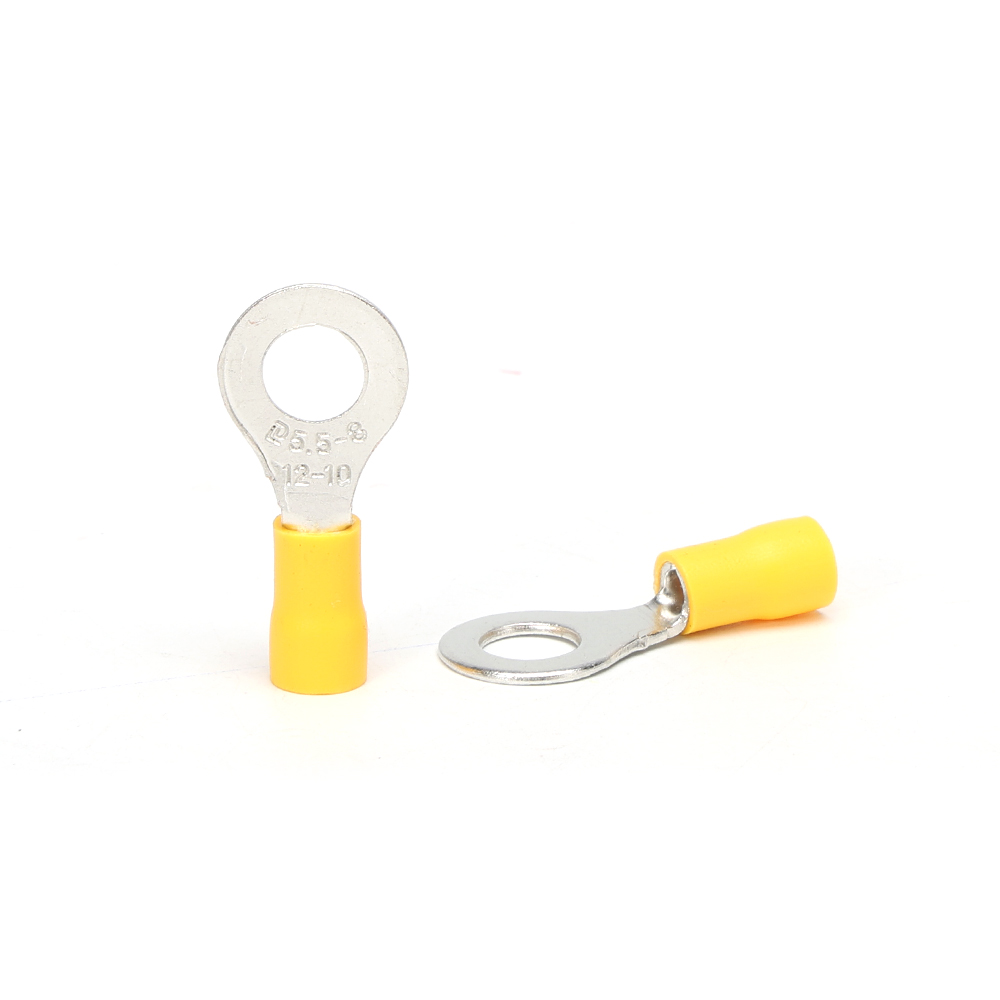
Vinyl Insulated Ring Terminals are crimp-type electrical connectors designed to create a secure connection between a wire and a stud, screw, or terminal block. They consist of a conductive metal barrel, usually made of copper or tinned copper, combined with a PVC insulation sleeve that covers the crimp area.
Unlike bare terminals, the insulation sleeve provides an additional protective layer around the conductor, reducing the risk of accidental contact and electrical faults.
Structure And Components
A typical Vinyl Ring Terminal contains three main parts:
- Ring-shaped tongue for attachment to bolts or studs
- Copper barrel for crimping the wire conductor
- PVC insulation sleeve for electrical protection
The ring design prevents accidental disconnection even when equipment experiences vibration or movement. This makes ring terminals particularly popular in demanding industrial environments.
Common Applications
You can find PVC Insulated Ring Terminals in many industries, including:
- Automotive wiring harnesses
- Industrial control panels
- Power distribution equipment
- Solar energy systems
- Marine electrical installations
- HVAC equipment
For example, many control panel manufacturers use insulated ring terminals to connect power supplies, relays, circuit breakers, and grounding points because they provide long-term reliability under continuous operation.
Why Vinyl Insulation Is Popular
Among various insulation materials, vinyl remains one of the most cost-effective options.
Benefits include:
- Good electrical insulation properties
- Affordable manufacturing cost
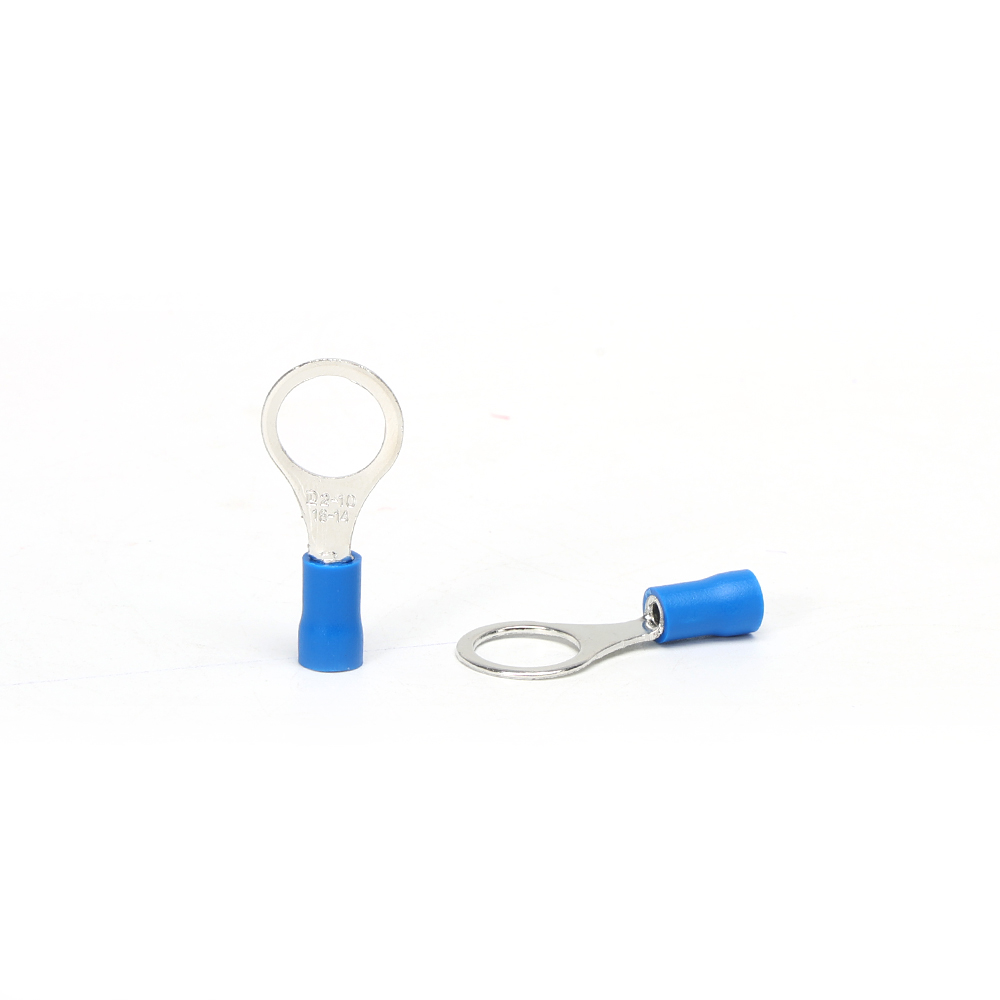
- Easy visual identification through color coding
- Flexibility during installation
- Protection against minor abrasion
For standard electrical applications, Vinyl Insulated Terminals offer an excellent balance between safety, performance, and cost.
How Vinyl Insulated Ring Terminals Work
Understanding how Electrical Ring Terminals Insulated function helps explain why they contribute significantly to electrical safety.
Creating A Secure Electrical Connection
When a wire is inserted into the barrel and crimped using the proper tool, the barrel compresses tightly around the conductor strands.
This creates:
- Mechanical retention
- Low electrical resistance
- Stable current transmission
A properly crimped connection essentially becomes a cold-welded joint, ensuring consistent conductivity throughout the service life of the equipment.
How The PVC Insulation Protects Conductors
The vinyl sleeve acts as a protective barrier between the conductor and its surroundings.
It helps prevent:
- Accidental contact with energized conductors
- Exposure of wire strands
- Electrical leakage
- Short circuits between adjacent terminals
In crowded control panels where multiple connections are installed close together, this insulation layer can significantly reduce wiring hazards.
Maintaining Stable Current Flow
Poor electrical connections often generate heat because of increased resistance.
A correctly crimped Ring Terminal Vinyl Insulated connector minimizes resistance by maintaining maximum contact between the conductor and terminal barrel.
The result is:
- Reduced heat generation
- Better electrical efficiency
- Improved equipment reliability
Reducing Mechanical Stress On Wires
Electrical systems frequently experience vibration, movement, and thermal expansion.
Without proper termination, these forces can damage conductors over time.
Ring terminals distribute stress more evenly and prevent wire strands from bending excessively at connection points, extending overall wiring life.
How Vinyl Insulated Ring Terminals Improve Electrical Safety
Electrical safety is not achieved through insulation alone. It is the combination of secure mechanical fastening, proper conductivity, and environmental protection that makes Insulated Ring Terminals such an effective solution.
Preventing Accidental Short Circuits
One of the most common causes of electrical failure is unintended contact between conductors.
The PVC sleeve surrounding the crimp area provides an additional layer of protection, reducing the likelihood of exposed conductors touching nearby components.
This is particularly important in:
- Electrical cabinets
- Vehicle wiring systems
- Generator installations
- Battery connections
By isolating energized conductors, Vinyl Insulated Ring Terminals help minimize the risk of short circuits and electrical faults.
Reducing Risk Of Electrical Shock
When technicians perform maintenance, exposed conductors present a potential shock hazard.
Insulated terminals reduce this risk by covering vulnerable connection points.
While proper lockout and safety procedures should always be followed, insulation provides an important secondary safeguard that improves workplace safety.
Protecting Against Vibration And Loosening
Unlike some connector styles that can slip off under vibration, ring terminals remain securely fastened around a stud or screw.
This makes them highly suitable for:
- Industrial machinery
- Automotive systems
- Agricultural equipment
- Marine applications
A wiring contractor working on heavy equipment recently reported that replacing push-on connectors with insulated ring terminals significantly reduced maintenance calls caused by loose electrical connections.
Improving Long-Term Connection Reliability
Over time, electrical connections are exposed to temperature changes, moisture, dust, and mechanical stress.
A properly installed PVC Insulated Ring Terminal provides protection against many of these challenges.
The result is:
- Fewer connection failures
- Lower maintenance costs
- Improved equipment uptime
- Longer service intervals
Minimizing Maintenance And Downtime
For manufacturers and facility operators, downtime can be extremely expensive.
Even a single loose connection may stop an entire production line.
By investing in quality Vinyl Ring Terminals, you can reduce maintenance frequency and improve overall operational reliability.
Safety Comparison Of Different Terminal Types
| Feature | Vinyl Insulated Ring Terminals | Non-Insulated Ring Terminals | Spade Terminals |
|---|---|---|---|
| Insulation Protection | High | None | Medium |
| Vibration Resistance | High | Medium | Medium |
| Electrical Safety | High | Low | Medium |
| Installation Security | High | High | Medium |
| Maintenance Requirement | Low | Higher | Medium |
Key Safety Benefits
- Enhanced insulation protection
- Reduced risk of short circuits
- Improved wire retention strength
- Better resistance to vibration
- Longer service life
- Lower maintenance costs
As electrical systems become more complex, these safety advantages become increasingly important for both equipment manufacturers and maintenance professionals.
How To Crimp Vinyl Insulated Ring Terminals
Proper installation is where most electrical safety issues are either solved—or quietly introduced. Even the highest quality Vinyl Insulated Ring Terminals will fail if the crimping process is wrong, so this section matters more than it looks.
Tools You Need
Before you start, make sure you have the right setup:
- Ratchet crimping tool matched to terminal size
- Wire stripper with gauge markings
- Correct size Insulated Ring Terminals
- Cable cutter for clean wire ends
In real factory or workshop environments, using a calibrated crimp tool is not optional—it directly affects connection safety and long-term stability.
Step-By-Step Crimping Process
When you work with Vinyl Ring Terminals, the process is simple but must be precise:
Strip the wire insulation carefully without damaging copper strands
Insert the conductor fully into the copper barrel
Place the terminal into the correct crimp die size
Apply firm, even pressure using a ratchet crimp tool
Inspect the crimp to ensure no loose strands or weak compression
A properly crimped terminal should feel solid, almost like the wire and terminal have become one single unit.
Common Crimping Mistakes To Avoid
Even experienced technicians sometimes make these errors:
- Using incorrect die size for the terminal
- Over-stripping or under-stripping the wire
- Partial crimping due to weak tool pressure
- Mixing wire gauge with wrong terminal size
- Ignoring insulation compression zone
A small mistake here can lead to overheating, unstable current flow, or mechanical loosening over time.
How To Inspect A Finished Crimp
You should always perform a quick quality check:
- Tug test for mechanical strength
- Visual check for exposed copper strands
- Ensure insulation sleeve is not cracked
- Confirm tight fit on stud or bolt
In industrial applications, this step is often what separates reliable wiring systems from recurring maintenance problems.
How To Choose The Right Ring Terminal
Choosing the correct terminal is not just about size—it is about system safety, current load, and installation environment.
Select The Correct Wire Gauge
The first rule is simple: the terminal must match the wire size.
If the barrel is too large, crimping will be weak.
If it is too small, wire damage or incomplete insertion may occur.
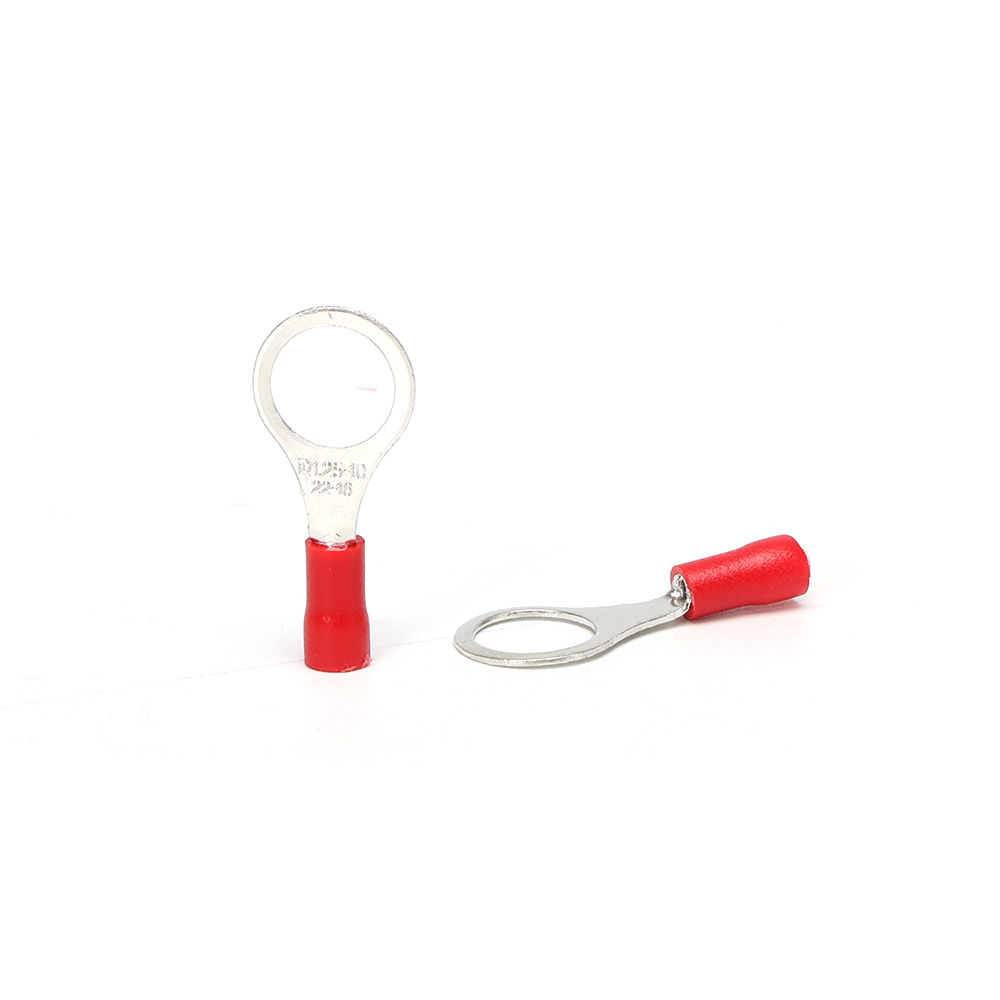
This is where Vinyl Insulated Terminals with color coding help installers quickly identify correct sizing.
Match The Stud Or Bolt Size
Ring terminals must fit securely onto the connection point:
- Too small → cannot install
- Too large → unstable contact
Industrial panels often standardize stud sizes to reduce errors, but field installations require careful checking.
Consider Current Carrying Capacity
Different applications demand different electrical loads.
For example:
- Automotive systems → moderate current
- Industrial motors → high current
- Solar systems → continuous load conditions
Using the wrong terminal may not fail immediately—but it will degrade over time.
Vinyl Vs Nylon Insulation Selection
Both materials are widely used, but they behave differently:
- Vinyl insulation → flexible, cost-effective, general use
- Nylon insulation → stronger, higher temperature resistance
In harsh environments like engine compartments or outdoor installations, Nylon Insulated Ring Terminals are often preferred.
Choosing For Application Type
You should always match terminal type with environment:
- Vibration-heavy machinery → reinforced crimp design
- Outdoor systems → moisture-resistant insulation
- Control cabinets → compact vinyl insulated types
A good rule in procurement: don’t over-spec, but never under-protect.
FAQ
Crimp Vs Solder Ring Terminals
Crimp terminals are preferred in industrial applications because they create a gas-tight connection and perform better under vibration. Soldered joints can weaken over time due to thermal stress and mechanical movement.
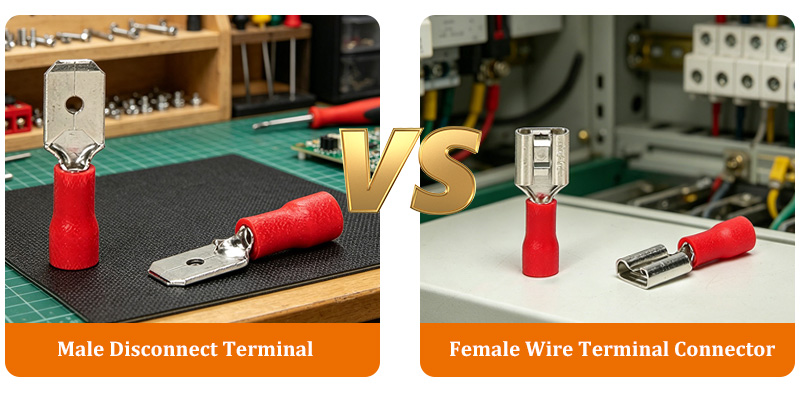
Ring Terminal Vs Spade Terminal
Ring terminals provide a fully closed loop connection, making them more secure under vibration. Spade terminals allow easier installation but can disconnect more easily.
Copper Vs Aluminum Ring Terminals
Copper offers better conductivity and reliability. Aluminum is lighter and cheaper but less commonly used in precision electrical systems.
What Size Ring Terminal Do I Need?
It depends on wire gauge and stud size. Both must match precisely to ensure safe crimping and stable electrical contact.
Vinyl Vs Nylon Insulated Terminals
Vinyl is more flexible and cost-effective, while nylon provides higher durability and temperature resistance for demanding environments.
Insulated Vs Non Insulated Ring Terminals
Insulated terminals provide additional protection against short circuits and accidental contact, while non-insulated types are used where external insulation is already provided.
How To Choose Ring Terminal Size For Wire
Always check wire gauge charts provided by manufacturers and match it with terminal color coding and barrel size specifications.
What Is The Difference Between Vinyl And Nylon Terminals?
Vinyl is softer and easier to install, nylon is stronger and more resistant to heat and mechanical stress.
What Are Vinyl Insulated Ring Terminals Used For?
They are widely used in automotive wiring, industrial control systems, and electrical distribution where safety and reliability are required.
Conclusion
Vinyl insulated terminals may look simple, but in real electrical systems they play a surprisingly critical role in safety and reliability. Vinyl Insulated Ring Terminals help prevent short circuits, reduce maintenance risks, and ensure stable electrical connections under vibration, heat, and long-term load conditions.
When you choose the right Insulated Ring Terminals, install them correctly, and match them with proper wire sizing, you are not just improving performance—you are directly improving system safety and operational stability.
For Westlec, this is exactly where engineering quality meets practical application. If you are sourcing PVC Insulated Ring Terminals or looking for a stable supplier for OEM or bulk orders, Westlec can support you with consistent manufacturing quality, technical guidance, and tailored solutions for different industrial applications.
In real-world wiring systems, small components often decide big outcomes—and this is one of them.
 EN
EN  PT
PT