

As industrial automation, smart manufacturing, and control panel assembly continue to evolve, wiring technologies are becoming faster, safer, and more efficient. Traditional terminal solutions are gradually giving way to modern connection systems that reduce labor costs and improve reliability.
Among the most popular options today are push in terminal connectors and spring loaded terminal blocks. Both technologies eliminate many of the drawbacks associated with screw terminals, but which one is truly better for modern wiring applications?
If you are a distributor, panel builder, OEM manufacturer, or procurement professional, this guide will help you understand the differences, advantages, and best use cases of each solution.
Push In Terminal Connectors Vs Spring Loaded Terminal Blocks
Although both technologies use spring-force connections, their operation methods and installation experiences differ significantly.
| Comparison Factor | Push In Terminal Connector | Spring Loaded Terminal Block |
|---|---|---|
| Wiring Speed | Extremely Fast | Fast |
| Tool Requirement | Usually Tool-Free | Requires Opening Tool |
| Installation Labor | Lowest | Moderate |
| Maintenance | Easy | Moderate |
| Vibration Resistance | Excellent | Excellent |
| Wiring Error Risk | Low | Low |
| User Experience | Simple | Requires Training |
| Automation Suitability | Excellent | Good |
Wiring Speed
Push In Wire Connectors allow direct insertion of solid or ferruled wires without opening the spring mechanism. Installers simply push the wire into the terminal.
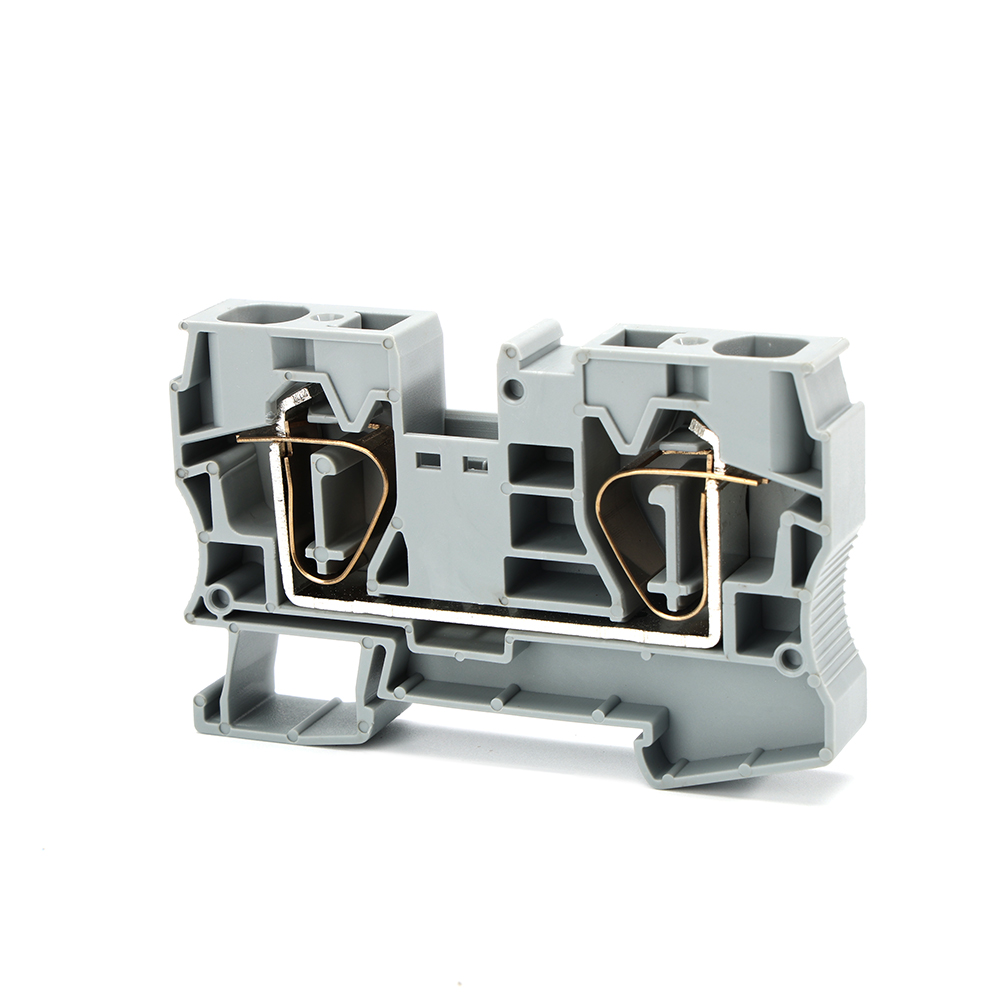
Spring-loaded terminals typically require a screwdriver or operating lever to open the spring before wire insertion.
For large control cabinets containing hundreds of wiring points, the time savings can be substantial.
Tool Requirement
One of the biggest advantages of Push Fit Terminals is tool-free operation.
With spring-loaded terminal blocks, operators usually need:
- Screwdrivers
- Release tools
- Opening levers
- Additional installation accessories
Push-in technology minimizes tool dependency and streamlines assembly processes.
Installation Labor
Many manufacturers report labor reductions of 20–40% after switching to push-in wiring systems.
Because operators can wire faster and make fewer mistakes, production throughput increases significantly.
Maintenance
Maintenance personnel often appreciate push-in terminals because wires can be quickly identified, removed, and reinserted.
This becomes particularly valuable during troubleshooting and system upgrades.
Vibration Resistance
Both technologies utilize spring pressure rather than screw compression.
As a result, they maintain reliable electrical contact even in environments subject to:
- Continuous vibration
- Mechanical shock
- Thermal cycling
- Equipment movement
- Industrial machinery operation
Wiring Error Risk
Human error is one of the largest contributors to electrical failures.
Push-in systems simplify installation and reduce:
- Loose connections
- Improper tightening torque
- Missing wire strands
- Inconsistent assembly quality
User Experience
For electricians and panel builders, user experience matters.
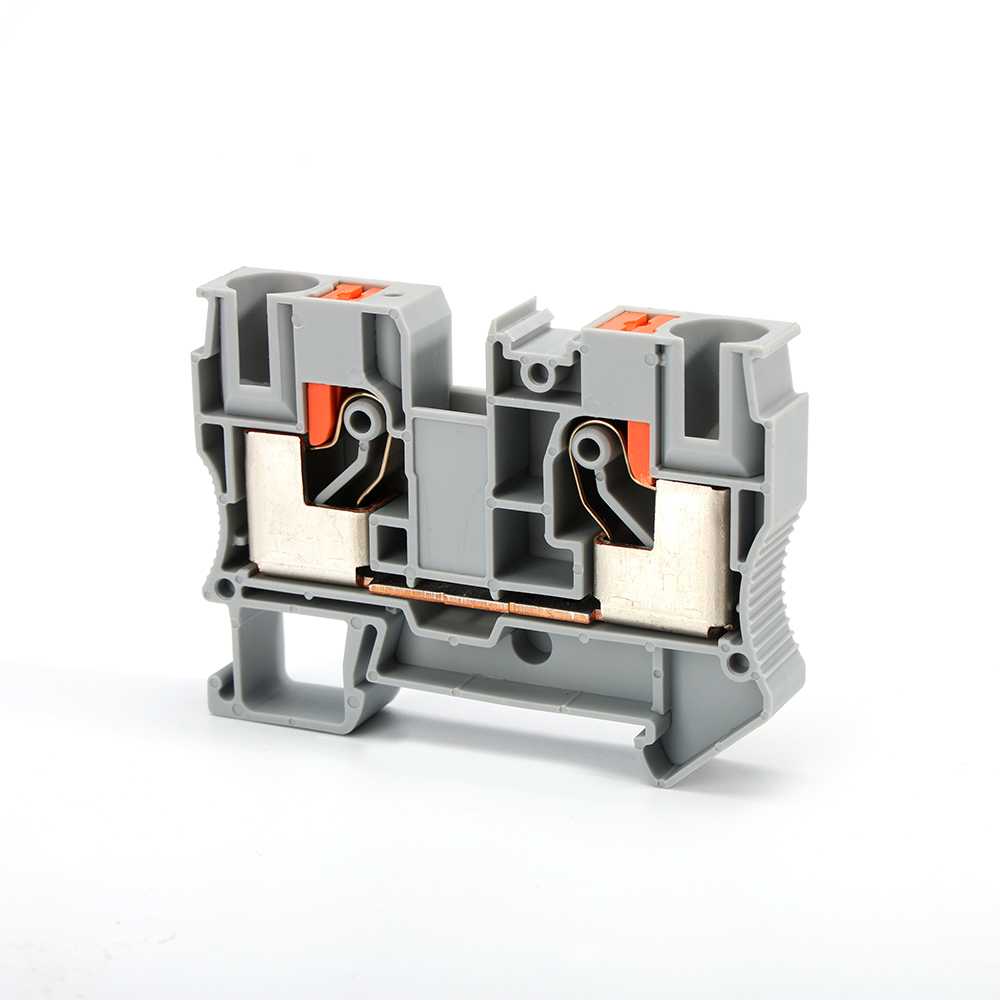 Push-in connectors offer a more intuitive workflow, especially for less experienced operators.
The learning curve is shorter, making workforce training easier.
Automation Suitability
Modern panel manufacturing increasingly relies on semi-automated and automated assembly processes.
Push In Terminal Connector technology aligns perfectly with this trend due to its simple insertion method and repeatable connection quality.
How Do Push-In Terminals Improve Wiring Efficiency?
Efficiency is one of the main reasons companies are adopting Push In Wire Connector technology.
One-Hand Installation
Traditional terminal connections often require two hands—one to hold the wire and another to operate a screwdriver.
Push-in terminals enable true one-hand wiring.
This seemingly small improvement can significantly increase productivity throughout an assembly shift.
Tool-Free Connection
Tool-free installation provides several benefits:
- Faster wiring
- Reduced tool management
- Lower installation fatigue
- Simplified field service
- Cleaner assembly workflow
According to industry practices published by IEC and UL-certified manufacturers, spring-force connection technologies consistently improve installation efficiency in industrial control applications.
Reduced Assembly Time
Imagine a PLC cabinet containing 1,500 connection points.
If each connection saves only a few seconds, the cumulative labor savings become substantial.
Many panel builders report noticeable reductions in assembly hours after converting from screw terminals to push-in systems.
Faster Panel Manufacturing
A control panel manufacturer serving the food processing industry recently upgraded to push-in terminal technology.
The result:
- Shorter assembly cycles
- Reduced wiring errors
- Faster delivery times
- Higher customer satisfaction
This type of improvement is becoming increasingly common across industrial sectors.
Why More Manufacturers Are Switching To Push-In Technology
The growth of automation and labor shortages has accelerated the adoption of push-in wiring systems.
Labor Cost Reduction
Labor expenses continue rising worldwide.
By reducing installation time, manufacturers can:
- Lower production costs
- Increase output
- Improve competitiveness
- Reduce overtime requirements
Increased Productivity
When electricians spend less time on repetitive wiring tasks, productivity naturally improves.
Production teams can complete more panels without increasing workforce size.
Reduced Training Requirements
Because Push On Terminals are easy to understand, training new employees becomes simpler.
New operators can often achieve consistent installation quality after minimal instruction.
Consistent Connection Quality
Unlike screw terminals, which depend on proper tightening torque, push-in systems deliver repeatable spring pressure.
This consistency reduces quality variations between operators.
Reliability Comparison: Which Terminal Performs Better?
Reliability remains a top purchasing consideration for industrial buyers.
Vibration Resistance
Modern Spring Loaded Electrical Connectors and push-in terminals both perform exceptionally well under vibration.
Applications include:
- Railway systems
- Wind turbines
- Material handling equipment
- Packaging machinery
- Heavy industrial plants
Shock Resistance
Shock events can loosen screw terminals over time.
Spring-force technologies automatically compensate for movement and maintain contact pressure.
Contact Stability
Reliable electrical contact directly impacts system uptime.
Both technologies provide:
- Stable conductivity
- Low contact resistance
- Reduced heat generation
- Consistent current transmission
Long-Term Electrical Performance
Long-term performance depends on:
- Material quality
- Spring design
- Copper conductivity
- Environmental protection
In many industrial applications, push-in terminals deliver equal or better long-term performance compared to traditional spring clamp designs.
Common Applications Of Push-In Terminals
The versatility of Spring Terminal Connector technology makes it suitable for numerous industries.
Industrial Control Panels
Industrial control cabinets often contain hundreds or thousands of wiring points.
Push-in terminals significantly reduce assembly time.
PLC Cabinets
PLC systems require organized, reliable wiring.
Push-in terminals simplify installation and future maintenance.
Building Automation Systems
Smart buildings rely on extensive control wiring for:
- HVAC systems
- Lighting controls
- Security systems
- Energy management
Push-in technology improves installation efficiency throughout these applications.
Renewable Energy Systems
Solar and wind installations benefit from vibration-resistant connections and reduced maintenance requirements.
Railway And Transportation Equipment
Transportation systems experience constant vibration.
This makes spring-force connection technologies an ideal choice.
Machine Building Industry
OEM machinery manufacturers increasingly standardize on push-in terminal technology to improve production efficiency and product reliability.
How To Choose The Right Push-In Terminal
Selecting the correct terminal block ensures optimal performance and safety.
Wire Size
Always verify conductor size compatibility.
Choosing the wrong terminal can compromise connection reliability.
Current Rating
Current ratings should exceed expected operating loads while maintaining safety margins.
Voltage Rating
Ensure compliance with local electrical standards and application requirements.
DIN Rail Compatibility
Most industrial installations use DIN rail mounting.
Verify compatibility before purchasing.
Environmental Conditions
Consider:
- Temperature range
- Humidity
- Dust exposure
- Chemical resistance
- Vibration level
These factors influence long-term performance and reliability.
Why Choose Westlec Push-In Terminals?
Westlec has become a trusted supplier of industrial terminal connection solutions for distributors, OEMs, and panel builders worldwide.
Wide Product Range
Westlec offers comprehensive terminal solutions covering various wire sizes, current ratings, and application requirements.
Reliable Spring Technology
Advanced spring-force designs provide secure connections and excellent vibration resistance.
International Quality Standards
Westlec products are manufactured according to strict international quality requirements to ensure consistent performance.
OEM & Custom Solutions
For customers requiring specialized designs, Westlec provides flexible OEM and customization services.
Fast Delivery And Technical Support
Beyond product supply, Westlec supports customers with:
- Technical consultation
- Product selection assistance
- Project support
- Rapid delivery schedules
- After-sales service
For procurement professionals seeking dependable connection technology, Westlec offers a strong balance of quality, performance, and value.
FAQ
Can Push-In Terminals Replace Screw Terminals?
Yes. In many industrial applications, push-in terminals are increasingly replacing screw terminals due to faster installation and improved reliability.
Which Terminal Technology Is Faster To Install?
Push-in terminals generally provide the fastest installation speed because wires can be inserted directly.
Which Terminal Connection Is Best For PLC Wiring?
Push-in terminals are often preferred for PLC cabinets because they simplify wiring and maintenance.
Can Stranded Wires Be Used With Push-In Terminals?
Yes. Ferruled stranded wires are commonly used with push-in terminals.
Can Push In Terminal Connectors Reduce Wiring Time?
Absolutely. Many users report significant reductions in assembly time.
Which Terminal Type Reduces Installation Labor Costs?
Push-in terminals typically offer the greatest labor savings.
Which Terminal Technology Is Best For Control Panels?
Push-in technology is widely considered one of the most efficient solutions for modern control panel assembly.
Which Connection Type Offers Better Vibration Resistance?
Both push-in and spring-loaded terminals provide excellent vibration resistance.
Are Push-In Terminals Better Than Spring Clamp Terminals?
For installation speed and ease of use, push-in terminals often have the advantage.
Can Push In Terminals Be Used In High-Vibration Environments?
Yes. They are commonly used in transportation, machinery, and renewable energy applications.
Are Push In Terminal Connectors More Cost-Effective Over Time?
In many cases, yes. Labor savings and reduced maintenance can offset initial product costs.
Which Terminal Type Is Easier For Maintenance And Troubleshooting?
Push-in terminals generally offer faster maintenance access.
Do Push In Terminal Connectors Meet International Safety Standards?
Quality push-in terminals from reputable manufacturers comply with major international standards and certifications.
Can Push In Terminal Connectors Replace Traditional Screw Terminals?
Yes. Many industries have already adopted push-in technology as their preferred wiring solution.
Are Spring Loaded Terminal Blocks More Secure Than Push In Terminals?
Not necessarily. Both technologies provide highly reliable spring-force connections when properly designed and manufactured.
Conclusion
Modern industrial wiring demands speed, reliability, and cost efficiency. While both Spring Loaded Terminal Blocks and Push In Terminal Connectors offer excellent performance, push-in technology clearly delivers advantages in installation speed, labor reduction, ease of maintenance, and automation readiness. For panel builders, OEM manufacturers, and distributors looking to improve productivity without sacrificing connection reliability, Push In Terminal Connector solutions have become the preferred choice across many industries. As factories continue moving toward smarter and more automated production, adopting advanced terminal technology can provide a meaningful competitive advantage. Contact Westlec today to discover high-quality push-in terminal solutions tailored to your industrial wiring requirements.
 EN
EN  PT
PT