Why Use Terminal Blocks?What Does Din Stand For In Connectors?
Home-Why Use Terminal Blocks?What Does Din Stand For In Connectors?
Why Use Terminal Blocks?What Does Din Stand For In Connectors?
Mar 25, 2026
When sourcing industrial connectors, finding a reliable terminal block manufacturerthat offers quality, safety, and durability is key. In this article, we will explore the importance of DIN rail terminal blocks and how they enhance efficiency in electrical installations. Understanding the significance of these components and their role in safety and reliability can help streamline your procurement process. Why use terminal blocks? Let’s dive into the answers you’re looking for.
Terminal blocks are essential in any electrical system where connections need to be managed safely and securely. Below, we’ll explain the primary reasons why they are indispensable in industrial environments.
Ensuring Electrical Safety
Electrical safety is paramount in any installation, and terminal blocks play a key role in protecting both equipment and personnel. These components are designed to manage high currents, reduce the risk of electrical fires, and prevent loose connections that could lead to accidents. A high-quality DIN rail terminal block ensures that your electrical circuits remain stable, with minimal risk of malfunctions.
Simplifying Installation and Maintenance
One of the primary advantages of using DIN rail terminal blocks is the ease of installation and maintenance they offer. These blocks are designed to be mounted quickly on a DIN rail, significantly reducing labor costs and the potential for errors. When it comes to maintenance, terminal blocks make it easy to disconnect and replace faulty wires or components without disturbing the entire system.
Providing Flexibility and Modularity
Terminal blocks are known for their modularity. This means that you can configure and reconfigure them as needed to meet the unique requirements of your installation. Whether you’re dealing with low-voltage systems or high-power circuits, DIN rail terminal blocks provide the flexibility to expand and adapt your system without extensive redesigns.
Saving Space
Space is often limited in control panels and electrical cabinets. DIN rail terminal blocks are designed to be compact and efficient, allowing for more connections in a smaller footprint. This space-saving design is particularly important in industries where real estate is at a premium, such as in automated machinery or control systems.
Standardization and Reliability
By using DIN rail terminal blocks, you adhere to industry-standard designs that ensure compatibility across different systems and manufacturers. Standardization increases reliability and streamlines the procurement process, as you don’t have to worry about specific wiring configurations or custom solutions.
Supporting Multiple Applications
From rail-mounted terminal blocks in industrial environments to waterproof cable glands in outdoor settings, terminal blocks support a variety of applications. Whether your systems require copper tube terminals or vinyl-insulated connectors, the versatility of terminal blocks makes them a staple in electrical design.
What Does DIN Stand for In Connectors?
Understanding DIN Standards
DIN stands for Deutsches Institut für Normung (German Institute for Standardization). It’s a set of internationally recognized standards that ensure the compatibility, safety, and quality of products, including terminal blocks. These standards are essential for maintaining consistency and high-quality performance in industrial products.
DIN Rail Terminal Blocks
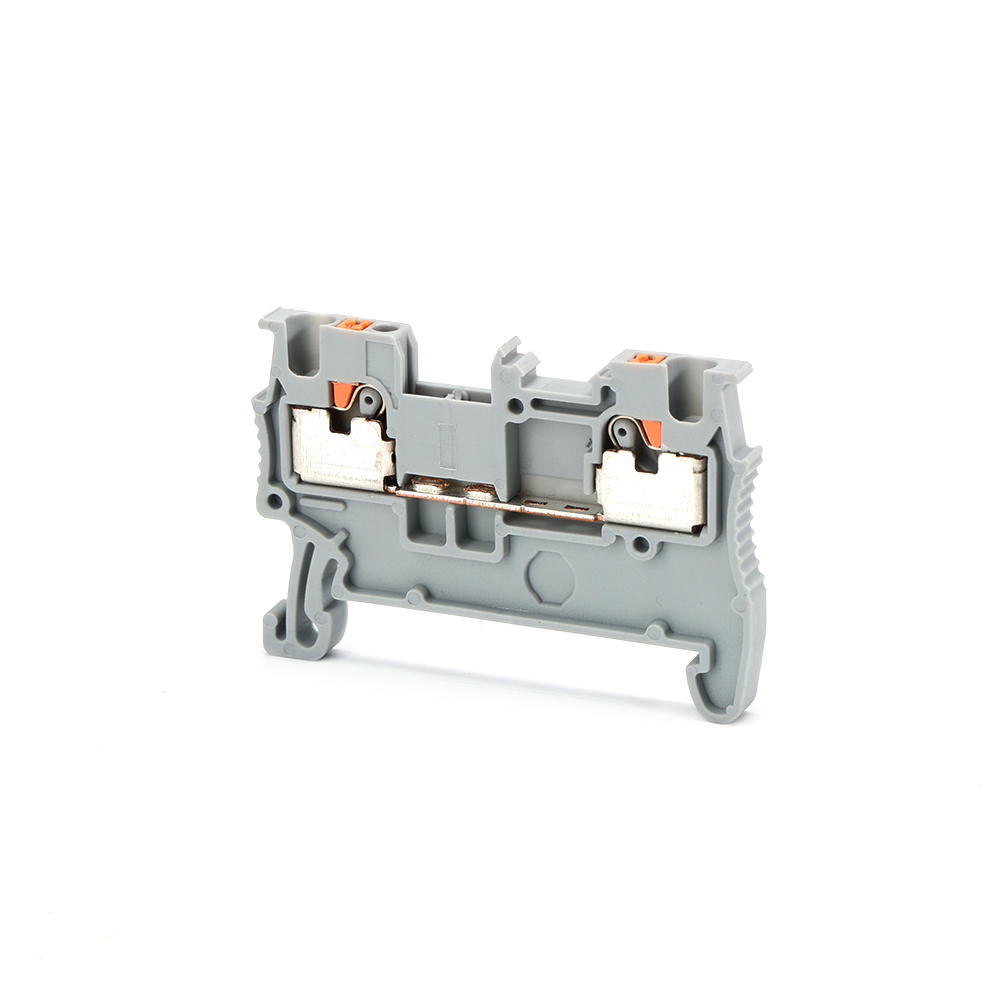
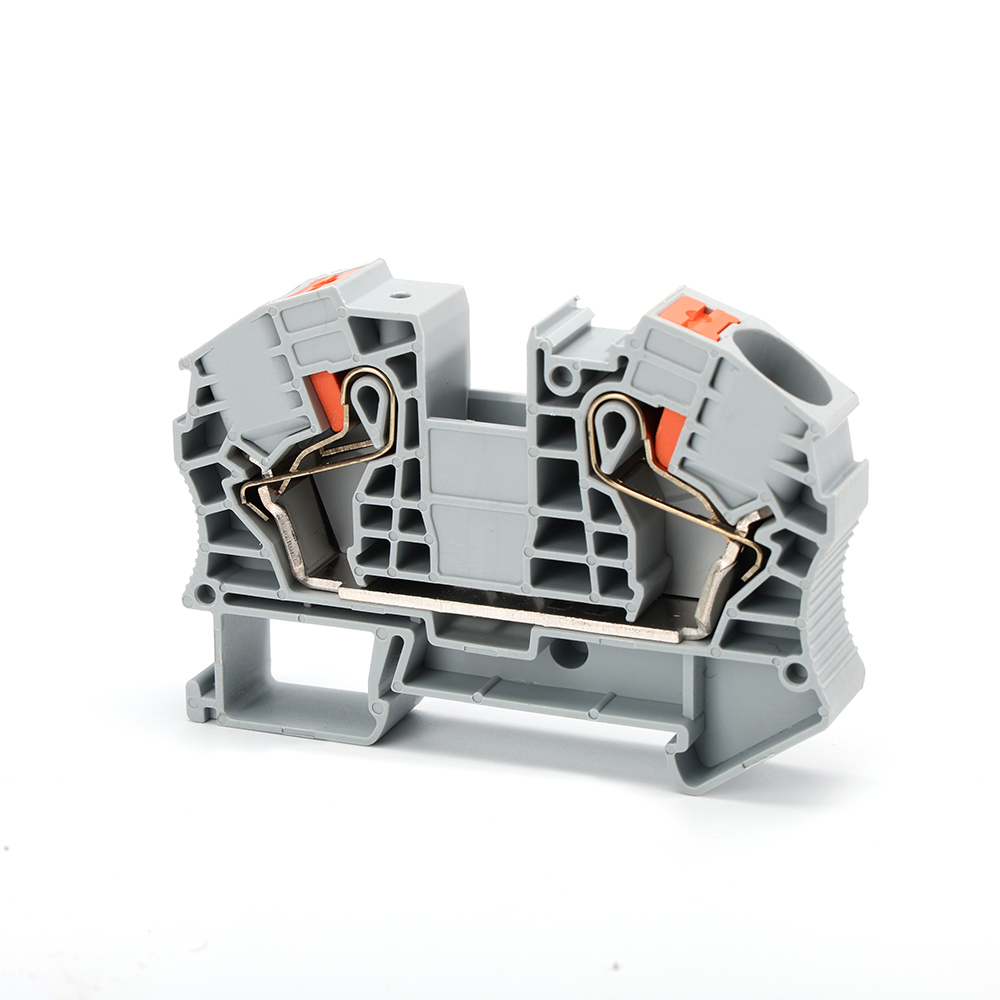
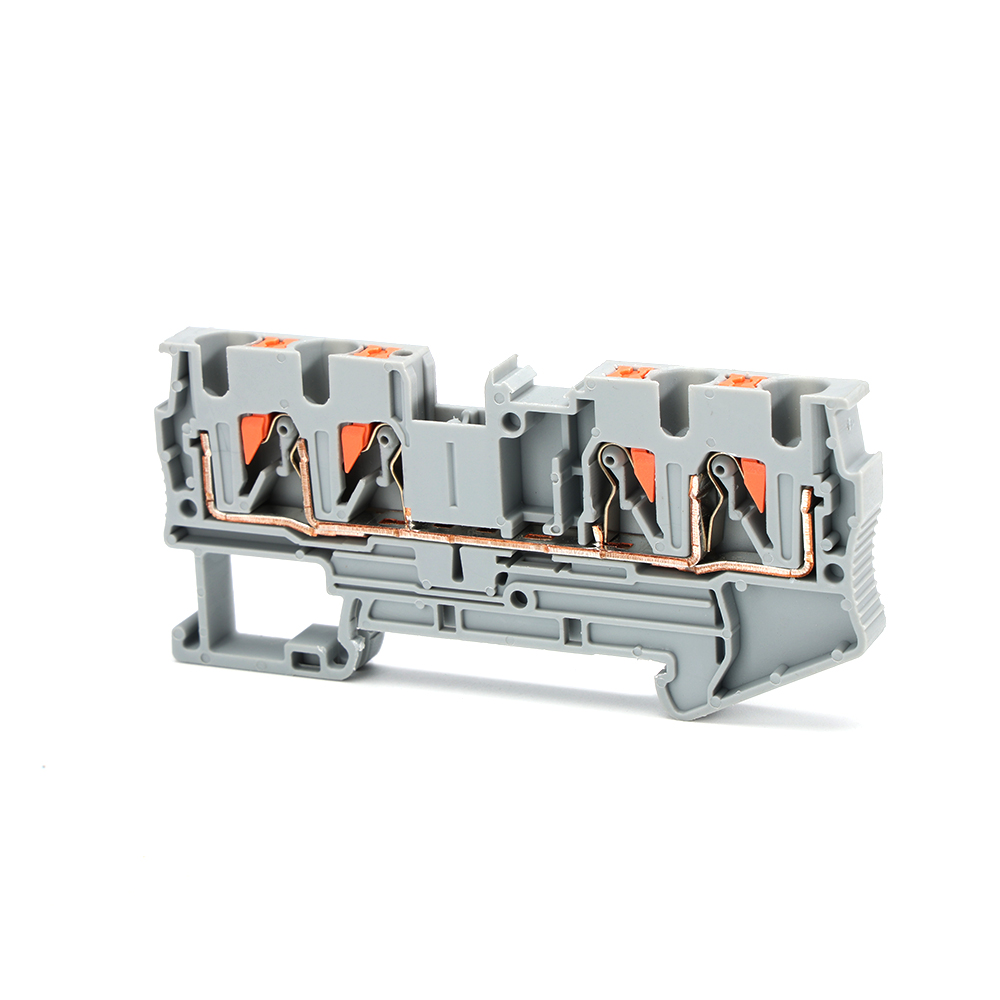
A DIN rail terminal block is a specialized component designed to mount on a DIN rail. These rails serve as the framework for the electrical panel, offering easy access for wiring, mounting, and maintenance. DIN rail terminal blocks are built to fit perfectly within these rails, providing both stability and flexibility.
Why DIN Compliance Matters
DIN compliance ensures that your electrical components meet rigorous safety and performance standards. Using DIN rail terminal blocks in your installations guarantees a high level of reliability and consistency across the entire system. Compliance with DIN standards is crucial for industries that require strict adherence to regulations, such as automation, manufacturing, and telecommunications.
Common Applications
DIN rail terminal blocks are used in a wide range of industries, including:
Industrial automation
Control systems
Telecommunications
Energy management
Building infrastructure
Each of these industries benefits from the efficiency, safety, and cost-effectiveness offered by DIN rail terminal blocks.
FAQ
Can Terminal Blocks Be Customized?
Yes, terminal blocks can be customized to meet the specific needs of your application. Many manufacturers, including Westlec, offer custom terminal blocks in various shapes, sizes, and electrical ratings to ensure compatibility with your systems.
Can Terminal Blocks Be Used Outdoors?
Yes, certain types of terminal blocks, such as waterproof cable glands, are designed to withstand outdoor environments. These blocks are typically made from materials that offer protection against moisture, dust, and extreme temperatures.
How Does A Terminal Block Improve Safety?
Terminal blocks improve safety by providing a secure and reliable connection that prevents accidental disconnections or short circuits. With proper installation, DIN rail terminal blocks ensure that wires remain in place and reduce the risk of electrical accidents.
Which Industries Use Terminal Blocks Most?
Terminal blocks are widely used in industries such as automation, energy, telecommunications, manufacturing, and building systems. They are essential in any application that requires secure and reliable electrical connections.
How Do DIN Rail Terminal Blocks Save Space?
By mounting securely on DIN rails, these terminal blocks allow for a compact, organized layout of wires and connections. This maximizes the available space inside electrical panels and enclosures.
What Types of Terminal Blocks Are Available?
There are various types of terminal blocks, including screw terminal blocks, spring clamp blocks, and pluggable terminal blocks. Each type offers unique benefits depending on the specific needs of the installation.
How Do I Maintain and Inspect Terminal Blocks?
Routine maintenance involves checking for signs of wear or corrosion, ensuring that connections are secure, and verifying that no wires are loose. Regular inspections help maintain system integrity and prevent potential failures.
Why Choose A Trusted Manufacturer Like Westlec?
Choosing a reputable terminal block manufacturer like Westlec ensures that you receive high-quality, reliable products that meet international standards. Westlec’s commitment to customer satisfaction and product excellence makes them a trusted partner for your electrical needs.
What Is The Advantage of Pluggable Terminal Blocks?
Pluggable terminal blocks offer the advantage of easy replacement or modification without the need for extensive rewiring. This is particularly useful in systems that require frequent maintenance or upgrades.
How Do Screw Terminal Blocks Differ From Spring Clamp Blocks?
Screw terminal blocks use screws to secure wires, providing a more permanent connection, while spring clamp blocks use spring tension to hold wires in place, making them easier to install and adjust.
Conclusion
Terminal blocks are essential components in electrical systems, offering safety, flexibility, and efficiency. Whether you’re designing a new control panel or upgrading an existing one, choosing the right terminal block manufacturer can make all the difference. At Westlec, we are committed to providing high-quality, reliable DIN rail terminal blocks that meet your needs. Contact us today to learn more about our products or request a quote.
When you're sourcing components for industrial projects, the electrical crimp terminals you choose can make all the difference in ensuring a reliable connection. Whether you're dealing with female crimp terminals, male crimp terminals, or the choice between insulated and non-insulated terminals, the right product can improve your system's efficiency and safety. But with so many options out there, selecting the right crimp terminal can seem overwhelming. That’s where Westlec comes in—we make it easy for you to find top-quality crimp terminals that meet your exact specifications.
Types of Electrical Crimp Terminals
Crimp terminals are an essential part of electrical systems, but they come in various types to suit different needs. In this section, we'll dive into the key categories: female crimp terminals vs. male crimp terminals, and insulated vs. non-insulated crimp terminals, along with size and wire gauge guides. Understanding these differences can help you make an informed choice based on your project’s requirements.
Female vs Male Crimp Terminals
When selecting crimp terminals, one of the first distinctions you’ll encounter is between female and male crimp terminals. These two types serve different purposes and are used based on the design of the electrical connection.
Male crimp terminals are typically used to create a connection with a female terminal. They are designed to be inserted into a female counterpart, providing a secure and reliable electrical contact.
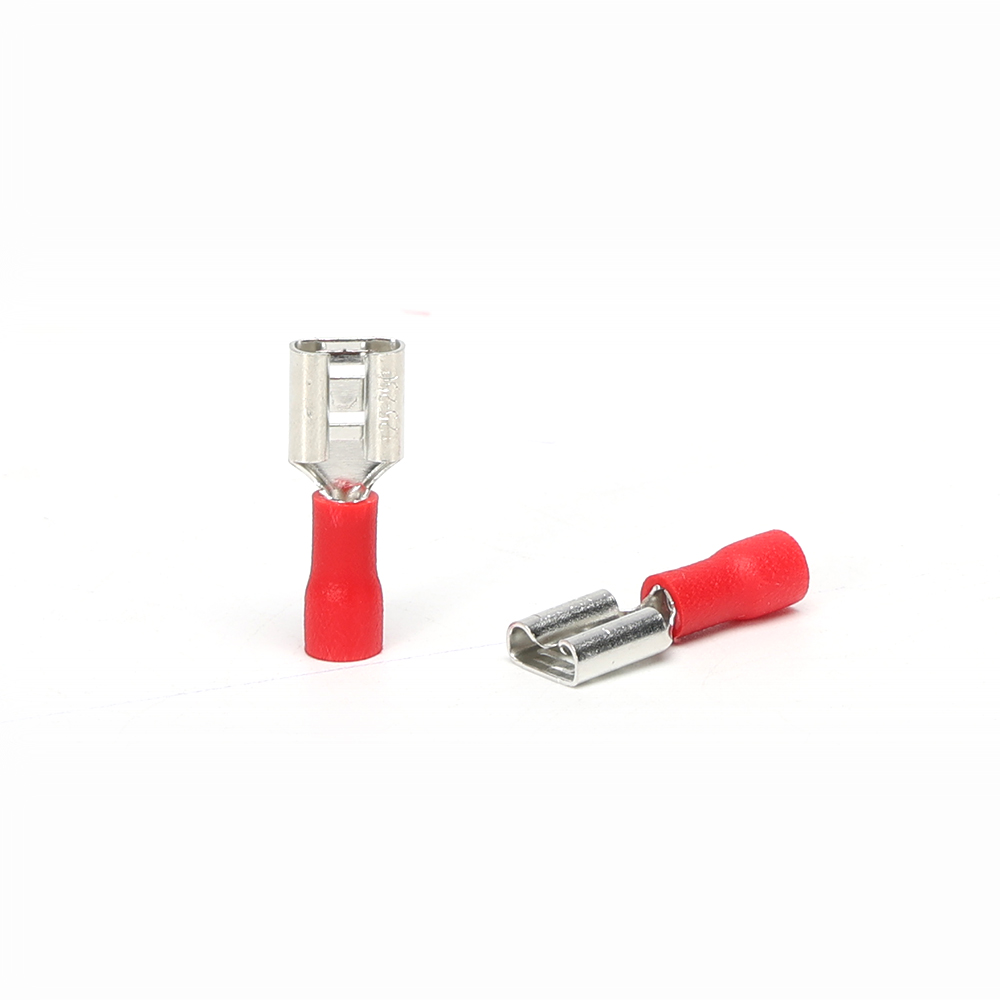
Female crimp terminals, on the other hand, receive male connectors, which can be inserted and removed as needed for maintenance or upgrades.
Common Uses:
Male terminals are often used in connections requiring a permanent link or for areas with minimal disconnects, such as power supplies.
Female terminals are more commonly used in setups that need flexibility, such as in automotive applications or modular industrial machinery.
Insulated vs Non-Insulated Crimp Terminals
Another crucial choice you'll make is whether to opt for insulated or non-insulated crimp terminals. Both offer their own advantages depending on the environment and application.
Insulated crimp terminals are coated with materials like vinyl, providing an extra layer of protection against short circuits, moisture, and physical damage. These are often preferred for high-voltage or outdoor environments.
Non-insulated crimp terminals lack this insulation, making them ideal for situations where size and efficiency are more critical than protection.
Key Considerations:
Insulated terminals are best used in high-risk environments where safety is a concern, like heavy machinery, automotive, and marine systems.
Non-insulated terminals are typically chosen for industrial applications where the wire’s insulation and the environment itself offer sufficient protection.
Size and Wire Gauge Guide
Crimp terminals come in various sizes, and choosing the correct size is essential for a secure and effective connection. The size of the terminal corresponds directly to the gauge of the wire you're working with. Using a terminal that is too small or too large for your wire can lead to weak connections, potential failure, or safety hazards.
Here’s a simple guide to help you select the right crimp terminal size based on the wire gauge:
Wire Gauge (AWG)
Recommended Terminal Size (mm²)
24-22
0.2-0.5
20-18
0.5-1.0
16-14
1.0-2.5
12-10
2.5-6.0
How Crimp Terminals Work
A crimp terminal works by securing a wire to a terminal using mechanical pressure, creating a reliable and long-lasting electrical connection. The process of crimping involves placing the wire inside the terminal’s barrel and using a crimping tool to compress the terminal tightly around the wire. This ensures that the wire is securely fastened, preventing accidental disconnections.
The Crimping Process:
Step 1: Select the correct crimp terminal based on the wire size and application.
Step 2: Insert the wire into the terminal’s barrel, ensuring that the wire is stripped to the appropriate length.
Step 3: Use a crimping tool to compress the terminal around the wire. This will form a secure connection.
Step 4: Check the crimp for security and ensure no insulation damage.
Applications
Electrical crimp terminals are versatile components used across various industries. Their primary function is to ensure a secure connection between wires and other electrical components. Below are some of the common applications.
Automotive Systems
In the automotive industry, crimp terminals play a crucial role in wiring harnesses, battery connections, and electrical systems. Whether it’s for the ignition system, lighting, or air conditioning, male and female crimp terminals are used to ensure stable and safe electrical connections in all areas of the vehicle.
Home Appliances
From refrigerators to washing machines, crimp terminals are widely used in home appliances to create safe, reliable electrical connections. Insulated crimp terminals are often used in these environments to prevent exposure to electrical hazards.
Industrial & Marine Applications
Crimp terminals are an essential component in industrial machinery, manufacturing plants, and marine vessels, where they ensure safety and reliability under challenging environmental conditions. For marine systems, non-insulated crimp terminals are often chosen for their ability to work in saltwater environments without compromising performance.
Selection Criteria
When choosing crimp terminals for your project, there are several factors you need to consider to ensure optimal performance.
Wire Gauge & Current Capacity
The wire gauge and current capacity are vital factors in choosing the right crimp terminal. A mismatch between wire size and terminal can lead to ineffective connections and system failures. Always refer to wire gauge charts and ensure that the terminal can handle the expected current load.
Environmental & Electrical Requirements
Depending on your project’s environment, you may need insulated terminals to prevent electrical shock or corrosion. Consider the operating conditions—whether you’re dealing with high humidity, extreme temperatures, or exposure to chemicals.
Safety & Standards Compliance
Crimp terminals must comply with safety standards such as UL, CE, and RoHS. Always check for certifications to ensure the components meet the necessary regulatory requirements for your region or industry.
Troubleshooting & Expert Tips
Common Problems
Some common issues when using crimp terminals include:
Loose connections: Often caused by using the wrong terminal size.
Wire damage: Can happen if the wire is not stripped correctly.
Corrosion: A common problem in marine or outdoor environments.
Professional Tips
Always use a crimping tool that matches the terminal size for a uniform and secure crimp.
Use a quality terminal with proper insulation to prevent electrical issues, especially in high-risk environments.
Double-check your crimp connections before installation to ensure reliability.
FAQ
What are crimp terminals?
Crimp terminals are connectors that use mechanical pressure to fasten a wire to a terminal, ensuring a secure electrical connection.
How do I select the right crimp terminal?
Choose crimp terminals based on the wire gauge, current capacity, and whether the environment requires insulation for protection.
Can I use non-insulated crimp terminals outdoors?
Non-insulated crimp terminals are suitable for industrial applications but may not be ideal for outdoor use unless they’re specifically designed for weather resistance.
What’s the difference between male and female crimp terminals?
Male crimp terminals are designed to be inserted into female terminals to create a secure electrical connection, commonly used when a detachable connection is required.
How do I prevent corrosion on crimp terminals?
Use insulated crimp terminals or apply corrosion-resistant coatings, especially in marine or outdoor applications, to protect the connection from environmental damage.
Conclusion
Choosing the right electrical crimp terminals is essential for the success of any project, whether in automotive, industrial, or marine applications. By considering factors such as wire gauge, environmental conditions, and terminal type, you can ensure your connections are safe, reliable, and long-lasting. At Westlec, we’re committed to providing high-quality crimp terminals tailored to your specific needs. Get in touch with us today to learn more or request a quote for your next project!
[custom-related-posts title="Related Posts" none_text="None found" order_by="title" order="ASC"]
Crimp connectors play a crucial role in ensuring the reliability and safety of electrical systems. These connectors, which are widely used across various industries, are essential for creating secure and durable wiring connections. Whether you’re working with automotive, marine, industrial, or residential wiring, understanding the different types of crimp connectors, their specifications, and how to choose the right one is essential. In this guide, we’ll explore everything you need to know about crimp connectors—from types and specifications to how to choose a reliable crimp connector manufacturer. By the end, you’ll be equipped with the knowledge to make informed purchasing decisions and ensure the best electrical connections for your needs.
What Are Crimp Connectors & Why They Matter in Modern Wiring
Crimp connectors are electrical connectors used to join two wires or terminals. They are designed to form a mechanical connection by crimping (compressing) the connector around the wire using a crimping tool. This creates a strong and low-resistance electrical connection, essential for the proper functioning of circuits. Electrical crimp connectors eliminate the need for soldering, making them faster to install and more durable in high-vibration environments.
How Crimping Works
Crimping is a straightforward process. It involves inserting the wire into the metal barrel of the connector and applying pressure with a crimping tool. This pressure deforms the barrel, causing it to tightly grip the wire, thus ensuring a secure electrical connection. Crimped connections are solid, low-resistance, and highly reliable. The crimping process also doesn’t require heat, which helps avoid the risk of damaging sensitive components, unlike soldering, which involves molten metal and heat.
Why Crimping Is Preferred Over Soldering
Crimp vs solder?There are several reasons why crimping is preferred over soldering in many applications, especially where electrical connections are exposed to vibration or physical stress.
Vibration Resistance: Crimped connections are more reliable in environments with constant vibration, such as in automotive or industrial applications. Solder joints can crack under stress, leading to connection failure.
Speed and Ease: Crimping is quicker and simpler than soldering, especially in mass production environments.
Consistency: Crimping tools apply the same amount of pressure each time, ensuring uniform connections. Soldering can vary depending on the skill of the operator.
Main Types of Crimp Connectors (With Real Applications)
Understanding the different types of crimp connectors is essential for choosing the right one for your project. Each type is designed for specific applications, offering various benefits depending on the requirements of the electrical system.
Butt Connectors (Best for Wire Splicing)
Butt connectors are commonly used to splice two wires together by joining their ends. They come in insulated and non-insulated varieties and are color-coded for easy identification based on wire gauge size.
Automotive repairs: Used for connecting wires in cars, trucks, and other vehicles.
Home appliances: Often used in household electrical systems to join wires.
Industrial wiring: Reliable for industrial applications, such as manufacturing equipment and machinery.
Why Choose Butt Connectors?
They are easy to install, making them ideal for quick wire splicing.
Vibration-resistant, ensuring stable connections over time.
Color-coding helps easily identify the correct wire gauge.
Ring Terminals (High-Current & Secure Connections)
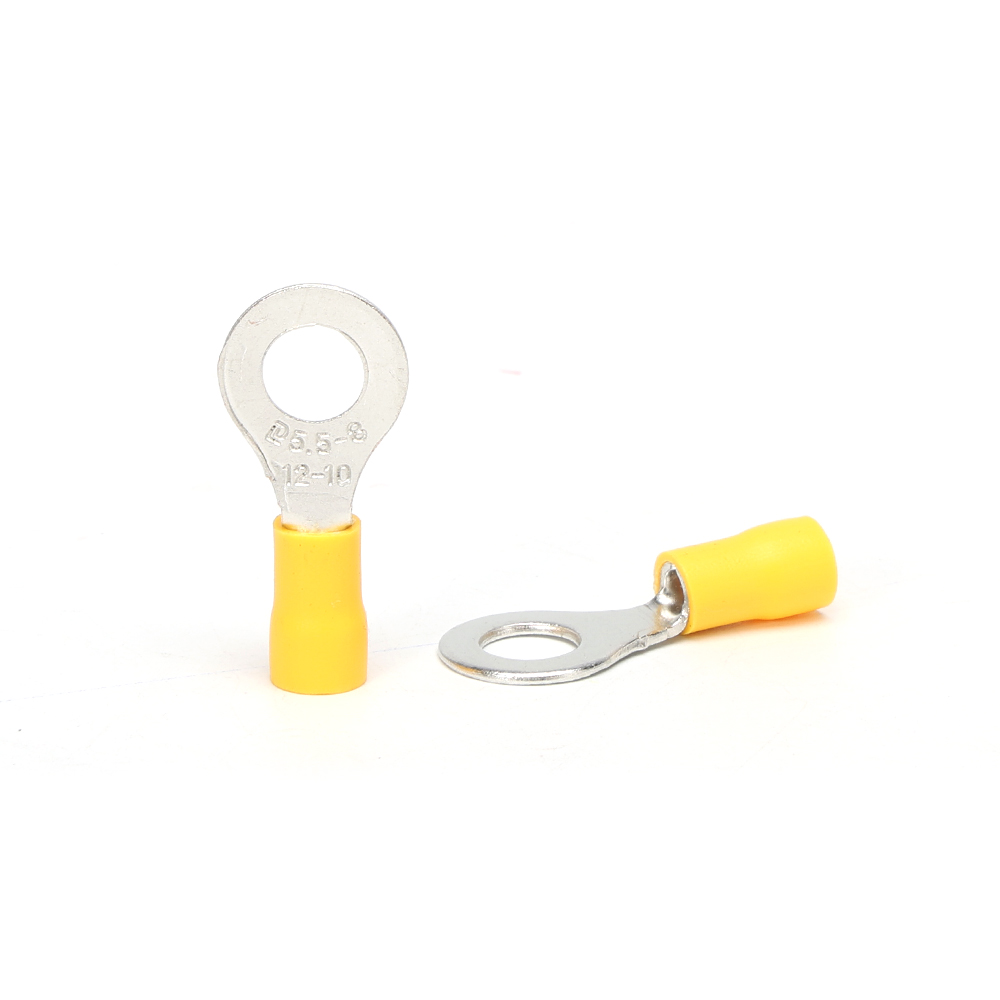
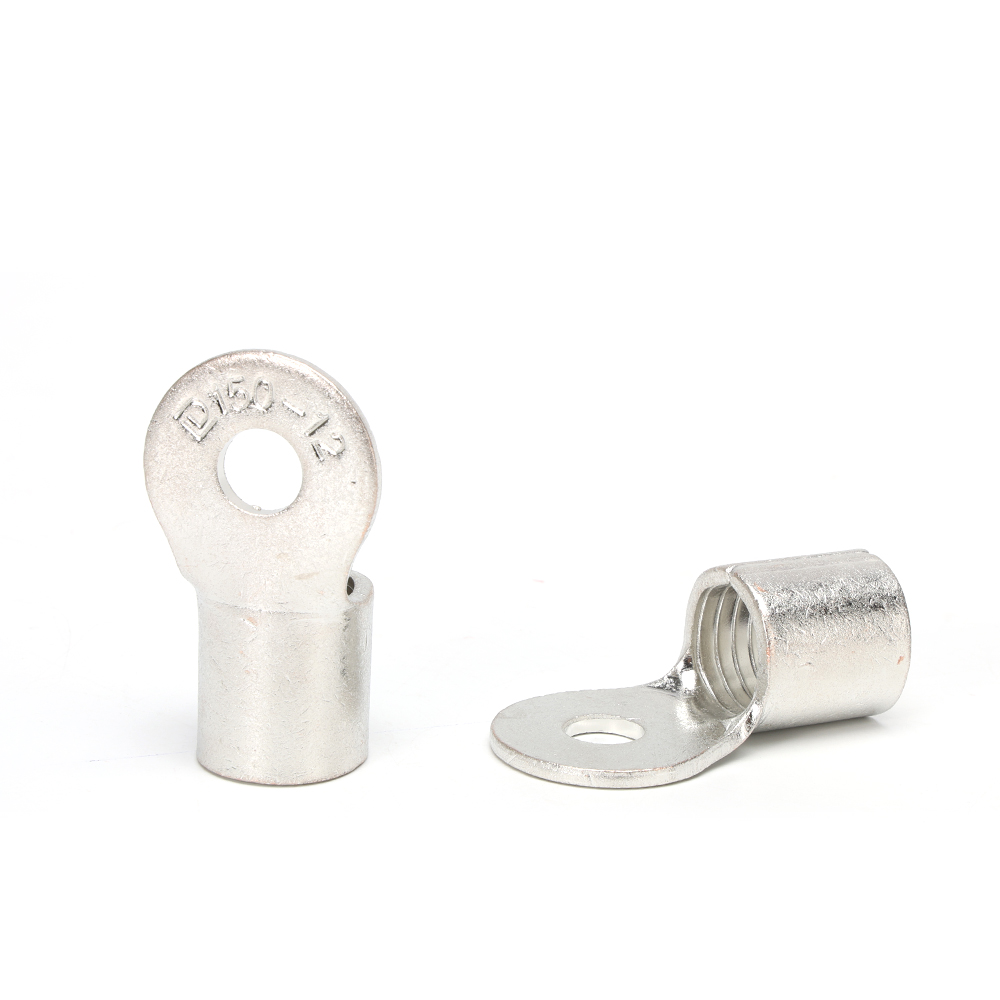
Ring terminals provide a fully enclosed circular end that fits over a screw or stud. When installed, they offer the most secure electrical connection, which is why they are commonly used in high-current applications.
Applications:
Automotive battery connections: Ideal for making secure connections to battery terminals.
Grounding systems: Used in electrical grounding to ensure a low-resistance connection.
Power distribution boards: Suitable for high-power circuits in industrial and commercial settings.
Why Choose Ring Terminals?
The fully enclosed design provides the most secure connection, especially for high-current circuits.
They are ideal for applications requiring a robust, vibration-resistant connection.
Available in various sizes and materials for a wide range of applications.
Spade / Fork Terminals (Quick Maintenance)
Spade connectors have a U-shaped opening that allows for quick and easy connection to a screw terminal. This design makes them ideal for systems that require regular maintenance or servicing.
Applications:
HVAC systems: Used in heating, ventilation, and air conditioning systems for easy disconnection and maintenance.
Electrical switchboards: Ideal for applications where quick disconnection is needed.
Audio equipment: Used in audio equipment to allow for quick repairs and adjustments.
Why Choose Spade Terminals?
They are quick and easy to install, making them ideal for systems requiring regular maintenance.
Vibration-resistant and highly reliable.
Can be used in applications where frequent disconnection is required.
Bullet Connectors (Quick Disconnect Systems)
Bullet connectors use a male-and-female design to create a quick-disconnect system. The connectors can be easily separated and reconnected, making them ideal for applications that require frequent servicing or part replacements.
Applications:
Motorcycle wiring: Used for easy disconnection and reconnection of wiring in motorcycles.
Trailer wiring: Perfect for trailers where wiring needs to be disconnected for maintenance or storage.
Automotive lighting systems: Used in automotive circuits that need quick and easy disconnection for repairs.
Why Choose Bullet Connectors?
They offer quick and tool-free disconnection and reconnection.
The rounded shape ensures easy alignment, making them convenient for tight spaces.
Stable under vibration, providing secure connections even in moving systems.
Pin Terminals (Control Panels & PLC Systems)
Pin terminals are designed for use in control panels, PLC systems, and other compact, low-voltage applications. They provide a clean, organized way to insert stranded wires into terminal blocks.
Applications:
PLC systems: Used in programmable logic controllers (PLCs) for reliable wiring connections.
Automation equipment: Ideal for industrial automation wiring.
Control panels: Used for creating neat, organized wiring layouts in control panels.
Why Choose Pin Terminals?
They prevent wire fraying and maintain a stable, secure connection.
Ideal for systems that require a clean, organized wiring layout.
Provide consistent pressure, ensuring reliable electrical contact.
Specialty crimp connectors are designed for applications that require additional protection, such as heat shrink connectors for moisture resistance or high-temperature terminals for harsh environments.
Applications:
Automotive harnesses: Used in automotive systems to ensure durability in high-vibration, high-heat environments.
Marine systems: Essential for wiring connections exposed to moisture and saltwater.
Aerospace and industrial applications: Suitable for high-tech environments requiring robust, durable connections.
Why Choose Specialty Crimp Terminals?
Waterproof and sealed, making them ideal for harsh, outdoor environments.
High-temperature resistant options ensure reliability in engine compartments.
Customizable for OEM applications, allowing for tailored solutions.
Key Specifications Buyers Must Understand Before Purchasing
Understanding the specifications of crimp connectors is crucial for choosing the right one. Here are the key factors to consider when selecting crimp connectors.
Wire Gauge (AWG) & Color Coding
Crimp connectors are available in various sizes to match the wire gauge (AWG) you are using. Many connectors are color-coded for easy identification.
Color
Wire Gauge (AWG)
Typical Use
Red
22-18
Low-voltage systems
Blue
16-14
Automotive wiring
Yellow
12-10
High-current applications
Material Selection (Copper vs Tinned Copper vs Brass)
The material used for the crimp connector affects its conductivity and resistance to corrosion.
Copper: Excellent conductivity but can corrode in humid or marine environments.
Tinned Copper: Copper with a tin coating for corrosion resistance, ideal for marine and outdoor applications.
Brass: A more affordable option, but with lower conductivity and corrosion resistance than copper.
Buyer Tip: Choose tinned copper for outdoor or marine environments to ensure long-term durability.
Insulation Types (PVC vs Nylon vs Heat Shrink)
Insulation materials protect wires from abrasion, heat, and moisture. Understanding the differences in insulation can help you choose the right crimp connector.
PVC: Basic insulation material suitable for dry, indoor environments.
Nylon: Offers better temperature resistance, ideal for industrial applications.
Heat Shrink: Provides the best protection, especially for outdoor or wet conditions.
Buyer Tip: For outdoor or marine applications, choose heat-shrink connectors to ensure waterproofing.
Current & Voltage Ratings
Each crimp connector has a specific current and voltage rating. Ensure that the connector you choose matches the power requirements of your application.
Connectors are often rated for environmental protection, such as resistance to water, dust, and chemicals. Look for connectors with high IP ratings for harsh environments.
How to Choose the Right Crimp Connector (Buyer’s Checklist)
Choosing the right crimp connector is essential to ensuring your electrical system performs reliably and safely. With so many different types and specifications, the decision-making process can be overwhelming. However, following this simple checklist will help you make an informed choice based on your specific needs. Let's walk through the steps.
Step 1: Confirm Wire Size
The first step in selecting the correct crimp connector is to determine the size of the wire you’re working with. Wire gauge, typically measured in AWG (American Wire Gauge), dictates the size of the crimp connector you need.
Too small a connector for the wire will create a weak connection, leading to overheating or even failure.
Too large a connector can cause a loose connection, which can result in voltage drop or intermittent contact.
Quick Tip: Use a wire gauge tool to measure the thickness of your wire and choose a connector that matches the corresponding AWG size.
Step 2: Identify Application Environment
Crimp connectors come in various insulation types and materials, each suited to different environments. You’ll need to consider the operating conditions, such as exposure to moisture, chemicals, temperature extremes, or vibration.
Indoor Applications: Basic PVC insulation may suffice for dry, low-temperature environments.
Outdoor or Marine Applications: Heat shrink and tinned copper connectors provide water resistance and prevent corrosion.
High-Temperature Environments: Select connectors with high-temperature insulation, like nylon or heat shrink.
Quick Tip: For harsh environments (moisture, temperature fluctuations), opt for heat shrink connectors, which offer both insulation and moisture resistance.
Step 3: Evaluate Electrical Load
Every crimp connector is rated to handle a specific amount of electrical current and voltage. Ensure that the crimp connector you choose can handle the electrical load of your system.
Low-Current Circuits: Standard connectors should suffice.
High-Current Circuits: Heavy-duty crimp connectors with thicker barrels and larger gauges are required.
Quick Tip: Match the connector’s current rating and voltage rating with the specifications of the circuit it will be used in.
Step 4: Select Insulation Type
Insulation helps protect the connector and surrounding environment from electrical hazards. The type of insulation you choose will depend on your system’s requirements, such as temperature resistance, moisture resistance, and flexibility.
PVC Insulation: Basic, cost-effective option for general purposes.
Nylon Insulation: Offers better heat resistance and is more durable in industrial settings.
Heat Shrink Insulation: Provides an extra layer of protection against water, dust, and chemicals, especially useful for outdoor or marine environments.
Quick Tip: Choose heat shrink connectors for outdoor or industrial applications where added protection is needed.
Step 5: Match with Crimping Tools
To ensure a secure connection, it's essential to use the correct crimping tool. Using the wrong crimping tool or technique can result in an unreliable connection.
Ratcheting Crimpers: Best for consistent, uniform crimps.
Standard Crimpers: Suitable for light-duty applications.
Heat Shrink Crimping Tool: Specifically designed for crimping heat-shrink connectors.
Quick Tip: Always match your crimp connector with the right tool. If in doubt, ratcheting crimpers provide more control and ensure a tighter, more reliable connection.
Quick Buyer Checklist
Wire size (AWG): Measure with a gauge tool and match the correct connector size.
Application environment: Choose insulation type based on exposure to moisture, heat, and chemicals.
Electrical load: Verify the connector’s current and voltage ratings.
Insulation type: Select according to temperature and environmental conditions.
Crimping tool: Ensure compatibility with the connector type (e.g., heat-shrink, ratcheting).
By following these five steps, you can confidently choose the right crimp connector for your specific application and ensure that your electrical system is both safe and reliable.
How to Crimp Connectors Properly (Ensure Performance)
Crimping connectors correctly is essential for the performance and longevity of your electrical system. A poorly crimped connection can lead to high resistance, overheating, or even electrical failure. Here’s a detailed guide to help you crimp connectors the right way.
Required Tools
Before you start crimping, make sure you have the right tools for the job. Using the proper tools ensures that the crimp connection is tight, secure, and reliable.
Essential Crimping Tools:
Wire Strippers: To strip the insulation from the wire without damaging the conductor.
Crimping Tool (Ratcheting or Standard): To apply even pressure and securely crimp the connector to the wire.
Heat Gun: For heat-shrink connectors to seal the insulation after crimping.
Continuity Tester/Multimeter: To check the crimp connection for proper electrical conductivity.
Optional Tools:
Crimping Dies: Specific to certain connector types, these ensure uniform crimping.
Pull Test Tool: To ensure the crimped connection has sufficient mechanical strength.
Step-by-Step Process
How to use crimp connectors?Crimping connectors may seem straightforward, but doing it correctly requires a systematic approach. Here’s a simple, step-by-step process:
Strip the Wire
Use wire strippers to remove the right amount of insulation from the wire. The stripped length should match the connector barrel’s length (check manufacturer instructions). Avoid over-stripping, as it can lead to weak connections.
Insert the Wire into the Connector
Insert the wire into the barrel of the crimp connector, making sure the wire strands are fully inside the barrel. Ensure that no insulation enters the barrel. The wire should be snug but not forced.
Crimp the Connector
Using your crimping tool, apply even pressure to the connector. For heat-shrink connectors, ensure you use a tool that applies the correct amount of force to avoid over-compressing. For standard connectors, check the manufacturer's recommended crimping pressure.
Check the Crimp
Once crimped, gently pull on the wire to check for a secure connection. If it feels loose or comes out, re-crimp or try a different size connector.
Apply Heat (if applicable)
For heat-shrink connectors, use a heat gun to shrink the insulation and form a tight seal around the wire and connector. Make sure to evenly heat the connector to avoid damage.
Test the Connection
After crimping, test the electrical continuity of the connection using a multimeter. Ensure that there is no resistance or signal loss across the crimp.
Common Mistakes to Avoid
While crimping is a relatively simple process, there are several common mistakes that can compromise the quality of your connection. Here are some pitfalls to avoid:
Using the Wrong Crimp Connector Size: Always ensure that the connector matches the wire gauge (AWG). A connector that's too small or too large can cause poor electrical contact.
Crimping on Insulation: The crimp should only grip the wire, not the insulation. Crimping on the insulation reduces the effectiveness of the connection.
Over-Stripping the Wire: Stripping too much wire can expose excess conductor, which could lead to short circuits or unreliable connections.
Inadequate Pressure: Applying too little pressure with the crimping tool can result in a loose, unstable connection. Too much pressure can damage the connector or wire.
Failing to Check the Connection: Always perform a pull test and check for electrical continuity after crimping.
How to Test Crimp Quality
Once your crimp connection is complete, it’s essential to test it to ensure it meets the necessary standards for safety and performance.
Pull Test
Perform a pull test to check the mechanical strength of the crimp. Gently tug on the wire to ensure the crimped connection holds firm. If the wire pulls out or the connector comes loose, it means the crimping was not done correctly and you may need to re-crimp.
Visual Inspection
Inspect the crimped connection to ensure the wire is fully inserted into the connector and the crimp is uniform. The metal barrel should be securely wrapped around the wire without damaging it.
Continuity Testing
Use a multimeter to check the electrical continuity through the crimped connection. There should be no resistance or voltage drop. If the reading indicates resistance, it suggests a poor crimp.
Vibration Resistance Test (for high-vibration environments)
In applications where vibration is common (e.g., automotive, industrial), it’s important to test the crimp’s resistance to mechanical stress. If possible, simulate vibration in the environment to ensure the crimped connection remains stable.
By following these steps, you can ensure your crimp connectors perform optimally and provide reliable electrical connections for the long term. Proper crimping and testing help avoid costly repairs and safety issues down the line.
How to Choose a Reliable Crimp Connector Manufacturer
Selecting a crimp connector manufacturer is an essential step in ensuring that your electrical systems are safe, reliable, and long-lasting. With so many manufacturers to choose from, it’s crucial to evaluate the right criteria to make sure you’re choosing a trustworthy partner. Here’s a comprehensive guide to help you make an informed decision when selecting a crimp connector manufacturer.
Certifications & Quality Standards
One of the first things to look for in a crimp connector manufacturer is whether they adhere to international quality standards and certifications. Certifications ensure that the manufacturer follows a set of strict quality control processes and complies with safety regulations, reducing the likelihood of defects or performance issues in the connectors.
Key Certifications to Look For:
ISO 9001: Ensures consistent quality management and manufacturing processes.
RoHS Compliance: Guarantees that the connectors are free of harmful materials, making them safe for use in various applications.
UL Certification: Verifies that the connectors meet safety and performance standards in electrical applications.
ISO 14001: Indicates the manufacturer’s commitment to environmental sustainability.
Why It Matters: Certifications ensure that the crimp connectors are manufactured to the highest quality standards, reducing the risk of faulty or substandard products in your electrical systems.
Material Quality Control
The quality of the materials used in crimp connectors directly affects their performance, longevity, and reliability. A reliable manufacturer will source high-quality materials that provide the necessary conductivity, corrosion resistance, and strength required for your application.
Key Materials to Look for:
Copper: Offers excellent conductivity but can be prone to corrosion, especially in harsh environments.
Tinned Copper: Provides the same high conductivity as copper but with added corrosion resistance, making it ideal for marine and outdoor applications.
Brass: A more cost-effective alternative, though with lower conductivity.
Nickel-Plated Copper: Used for enhanced corrosion resistance, ideal for environments exposed to moisture or chemicals.
Why It Matters: High-quality materials ensure that crimp connectors will perform well over time, even in challenging conditions. Poor-quality materials can lead to poor electrical contact, overheating, or failure.
Production Capacity
The production capacity of a crimp connector manufacturer indicates how well they can meet your specific needs in terms of volume, delivery time, and order flexibility. A reliable manufacturer should have the capacity to handle both large and small orders with consistent quality.
Factors to Consider:
Order Volume: Can the manufacturer handle bulk orders if necessary? Or do they specialize in smaller, custom runs?
Lead Time: How long does it take for the manufacturer to fulfill your order? Ensure they can meet your timeline needs.
Flexibility: Can the manufacturer accommodate urgent orders or changes in specifications?
Why It Matters: A manufacturer with sufficient production capacity ensures that your order will be fulfilled in a timely manner without compromising on quality. If a manufacturer has limited capacity, it may cause delays, affecting your project timelines.
Customization (OEM / ODM)
Customization options are important, especially for businesses that have specific requirements or want unique crimp connectors tailored to their applications. OEM (Original Equipment Manufacturer) and ODM (Original Design Manufacturer) services allow you to design crimp connectors that fit your exact needs.
Customization Options to Look For:
Connector Size: Tailoring the size of the connectors to your specific wire gauge or application.
Insulation Type: Choosing the appropriate insulation material for environmental protection.
Connector Shape & Design: Custom crimp connector designs for non-standard applications or spaces.
Branding: Private labeling options for OEMs or product lines.
Why It Matters: Customization allows you to get connectors that are uniquely suited to your project requirements, offering more flexibility and adaptability to different wiring needs.
Testing & Inspection
A reliable crimp connector manufacturer should have a robust testing and inspection process to ensure the quality and performance of every product they produce. Testing ensures that connectors meet industry standards and perform well under real-world conditions.
Types of Testing to Look For:
Pull Test: To ensure the crimp connection has sufficient mechanical strength and won’t come loose under stress.
Electrical Continuity Test: To verify that the crimp connection allows electrical current to pass without resistance or interruption.
Environmental Testing: Tests for temperature, humidity, vibration, and moisture resistance to ensure the connectors perform well in various conditions.
Visual Inspection: To check for any manufacturing defects, such as poor crimping, damaged insulation, or material inconsistencies.
Why It Matters: Rigorous testing ensures that every crimp connector meets the required performance and safety standards, helping you avoid failures or problems down the line.
Why Global Buyers Choose Westlec
Westlec is a trusted manufacturer of high-quality crimp connectors and electrical components. Here’s why buyers worldwide choose Westlec for their crimp connector needs:
Premium Material Quality: Westlec uses high-grade copper, tinned copper, and brass to ensure maximum conductivity, corrosion resistance, and strength.
Certifications: Westlec adheres to ISO 9001 and RoHS compliance, guaranteeing that their products meet international quality standards and environmental regulations.
Customization Options: Westlec offers both OEM and ODM services, allowing businesses to tailor connectors to their specific needs.
Testing & Inspection: All products undergo comprehensive testing, including pull tests, electrical tests, and environmental tests, to ensure reliability and performance.
Fast Turnaround Times: With a robust production capacity, Westlec can handle bulk orders and custom requests, ensuring fast lead times without sacrificing quality.
Global Shipping: Westlec serves clients across the globe, delivering high-quality connectors to industries ranging from automotive to industrial and marine.
By choosing Westlec, you’re assured of getting reliable, high-performance crimp connectors that meet the highest standards of quality and safety.
FAQ
Are Crimp Connectors Better Than Soldering?
Yes, crimp connectors are often better than soldering for many applications, particularly in environments with vibration. Crimping provides a quicker, more reliable, and vibration-resistant connection compared to soldering, which can crack under stress.
Can Crimp Connectors Be Reused?
No, crimp connectors are typically designed for single-use only. Reusing them can compromise the connection, leading to poor contact or electrical failure.
What Size Crimp Connector Do I Need?
The size of the crimp connector depends on the wire gauge (AWG) and the electrical load. Always ensure that the connector you choose matches the wire size and current rating of your system.
Are Heat Shrink Connectors Waterproof?
Yes, heat shrink connectors are waterproof when installed correctly. The heat-shrink tubing provides a protective seal around the connection, making it resistant to moisture and environmental factors.
What Is The Best Crimping Tool?
A ratcheting crimping tool is considered the best for consistent, high-quality crimps. It applies uniform pressure to ensure a secure connection, reducing the chances of an incomplete crimp.
What Happens If A Crimp Is Bad?
A poorly crimped connection can lead to several issues, including overheating, electrical failure, and even fire hazards. It’s crucial to use the correct connector size and crimping tool to ensure a secure connection.
Are Cheap Crimp Connectors Reliable?
Cheap crimp connectors may save you money upfront, but they often lack the quality control and testing standards necessary for long-term reliability. It’s important to prioritize quality to avoid potential system failures.
Conclusion
Choosing the right crimp connectors and manufacturer is essential for the safety and reliability of your electrical systems. By considering factors such as material quality, certifications, testing processes, and customization options, you can make an informed decision that aligns with your project requirements. For those looking for premium-quality crimp connectors, Westlec stands out as a trusted partner, offering high-performance solutions for a variety of industries.
Need help choosing the right crimp connectors for your next project? Contact Westlec today to learn more about our products, customization options, and how we can help you ensure the success of your wiring systems.
If you work with electrical systems, you’ve likely come across crimp terminals—small but critical components that ensure secure, long-lasting wire connections. From industrial control panels to automotive wiring, electrical crimp terminals provide a reliable mechanical and electrical link without soldering. In this guide, you’ll learn what they are, how they work, their types, and how to choose the right solution for your application or procurement needs.
What Is a Crimp Terminal?
Basic Definition
A crimp terminal is a type of electrical connector used to join a wire to a device, terminal block, or another wire through mechanical compression. Instead of melting metal like soldering, crimping creates a cold-welded connection by deforming the terminal around the conductor.
This process forms both:
A mechanical bond that holds the wire firmly
An electrical connection that allows efficient current flow
For procurement professionals, this dual functionality is exactly why crimp terminals dominate modern electrical assembly.
Structure of a Crimp Terminal
Understanding the structure helps you choose the right product faster.
A standard crimp terminal typically includes:
Conductor barrel — where the stripped wire is inserted
Contact area — connects to equipment (ring, fork, pin, etc.)
Insulation sleeve — protects against short circuits and damage
Color coding — indicates wire size compatibility
Most high-quality terminals use copper or brass, often tin-plated for corrosion resistance.
How Does a Crimp Terminal Work?
At its core, crimping relies on controlled deformation.
When you apply a crimping tool:
The metal barrel compresses tightly around the wire strands
Air gaps are eliminated, reducing oxidation
A gas-tight connection is formed
This results in a connection that is:
Highly conductive
Resistant to vibration
Durable under thermal cycling
Compared to soldering, crimping avoids brittle joints and heat damage. That’s why industries like automotive and energy strongly prefer it.
Types of Crimp Terminals
This is where things get practical—choosing the right type directly affects performance and installation efficiency.
Insulated Crimp Terminals
These come with a PVC or nylon sleeve.
Advantages:
Prevent accidental short circuits
Easier handling during installation
Color-coded for quick identification
They are widely used in commercial and residential wiring.
Uninsulated Crimp Terminals
No insulation—just pure metal.
Best suited for:
Control cabinets
Industrial machinery
High-temperature environments
They offer better conductivity and are often paired with heat shrink tubing.
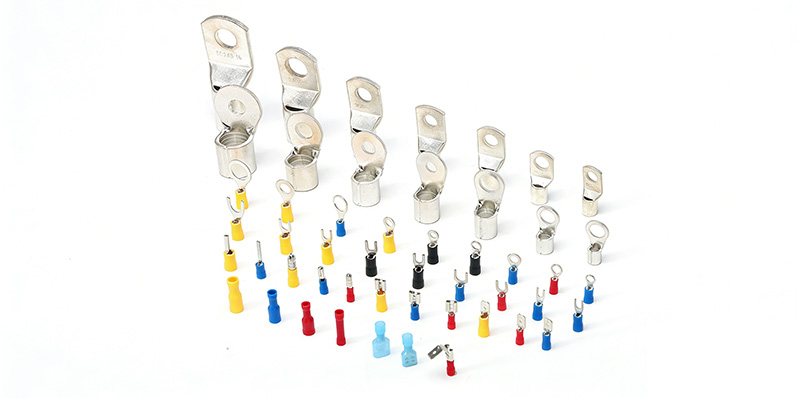
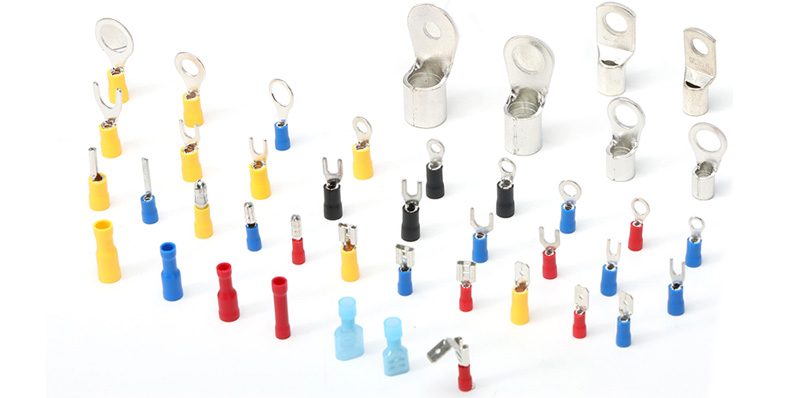
Common Shapes of Crimp Terminals
Different applications require different geometries.
For large-scale procurement, selecting the correct shape can significantly reduce installation time.
Crimp Terminal Materials and Color Coding
Materials
Material selection impacts conductivity, durability, and cost.
Material
Conductivity
Corrosion Resistance
Typical Use Case
Copper
Excellent
Moderate
General wiring
Tinned Copper
Excellent
High
Marine, outdoor
Brass
Good
Good
Cost-effective industrial use
Color Coding System
Color coding simplifies wire matching in the field.
Red — 0.5–1.5 mm²
Blue — 1.5–2.5 mm²
Yellow — 4–6 mm²
This system reduces installation errors—especially useful when managing large projects with multiple technicians.
Applications of Crimp Terminals
Crimp terminals are everywhere—and for good reason.
You’ll typically find them in:
Electrical distribution panels
Automotive harness systems
Industrial automation equipment
Renewable energy installations (solar, wind)
In one real-world scenario, a commercial solar contractor reduced maintenance failures by switching from soldered joints to crimp terminals, improving uptime across multiple installations.
Crimping vs Soldering: Which Is Better?
This is a high-impact decision point for many buyers.
Factor
Crimping
Soldering
Strength
High (vibration-resistant)
Medium (can crack)
Installation
Fast
Time-consuming
Skill Required
Moderate
High
Consistency
Very consistent
Operator-dependent
Heat Impact
None
Can damage insulation
Why industries prefer crimping:
Faster production cycles
Lower labor cost
More consistent quality
If you’re sourcing for manufacturing or large-scale installation, crimping is almost always the better investment.
How to Use Crimp Terminals (Step-by-Step Guide)
Even the best terminal fails if installed incorrectly. Here’s a clean workflow:
Strip the wire to the correct length
Insert the conductor fully into the barrel
Use a calibrated crimping tool
Apply firm, even pressure
Inspect for tightness and alignment
A properly crimped connection should not pull apart under moderate force.
How to Choose the Right Crimp Terminal
This is where procurement decisions get strategic.
Key Selection Factors
Wire size compatibility — always match gauge precisely
Choosing incorrectly can lead to failure, rework, and increased cost.
Practical Buying Insights
When you’re sourcing at scale, think beyond just price.
Bulk consistency matters more than unit cost
Packaging should support efficient installation
Supplier traceability reduces risk
Customization may be necessary for OEM projects
Lead time stability is critical for production planning
Why Choose Westlec As Your Crimp Terminal Manufacturer
When it comes to sourcing high-quality crimp terminals, making the right choice of manufacturer is crucial for ensuring the durability, reliability, and performance of your electrical connections.
By choosing Westlec, you’re ensuring that your electrical connections are in good hands. With an unmatched focus on quality, customization, and customer service, Westlec is the perfect partner for your crimp terminal needs.
FAQs About Buy Crimp Terminals
Are crimp connections reliable?
Yes—when properly installed, they are highly reliable and widely used in industry.
Can crimp terminals be reused?
No, they are designed for single use to maintain integrity.
What tool is used for crimping?
A dedicated crimping tool matched to the terminal type.
How do I choose the right size?
Match the terminal to your wire gauge and color code.
What Is The Difference Between Insulated And Non-insulated Terminals?
Insulated terminals have a protective covering to prevent short circuits, while non-insulated terminals are exposed metal for direct connections.
Are Crimp Terminals Better Than Soldering?
Yes, crimp terminals offer stronger, more reliable connections that resist vibration better than soldering.
Do Crimp Terminals Prevent Short Circuits?
Insulated crimp terminals can help prevent short circuits by isolating the connection from external elements.
What Materials Are Best For Crimp Terminals?
Copper, tinned copper, and brass are the best materials for crimp terminals, offering excellent conductivity and corrosion resistance.
Where Can I Buy High-Quality Crimp Terminals?
You can buy high-quality crimp terminals from reputable suppliers like Westlec or authorized distributors.
Conclusion
By now, you should have a clear understanding of what crimp terminals are, how they work, and how to select the right type for your needs. From material selection to application scenarios, every detail plays a role in ensuring a safe, durable electrical connection.
For procurement professionals, the real value lies in balancing performance, consistency, and supplier reliability. Choosing the right partner—especially one that understands real-world applications like Westlec—can significantly reduce long-term operational risks.
If you’re planning a project or sourcing in bulk, now is the time to act—reach out, request samples, compare specifications, and secure a supplier that aligns with your quality and delivery expectations.
[custom-related-posts title="Related Posts" none_text="None found" order_by="title" order="ASC"]
Related Product
Warning: Invalid argument supplied for foreach() in /www/wwwroot/westlec.com/wp-content/themes/junj/single.php on line 67



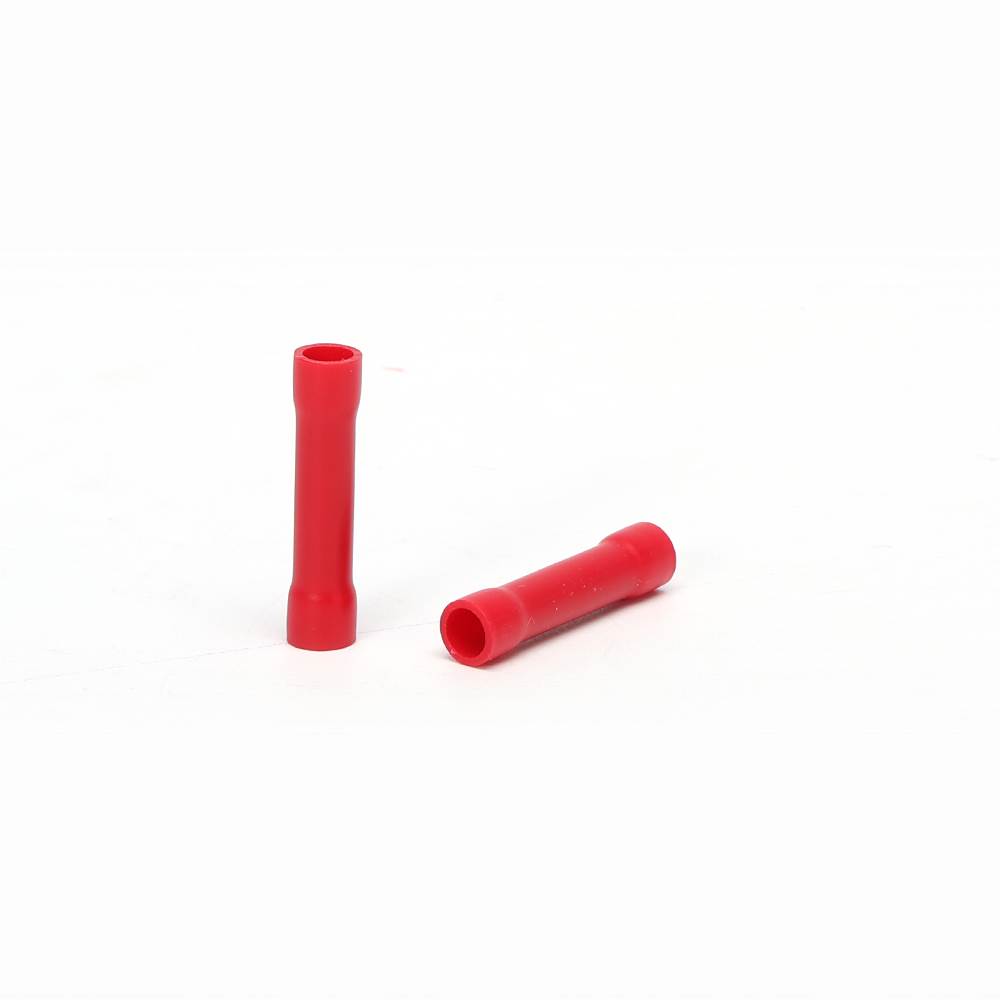 Vinyl-insulated butt splice terminal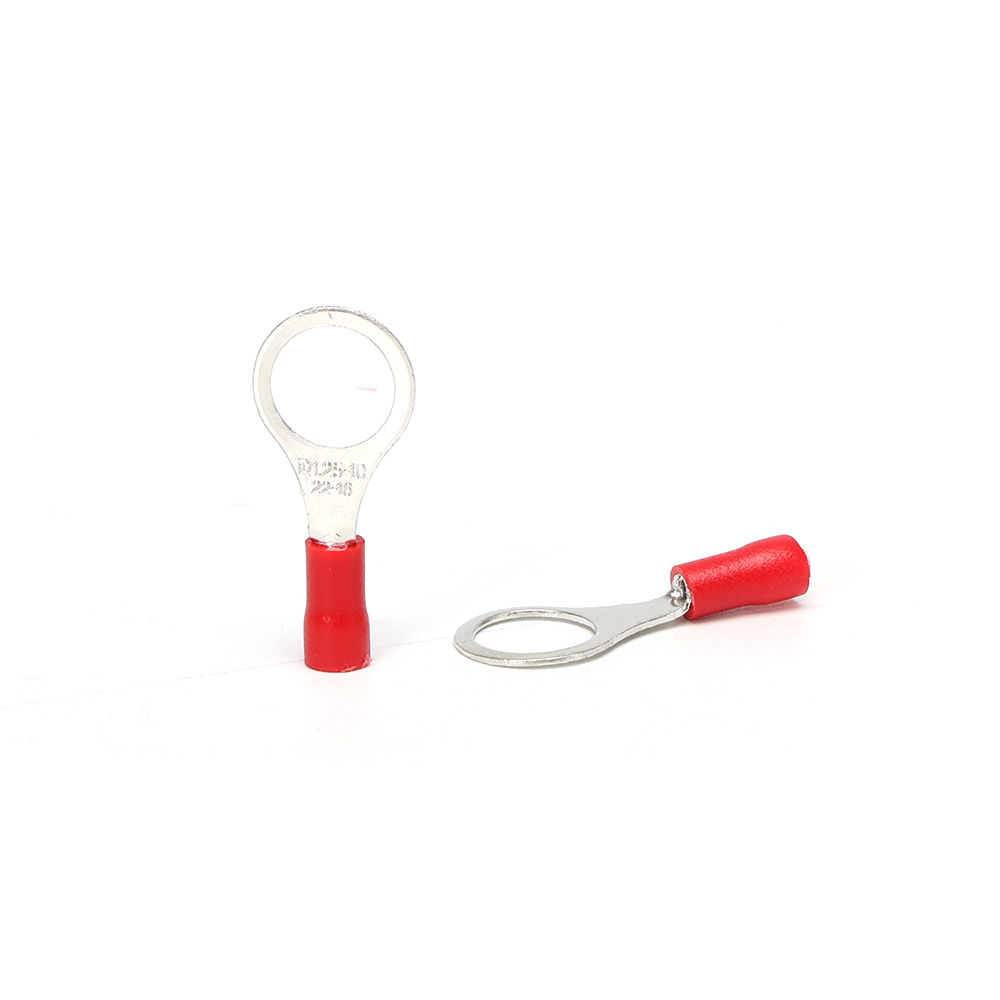
 EN
EN  PT
PT 