China is the world's largest producer of low-voltage electrical components, including DIN rail terminal blocks used in industrial control panels, power distribution systems, and OEM equipment. But with thousands of suppliers advertising online, the real challenge is not finding a manufacturer — it is finding one you can trust. A wrong choice can mean substandard materials, missed delivery deadlines, fake certifications, or complete communication breakdown after payment.
This guide shows you exactly how to find a trusted China DIN rail terminal block manufacturer step by step. You will learn where to search, how to verify legitimacy, what certifications to demand, how to distinguish real factories from trading companies, and the red flags that signal an unreliable supplier. Whether you are a first-time buyer sourcing from China or an experienced procurement manager looking for a better supplier, this guide gives you a practical, actionable framework.
Why Source DIN Rail Terminal Blocks from China?
China's electrical component manufacturing industry has matured significantly over the past two decades. Cities like Yueqing in Zhejiang Province have become global hubs for low-voltage electrical products, with complete supply chains covering raw materials, precision tooling, injection molding, automated assembly, and quality testing. Understanding the advantages of sourcing from China helps you set realistic expectations and evaluation criteria.
Manufacturing Cost Advantages
China offers significant cost advantages without necessarily compromising quality. Lower labor costs, integrated supply chains, and economies of scale allow Chinese manufacturers to produce DIN rail terminal blocks at 30-50% lower prices than European or North American equivalents. For B2B buyers managing large-volume industrial projects, these savings compound across thousands of units.
However, cost advantage alone does not make a manufacturer trustworthy. The key is finding suppliers who pass these savings to you while maintaining international quality standards. For a deeper understanding of pricing factors, our terminal block price guide breaks down what drives cost differences across suppliers.
Supply Chain Maturity and Product Range
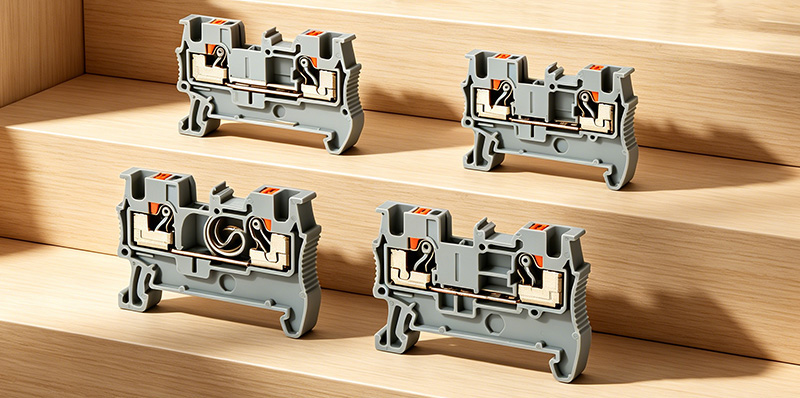
Established Chinese manufacturing clusters offer complete product ecosystems. A trusted China DIN rail terminal block manufacturer typically provides all major connection types — screw connection, spring cage, and push-in terminal blocks — along with accessories like end plates, bridges, markers, and DIN rails. This breadth allows you to consolidate sourcing, simplify logistics, and maintain consistent quality across your entire bill of materials.
China's supply chain maturity also means faster prototyping for custom specifications, shorter tooling turnaround times, and flexible MOQ arrangements that accommodate both small-batch testing and high-volume production runs.
Where to Find China DIN Rail Terminal Block Manufacturers
Finding potential manufacturers is the first step. Each sourcing channel has distinct advantages and limitations. Use multiple channels in parallel to build a strong shortlist of candidates.
B2B Platforms
Online B2B marketplaces are the most common starting point for finding Chinese suppliers. Alibaba, Made-in-China, and Global Sources host thousands of electrical component manufacturers with company profiles, product catalogs, and trade assurance programs. These platforms allow you to filter by certification, export experience, and response rate.
However, B2B platforms mix factories with trading companies, and profile ratings can be manipulated. Always cross-reference platform information with the manufacturer's own website, independent business registration databases, and third-party audit reports.
Industry Exhibitions and Trade Shows
Trade fairs remain one of the most effective ways to meet manufacturers face-to-face and evaluate products directly. Key exhibitions for electrical components include:
- Canton Fair (Guangzhou) — China's largest trade exhibition, held twice annually (spring and autumn), featuring electrical and electronic products sections
- China International Industry Fair (Shanghai) — Focus on industrial automation and electrical components
- Electrical Building Technology Guangzhou — Specialized exhibition for low-voltage electrical components and building electrical systems
- Hannover Messe (Germany) — Many Chinese manufacturers exhibit here to reach European industrial buyers
At exhibitions, you can physically inspect product quality, discuss technical specifications directly with engineers, and establish personal relationships that build trust. Many buyers combine exhibition visits with factory tours in the same trip.
Search Engine Research
Professional manufacturers invest in their own websites with detailed product catalogs, technical datasheets, and company information. Google searches for terms like "DIN rail terminal block manufacturer China" or "terminal block factory Yueqing" can uncover manufacturers that maintain independent websites outside of B2B platforms. These suppliers often have stronger brand presence and technical documentation.
A manufacturer with a well-maintained website, comprehensive terminal block product range, downloadable datasheets, and transparent company information signals professionalism and long-term commitment — traits that are harder to fake on a standalone website than on a B2B platform profile.
Industry Referrals and Networks
Recommendations from industry peers, electrical engineering forums, and professional networks can lead you to manufacturers with proven track records. LinkedIn groups, engineering communities, and industry associations often share supplier experiences that are more candid than any online review. A referral from a trusted colleague who has already verified a manufacturer's quality saves weeks of due diligence.
Sourcing Channel Comparison
Use this comparison table to choose the right sourcing channels for your situation. Most successful buyers combine 2-3 channels to build a robust shortlist.
| Channel |
Advantages |
Limitations |
Trust Level |
| B2B Platforms |
Large supplier pool, trade assurance, easy comparison |
Mixes factories with trading companies; ratings can be inflated |
Medium — requires independent verification |
| Trade Exhibitions |
Face-to-face contact, physical product inspection, direct negotiation |
Requires travel, limited to exhibition dates, limited supplier pool per event |
High — personal interaction builds confidence |
| Search Engine Research |
Finds manufacturers with independent websites and technical resources |
Requires SEO knowledge to find quality results; some factories have weak web presence |
Medium-High — professional websites signal commitment |
| Industry Referrals |
Pre-vetted suppliers, candid feedback, time-saving |
Limited pool, may not match your specific product needs |
Highest — peer recommendation is the strongest signal |
Request Supplier Verification Documents
7 Essential Criteria for Identifying a Trusted China Manufacturer
Once you have a shortlist of potential manufacturers, evaluate each one against these seven trust criteria. A manufacturer that meets all seven is highly likely to be a reliable, long-term partner for your industrial projects.
1. Verifiable Business Licenses and Company Registration
Every legitimate Chinese manufacturer must hold a valid business license issued by the local Administration for Industry and Commerce. This document includes the company's registered name, legal representative, registered capital, business scope, and establishment date. You can verify business licenses through China's National Enterprise Credit Information Publicity System or third-party verification services.
Pay attention to the business scope on the license — it should explicitly include manufacturing of electrical components or low-voltage electrical products. If the scope only mentions "trading" or "sales," you are dealing with a trading company, not a manufacturer. Also check the establishment date: a manufacturer with 10+ years of operation has a proven track record of survival in a competitive market.
2. International Quality Certifications
Certifications are the most objective measure of a manufacturer's commitment to quality. A trusted China DIN rail terminal block manufacturer should hold these certifications at minimum:
| Certification |
What It Proves |
How to Verify |
| IEC 60947 / EN 60947 |
Compliance with international low-voltage switchgear standards |
Request test reports from accredited labs (TUV, SGS, Intertek) |
| CE Marking |
EU health, safety, and environmental compliance |
Check Declaration of Conformity and Notified Body number |
| UL Certification |
Safety certification for North American markets |
Search UL Product iQ database with company name or file number |
| RoHS Compliance |
No hazardous substances in manufacturing materials |
Request RoHS test report from recognized testing lab |
| ISO 9001 |
Quality management system is certified and audited |
Verify certificate number on certification body's website |
Never accept photocopies or scanned images at face value. Every certification can be verified online through the issuing body's database. Fake certificates are one of the most common fraud tactics in cross-border trade.
3. Manufacturing Experience in Terminal Block Production
Not all electrical component manufacturers have deep expertise in terminal blocks specifically. Some factories produce a broad range of products without specializing in any. A trusted manufacturer should have focused experience in DIN rail terminal block production — ideally 10 or more years — and should be able to demonstrate knowledge of different connection types, material specifications, and industrial application requirements.
Ask about the manufacturer's engineering team. Do they have in-house engineers who understand terminal block design? Can they explain the differences between their screw connection terminal block applications and spring cage variants? A manufacturer whose staff can discuss technical details with confidence is far more trustworthy than one that only talks about price.
4. In-House Production vs. Trading Company
One of the most important distinctions in Chinese sourcing is whether you are dealing with an actual factory or a trading company. Both have legitimate roles, but you need to know which one you are working with. The table below helps you identify the difference:
| Characteristic |
Direct Factory |
Trading Company |
| Business license scope |
Includes "manufacturing" or "production" |
Only includes "trading," "sales," or "import/export" |
| Product range |
Focused on one product category with deep expertise |
Broad range across unrelated categories |
| Pricing |
Factory-direct pricing, typically lower |
Includes trading margin, typically higher |
| Factory tour |
Can show production lines, equipment, workers |
May show a partner factory or avoid tours |
| Customization |
Direct control over tooling, materials, production schedule |
Acts as intermediary, less control over production details |
| Technical support |
In-house engineers with direct product knowledge |
Sales staff, may need to relay technical questions to factory |
| Quality control |
Direct oversight of QC processes and testing |
Limited visibility into factory QC practices |
For industrial projects requiring consistent quality, customization, and technical support, working directly with a factory is generally preferable. Trading companies can add value when you need to source multiple unrelated product categories or when you require lower MOQs than a factory would accept.
5. Quality Control Systems and Testing Equipment
A trusted manufacturer should have documented quality control procedures at every production stage — from incoming material inspection to in-process quality checks to final product testing. Ask specific questions: What testing equipment do they use? Do they perform dielectric strength tests on every batch? Do they measure torque retention on screw terminals? Do they conduct thermal cycling tests?
Request photos or videos of their testing lab and QC stations. A manufacturer that cannot show you their testing equipment or explain their QC process is unlikely to maintain consistent product quality. For a deeper understanding of what to look for, our China supplier selection guide covers quality control evaluation in additional detail.
6. Export Experience and Global Customer Base
Export experience matters because it indicates the manufacturer understands international trade requirements, customs documentation, incoterms, and packaging standards for long-distance shipping. A manufacturer with 10+ years of export experience has likely resolved most logistics challenges and can guide you through the import process smoothly.
Ask which countries they currently export to and whether they have customers in your region. A manufacturer already shipping to your market will be familiar with your country's import regulations, required certifications, and preferred shipping routes. Request references from existing international customers — a trusted manufacturer will gladly provide them.
7. Communication Responsiveness and Technical Support
Communication quality is one of the most reliable predictors of a manufacturer's overall trustworthiness. A manufacturer that responds to inquiries within 24 hours, answers technical questions accurately, provides complete documentation promptly, and proactively updates you on order status is demonstrating professional service standards that will extend to production and after-sales support.
Test communication responsiveness early: send a detailed inquiry and note how long it takes to get a substantive response (not just an auto-reply). Ask technical questions about product specifications and see if the answers are accurate and detailed. Poor communication during the sales process almost always means worse communication after you place an order.
Trust Verification Checklist
Use this checklist to systematically verify each potential manufacturer before placing an order. A manufacturer should pass every item on this list to be considered truly trusted.
Manufacturer Trust Verification Checklist:
- Business license verified through National Enterprise Credit Information Publicity System
- Business scope includes manufacturing of electrical components
- Company has been operating for 5+ years (10+ preferred)
- IEC 60947 / EN 60947 test reports provided from accredited lab
- CE, RoHS, and ISO 9001 certificates verified on issuing body websites
- UL certification verified in UL Product iQ database (if applicable)
- Factory tour (virtual or in-person) completed showing production lines
- Quality control procedures explained with photos or videos of testing equipment
- Product samples received and tested for build quality and specifications
- Technical datasheets match actual sample measurements
- Export experience confirmed with references from international customers
- Communication response time under 24 hours for all inquiries
- Payment terms include trade assurance or letter of credit for first order
- Warranty policy (12-24 months) provided in writing
Get a Free Supplier Assessment
How to Verify a China Manufacturer's Legitimacy
Beyond checking the checklist above, take these specific verification actions to protect yourself from fraud and ensure you are dealing with a legitimate, capable manufacturer.
Step 1: Verify Business Registration
Request a copy of the manufacturer's business license (营业执照) and cross-check the information on China's National Enterprise Credit Information Publicity System (国家企业信用信息公示系统). This free government database shows registration status, legal representative, paid-in capital, annual reports, and any administrative penalties. If the company name or registration number on the license does not match the database, do not proceed.
Third-party verification services like SGS, TUV, or QCC can provide more detailed company background reports, including financial health, legal disputes, and operational status. For high-value or long-term supply agreements, investing in a professional background check is well worth the cost.
Step 2: Request and Verify Certifications
Ask for copies of all relevant certifications and then verify each one independently. For CE marking, request the Declaration of Conformity and check the Notified Body number. For UL, search the company name or file number in the UL Product iQ database. For ISO 9001, look up the certificate number on the certification body's website (e.g., TUV, SGS, BSI, DNV). For IEC/EN compliance, request test reports from accredited laboratories.
Be alert for common certification fraud tactics: expired certificates, certificates belonging to a different company, altered scan copies, or certificates for unrelated product categories. A trusted manufacturer will welcome verification and may even proactively provide links to verify their certifications online.
Step 3: Order Product Samples for Testing
Never place a bulk order without first receiving and testing physical samples. Samples let you evaluate build quality, material feel, dimensional accuracy, marking legibility, and connection reliability firsthand. Compare the sample against the manufacturer's technical datasheet — any discrepancy in dimensions, current rating, or material specifications indicates poor quality control or misrepresentation.
For critical industrial applications, consider sending samples to an independent testing laboratory for dielectric strength, pull-out force, and temperature rise testing. The cost of third-party testing is negligible compared to the cost of installing substandard terminal blocks in an industrial project. To learn more about specific product characteristics, review our guide on push-in terminal block features and performance.
Step 4: Conduct a Virtual or In-Person Factory Audit
A factory audit is the single most effective way to verify a manufacturer's capabilities. If you cannot visit in person, request a live video tour where the manufacturer walks you through their injection molding workshop, assembly lines, testing lab, and warehouse. Ask to see specific equipment in operation and workers performing quality checks in real time.
For high-value contracts, hire a third-party inspection company (SGS, Intertek, TUV) to conduct an independent factory audit. These audits assess production capacity, quality systems, working conditions, and compliance with international standards. A manufacturer that refuses a factory audit or third-party inspection is a major red flag.
Red Flags When Sourcing Terminal Blocks from China
Watch for these warning signs during your supplier evaluation. Any single red flag warrants further investigation; multiple red flags mean you should look elsewhere immediately.
- Prices 40%+ below market average: Extremely low pricing almost always means substandard materials, skipped quality control, or fraudulent intent. Quality PA66 housings and copper alloy contacts have fixed material costs that set a floor on legitimate pricing.
- Cannot provide current certification copies: If a manufacturer claims certifications but cannot produce current, verifiable certificate copies, they either do not have them or the certificates have expired. Either way, this is a dealbreaker for industrial projects.
- Refuses factory tours or video calls: A legitimate manufacturer is proud to show their facility. Refusal to allow any form of factory inspection suggests they are a trading company pretending to be a factory, or the factory does not meet claimed standards.
- Requires 100% upfront payment: Trusted manufacturers accept trade assurance, letters of credit, or 30/70 payment terms (30% deposit, 70% before shipment). Demands for 100% prepayment via wire transfer offer no buyer protection.
- Communication deteriorates after initial contact: If a supplier is responsive during the sales pitch but becomes slow or evasive when you ask for samples, certifications, or factory tours, they are likely hiding something.
- No technical staff available for product discussions: A real factory has engineers who can discuss material specifications, testing methods, and customization options. If only sales staff are available and cannot answer technical questions, you may be dealing with a trading company.
- Product range spans unrelated categories: A factory claiming to produce terminal blocks, LED lights, power tools, and solar panels simultaneously is almost certainly a trading company. Real factories specialize.
- No verifiable customer references: A trusted manufacturer with export experience should be able to provide references from satisfied international customers. Inability to provide any references after years of claimed operation is suspicious.
Building Long-Term Trust with Your Chinese Manufacturer
Finding a trusted manufacturer is only the beginning. Building a long-term partnership that delivers consistent quality, competitive pricing, and reliable delivery requires ongoing effort from both sides. Here are key strategies for maintaining trust over time:
- Start with a trial order: Begin with a modest order quantity that is large enough to test production capability but small enough to limit risk. Evaluate product quality, packaging, documentation, delivery time, and communication throughout the process.
- Maintain regular communication: Schedule periodic check-ins with your manufacturer even between orders. Share feedback on product performance in your market, discuss upcoming project requirements, and address any issues promptly before they escalate.
- Visit periodically: If feasible, visit the factory annually or arrange annual third-party inspections. Regular visits reinforce the relationship and demonstrate your commitment to the partnership.
- Negotiate long-term agreements: For stable, recurring demand, negotiate annual supply contracts with agreed pricing, delivery schedules, and quality standards. Long-term agreements give the manufacturer predictable revenue and give you priority production slots and better pricing.
- Collaborate on product development: Share market feedback and new application requirements with your manufacturer. A trusted partner will invest in developing new products or modifications that help you win business in your market.
- Establish clear quality expectations: Document acceptable quality levels, inspection criteria, and defect resolution procedures. Use incoming quality inspection (IQC) reports for each shipment and track defect trends over time.
How WESTLEC Earns Trust as a China Terminal Block Manufacturer
WESTLEC operates as a professional manufacturer of low-voltage electrical components based in Yueqing, Zhejiang Province — one of China's most established electrical industry hubs. With over 10 years of manufacturing experience, WESTLEC has built trust with industrial clients worldwide through transparent operations, certified quality, and responsive service.
Our DIN rail terminal block range includes screw connection, spring cage, and push-in types covering cross-sections from 0.14mm to 4mm. Products like the VPT 2.5 feed-through terminal block demonstrate our engineering precision, with constant force spring technology and automated assembly ensuring consistent quality across production batches.
WESTLEC's trust credentials include:
- Verifiable business registration with manufacturing scope in Yueqing, Zhejiang — available for independent verification
- International certifications including IEC/EN compliance, CE marking, RoHS, and ISO 9001 quality management system
- In-house production facilities with injection molding workshop, automated assembly lines, and dedicated quality testing stations
- Factory-direct pricing without trading company markups, with transparent quotation breakdowns
- OEM customization services including branding, custom specifications, and specialized packaging
- Global export experience with established logistics networks serving industrial clients across multiple continents
- Responsive technical support with in-house engineering staff available for product selection and application guidance
We welcome factory audits, sample requests, and certification verification from all prospective customers. Contact WESTLEC to begin the trust-building process with a manufacturer that values transparency and long-term partnerships.
Start Your Sourcing Journey with WESTLEC
Frequently Asked Questions
1. How do I find a trusted China DIN rail terminal block manufacturer?
To find a trusted China DIN rail terminal block manufacturer, start by searching B2B platforms (Alibaba, Made-in-China), attending trade exhibitions (Canton Fair), and using Google to find manufacturers with professional websites. Build a shortlist of 3-5 candidates, then verify each by checking business registration, requesting certification copies, ordering samples, and conducting factory audits. A manufacturer with 10+ years of experience, verifiable IEC/CE/ISO certifications, in-house production facilities, and positive customer references is likely to be trustworthy. Always test samples before placing bulk orders.
2. What are the best platforms to find terminal block manufacturers in China?
The most effective platforms for finding Chinese terminal block manufacturers are Alibaba (largest supplier database with trade assurance), Made-in-China (focused on industrial products), and Global Sources (verified suppliers with trade show connections). Additionally, attending the Canton Fair in Guangzhou provides direct face-to-face access to hundreds of electrical component manufacturers. Google searches can also uncover manufacturers with independent websites that may not appear prominently on B2B platforms. Use multiple channels in parallel for the best results.
3. How can I verify a Chinese terminal block manufacturer is legitimate?
Verify a Chinese manufacturer's legitimacy by checking their business license on China's National Enterprise Credit Information Publicity System, confirming the business scope includes manufacturing, verifying all certifications independently through issuing body databases, requesting a virtual or in-person factory tour, ordering product samples for testing, and asking for customer references. For high-value contracts, hire a third-party inspection company like SGS or TUV to conduct an independent factory audit. A legitimate manufacturer will welcome all of these verification steps.
4. What certifications should a China terminal block manufacturer have?
A trusted China terminal block manufacturer should hold IEC 60947 / EN 60947 compliance (verified through accredited lab test reports), CE marking for European market access, RoHS compliance for environmental safety, and ISO 9001 for quality management. For North American markets, UL certification is essential. Each certification should be verifiable through the issuing body's online database. Request current certificate copies and verify their validity independently — do not accept scanned images without cross-checking.
5. Should I work with a China factory or a trading company for terminal blocks?
For industrial projects requiring consistent quality, customization, and technical support, working directly with a factory is generally preferable. Factories offer lower pricing (no trading margin), direct control over production and quality, in-house engineering support, and OEM customization capabilities. Trading companies can be useful when you need to source multiple unrelated product categories or require lower minimum order quantities than a factory would accept. Check the business license scope — if it only mentions "trading" or "sales," you are dealing with a trading company, not a manufacturer.
6. How do I request samples from a China terminal block manufacturer?
Contact the manufacturer with a clear specification of the terminal block types, connection methods, and cross-sections you need. Most reputable manufacturers provide free samples for evaluation, though you may need to pay for shipping (typically $30-50 via DHL/FedEx). Allow 5-10 days for sample preparation and delivery. When samples arrive, test build quality, dimensional accuracy, material composition, and connection reliability. Compare actual measurements against the technical datasheet. Any discrepancies should be discussed with the manufacturer before placing a bulk order.
7. What is the minimum order quantity for DIN rail terminal blocks from China?
Minimum order quantities (MOQ) vary by manufacturer and product type. For standard catalog DIN rail terminal blocks, MOQ typically ranges from 500 to 5,000 pieces per model. For customized or OEM-specified products, MOQ may be 5,000 to 10,000 pieces due to tooling and setup costs. Some manufacturers offer lower MOQs for trial orders to help new customers evaluate quality before committing to larger volumes. Always discuss MOQ requirements early in the evaluation process and negotiate trial order quantities if needed.
8. How long does it take to ship terminal blocks from China?
Shipping time depends on the method chosen. Air freight (DHL, FedEx, UPS) typically takes 5-10 days door-to-door for sample orders or urgent shipments. Sea freight takes 25-40 days to most global destinations for bulk orders and is significantly more cost-effective for large volumes. Production lead time for standard products is typically 7-15 days for orders under 10,000 units, and 15-30 days for larger volumes. Custom or OEM products may require 25-45 days. Always confirm production and shipping timelines in writing before placing an order.
9. Can China terminal block manufacturers provide OEM services?
Yes, established Chinese terminal block manufacturers typically provide comprehensive OEM services including custom branding with your company logo, custom part numbering and marking systems, modified electrical or mechanical specifications, specialized packaging design, and custom color options for housings. OEM services require the manufacturer to have flexible production capabilities and in-house engineering support. Discuss your specific OEM requirements during the evaluation process and ask for examples of previous OEM projects they have completed for other customers.
10. How do I avoid scams when sourcing terminal blocks from China?
Avoid scams by following these rules: never pay 100% upfront via wire transfer to an unverified supplier; use trade assurance, letters of credit, or 30/70 payment terms; verify business registration through official government databases; independently verify all certifications; request and test physical samples before bulk orders; conduct factory audits (virtual or third-party); check for consistent communication quality; and be suspicious of prices significantly below market average. If a deal seems too good to be true, it almost certainly is. Work only with manufacturers that welcome verification and transparency.
Conclusion
Finding a trusted China DIN rail terminal block manufacturer requires systematic research, independent verification, and careful evaluation. By sourcing through multiple channels, verifying business registrations and certifications, distinguishing real factories from trading companies, testing samples, and conducting factory audits, you can identify a manufacturer that delivers consistent quality at competitive prices.
Remember that trust is built over time. Start with trial orders, maintain regular communication, and invest in the relationship. The right Chinese manufacturing partner will reward your due diligence with reliable products, competitive pricing, and technical support that helps your industrial projects succeed.
WESTLEC welcomes your verification process — from business license checks to factory tours to sample testing. With over 10 years of manufacturing experience, international certifications, and a commitment to transparent operations, we are ready to earn your trust. Contact our team today to start the conversation.
Contact WESTLEC for a Free Consultation
Related Resources
Expand your knowledge of China terminal block sourcing and supplier evaluation with these additional resources:
Recommended Future Reading:
- China Factory Audit Guide: What to Check During a Terminal Block Manufacturer Visit (coming soon)
- How to Negotiate Payment Terms with Chinese Electrical Component Suppliers (coming soon)
- Importing Terminal Blocks from China: Customs, Certifications, and Compliance Guide (coming soon)
About WESTLEC: WESTLEC is a professional manufacturer of low-voltage electrical components headquartered in Yueqing, Zhejiang, China. With over 10 years of industry experience, WESTLEC provides DIN rail terminal blocks, quick wire connectors, busbars, cable glands, and related components to industrial clients worldwide. All products comply with IEC, CE, RoHS, and ISO 9001 standards. For inquiries, contact [email protected] or visit our contact page.


 1. Understand the Role of a Male Disconnector in Power Systems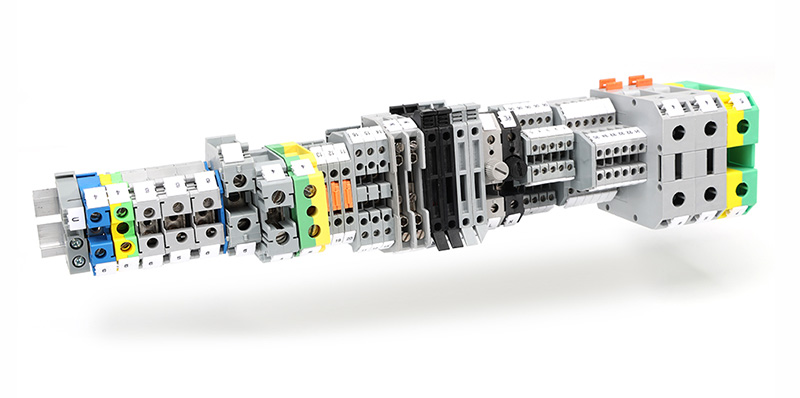
 EN
EN  PT
PT