

Crimp Fork Terminals are widely used in electrical wiring systems where fast maintenance, stable conductivity, and flexible disconnection are required. In industrial control panels, automotive wiring, and power distribution systems, crimp fork terminal solutions offer a practical balance between reliability and accessibility.
Unlike permanent-style connectors, fork-shaped terminals allow you to loosen a screw or stud without fully dismantling the entire connection system. For procurement buyers, this translates into lower maintenance downtime and better service efficiency in the field—especially when systems need frequent inspection or replacement.
How To Properly Use And Install Crimp Fork Terminals
Step 1 – Wire Stripping
You always start with correct wire preparation. Strip the insulation carefully so that the conductor length matches the barrel depth of the Fork Terminal Connector. Too short, and you lose conductivity; too long, and exposed copper increases risk.
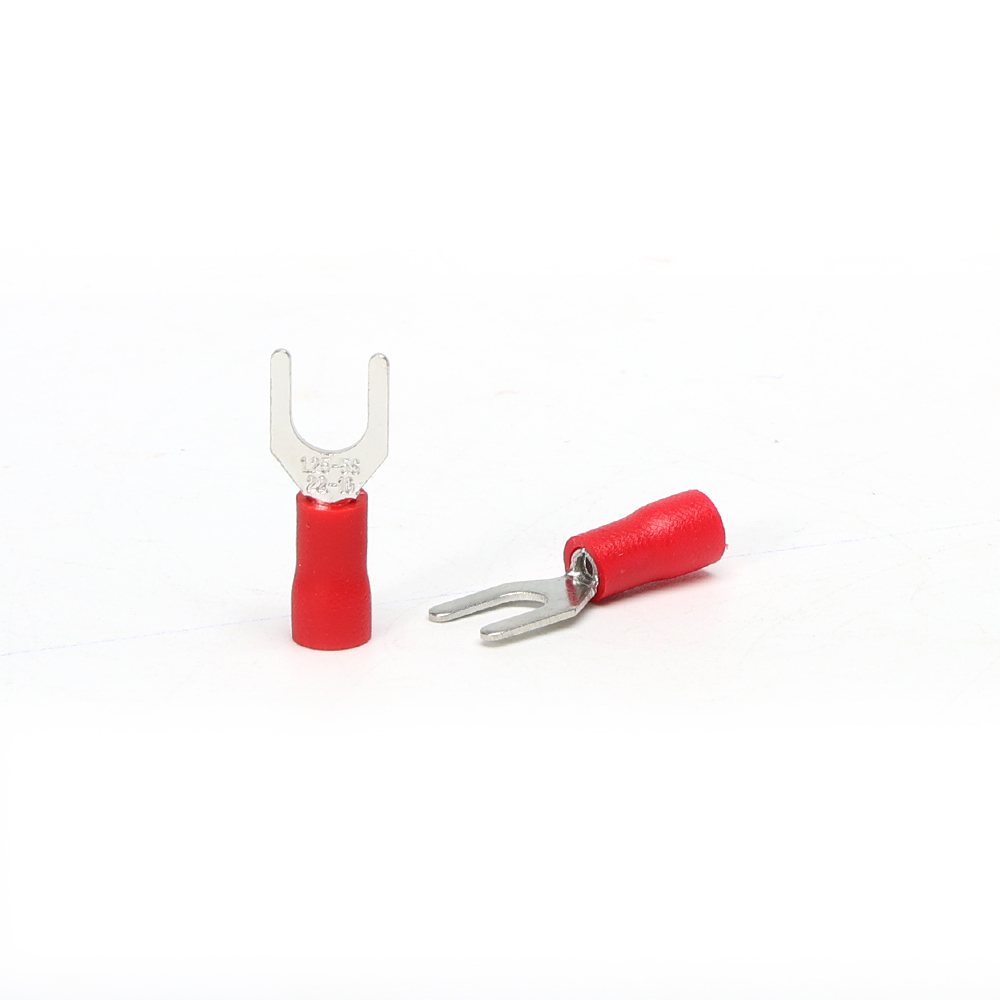 Key practical behavior you should follow:
- Match strip length precisely with terminal barrel
- Avoid cutting conductor strands
- Keep insulation clean and undamaged
- Ensure no loose copper strands remain
- Confirm wire gauge compatibility before crimping
Step 2 – Insert Wire Into Terminal Barrel
Once stripped, insert the wire fully into the barrel of the Crimp Fork Connectors. The insulation should sit flush against the terminal body, not floating or overlapping.
At this stage, small mistakes can create long-term failure points. In real factory scenarios, many installers rush here—and later face overheating issues or unstable contact resistance.
Step 3 – Crimping Process
Crimping is the most critical stage. You should use a calibrated crimping tool designed for insulated or non-insulated terminals depending on your Insulated Fork Terminal type.
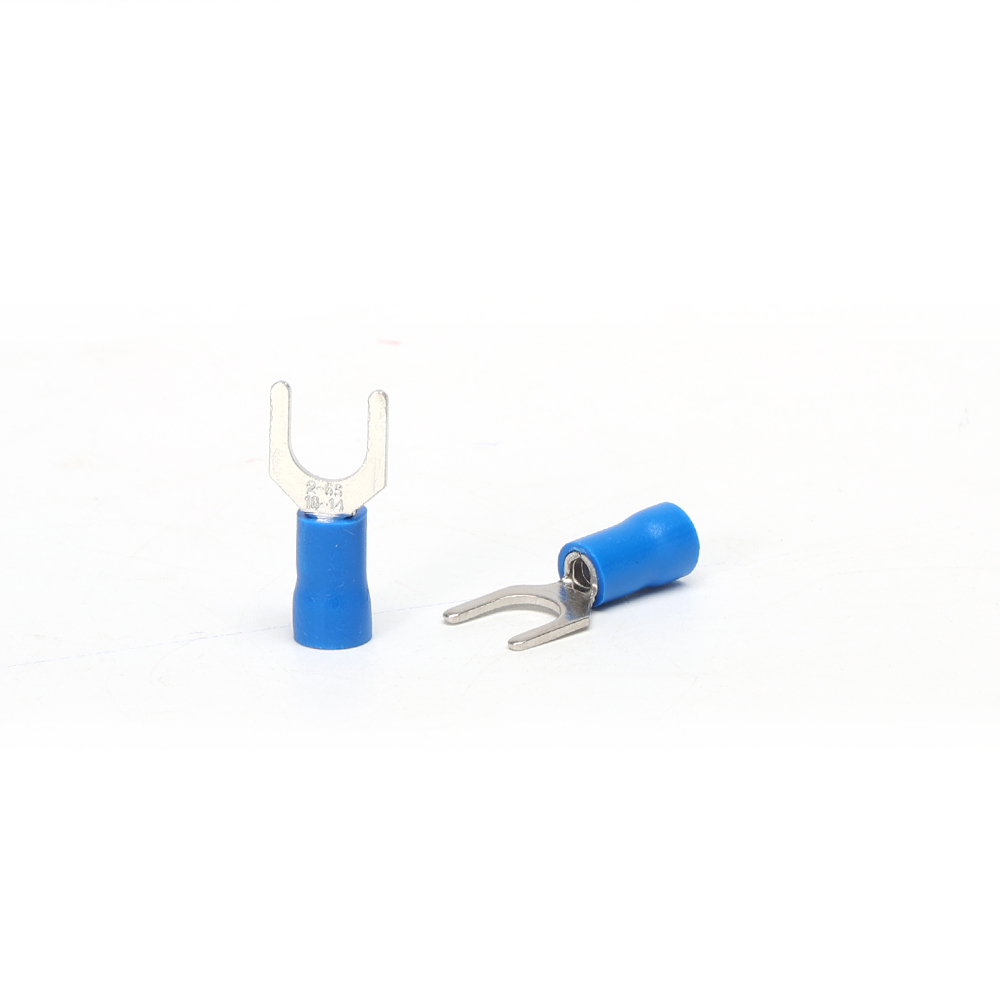
A properly executed crimp ensures mechanical strength and electrical conductivity simultaneously.
Typical expectations:
- One complete ratchet cycle only
- No deformation of fork structure
- Uniform compression across barrel
- No insulation cracking or splitting
- Stable conductor grip without movement
If you want a technical reference for crimp quality standards, NASA also publishes mechanical crimp integrity guidelines in electrical harness design
Step 4 – Pull Test (Crimp Verification)
After crimping, you don’t just “trust it”—you test it. The pull test is a simple but effective verification method used across electrical manufacturing lines.
You hold the wire and terminal separately and apply controlled force. If the crimp is correct, there is no movement, no slippage, and no deformation.
Key verification signals:
- No wire pull-out
- No barrel opening
- No insulation separation
- No visible cracking
- No movement under moderate force
In procurement environments, this step is often overlooked—but it’s exactly where quality control separates premium suppliers from low-cost alternatives.
Step 5 – Mounting Onto Bus Bar Or Screw Terminal
Now you install the fork onto a bus bar, screw terminal, or stud connection. This is where the Electrical Fork Terminal design advantage becomes obvious—you can install or remove it without fully removing the screw.
When used in real panels, technicians often appreciate this feature during maintenance cycles, especially in dense wiring systems where space is limited.
Important practical points:
- Align fork opening with screw direction
- Avoid over-tightening
- Ensure full contact surface engagement
- Double-check torque consistency
- Reinspect after vibration exposure
How To Choose The Right Fork Terminal
Wire Size Compatibility
Matching wire gauge with terminal barrel is not optional—it’s structural. A mismatch leads to overheating, instability, or long-term failure.
Current Rating Consideration
Different Crimp Fork Terminal models support different current loads. Industrial systems often require higher copper purity and thicker barrels.
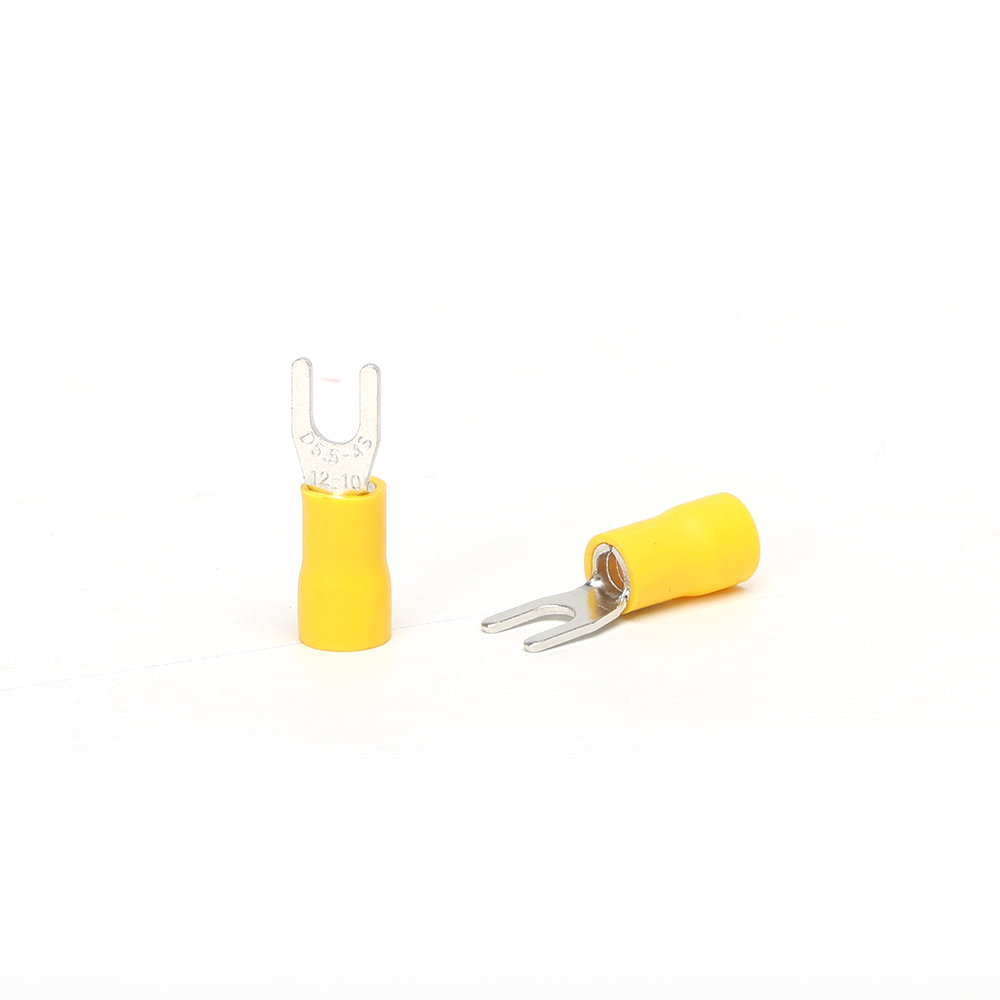
Insulation Type Selection
You typically choose between PVC, Nylon, or non-insulated designs depending on environment and safety requirements.
| Type | Protection Level | Flexibility | Cost | Typical Use |
|---|---|---|---|---|
| PVC Insulated | Medium | High | Low | General wiring |
| Nylon Insulated | High | Medium | Medium | Industrial panels |
| Non-Insulated | Low | Low | Very low | Controlled environments |
Application Environment
Environmental conditions directly impact terminal life. Humidity, vibration, and temperature swings matter more than most buyers expect.
- High vibration systems require stronger crimp retention
- Outdoor systems need insulation resistance
- Control panels prioritize density and clarity
- Automotive systems require thermal stability
- Industrial automation demands long cycle reliability
Applications Of Crimp Fork Terminals
In real-world use, Crimp Fork Connectors are not limited to one industry. You’ll see them everywhere once you start noticing wiring systems.
- Electrical control cabinets
- Automotive wiring harnesses
- Industrial machinery panels
- Power distribution systems
- Renewable energy installations
In one Westlec customer case, a panel builder reported reduced maintenance time simply because technicians no longer had to fully remove screw assemblies during inspection. Small detail—but in large-scale systems, that adds up fast.
Why Choose Westlec Fork Terminals
When you evaluate suppliers, consistency matters more than catalog size. Westlec focuses on manufacturing stability and electrical performance rather than just variety.
Key strengths include:
- Stable copper conductivity performance
- Precise stamping and forming control
- Reliable insulation adhesion
- Wide wire range coverage
- OEM/ODM customization support
For B2B procurement buyers, this reduces supply chain risk and improves long-term installation consistency across projects.
FAQ
What Types Of Crimp Fork Terminals Are Available?
You typically find insulated, non-insulated, and heat-shrink versions depending on application needs.
What Is The Basic Structure Of Fork Terminals?
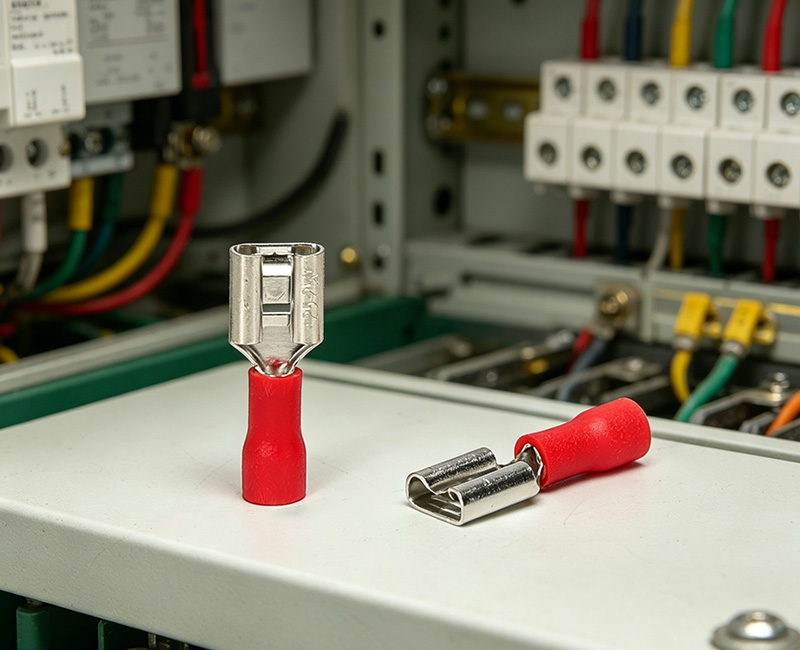
A fork terminal usually includes a conductive barrel, insulation layer, and open fork-shaped contact end designed for screw or stud mounting.
Where Are Electrical Fork Terminals Commonly Used?
They are commonly used in control panels, automotive systems, and industrial power distribution setups.
Can Fork Terminal Connectors Be Reused After Removal?
In most cases, reuse is not recommended because crimp integrity may weaken after removal.
What Wire Sizes Are Compatible With Crimp Fork Terminals?
They typically support a wide AWG or metric range depending on model specifications.
Why Choose Crimp Fork Connectors Over Other Terminal Types?
Because they allow faster maintenance without fully removing mounting hardware.
What Are Common Mistakes When Installing Fork Terminal Connectors?
Incorrect stripping length, poor crimping force, and mismatched wire size are the most common issues.
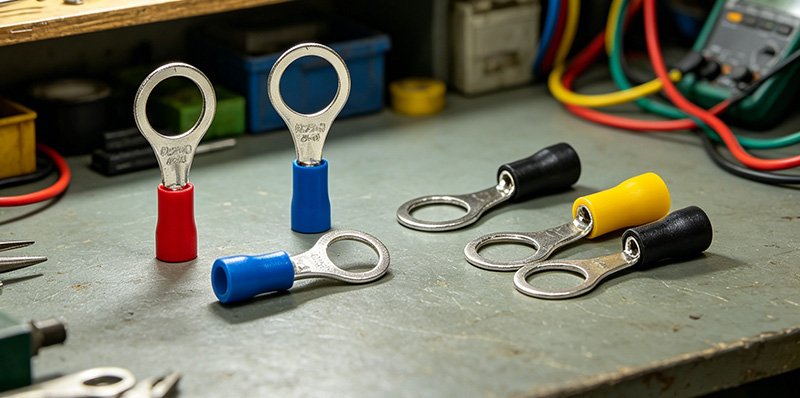
What Is The Difference Between Fork Terminal Connectors And Ring Terminals?
Fork terminals allow easier removal without fully undoing screws, while ring terminals provide a more permanent locked connection.
Conclusion
Using Crimp Fork Terminal, Crimp Fork Connectors, and Fork Terminal Connector systems correctly is not just about installation—it’s about long-term reliability, maintenance efficiency, and system safety. When you follow proper stripping, crimping, and mounting procedures, you significantly reduce failure risk in electrical systems.
For procurement buyers, choosing a stable supplier like Westlec means you are not just buying a connector—you are securing consistency across every electrical project. If your application requires stable conductivity and easy maintenance access, fork terminals are often the smarter long-term choice. And honestly, once you’ve worked with properly engineered terminals, going back to unstable connections feels… outdated.
If you are sourcing for industrial projects or OEM production, now is a good time to evaluate your current terminal standard and consider upgrading to a more reliable fork terminal solution from Westlec.
 EN
EN  PT
PT